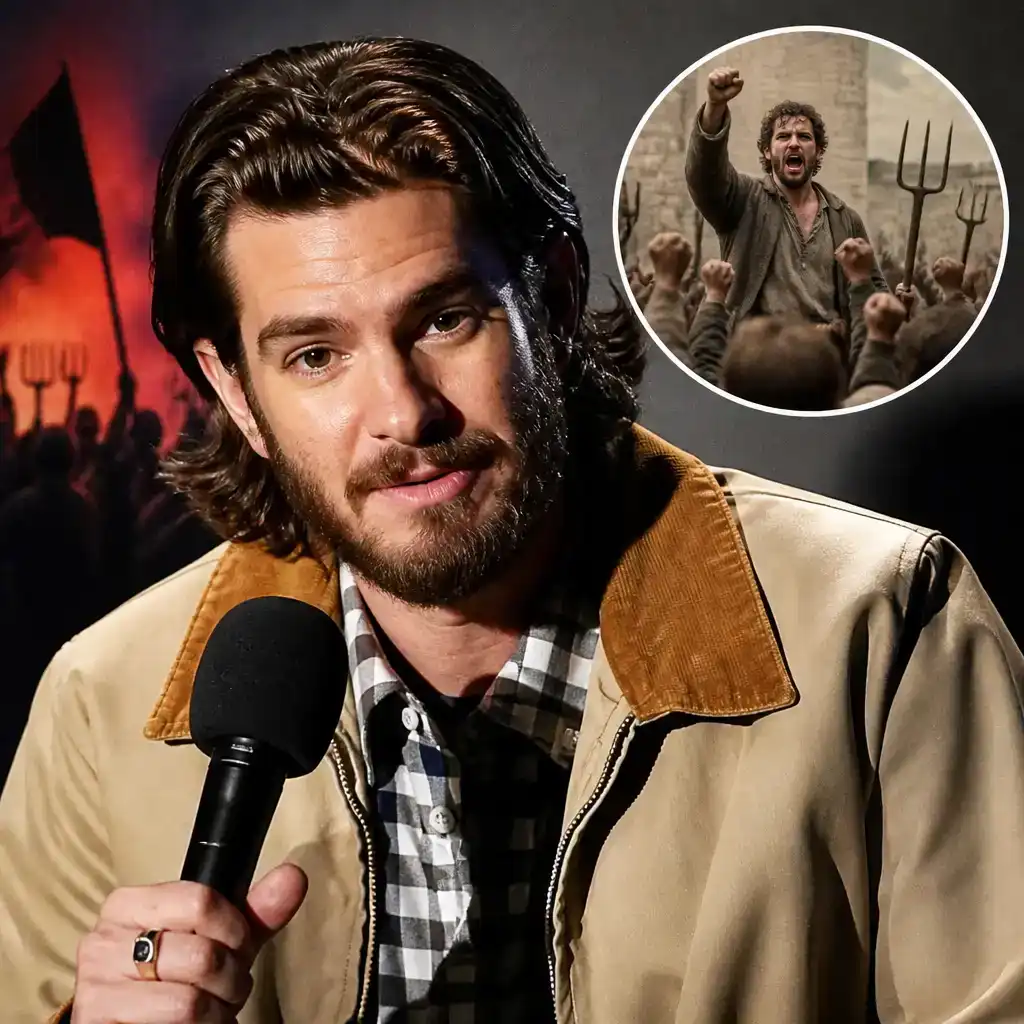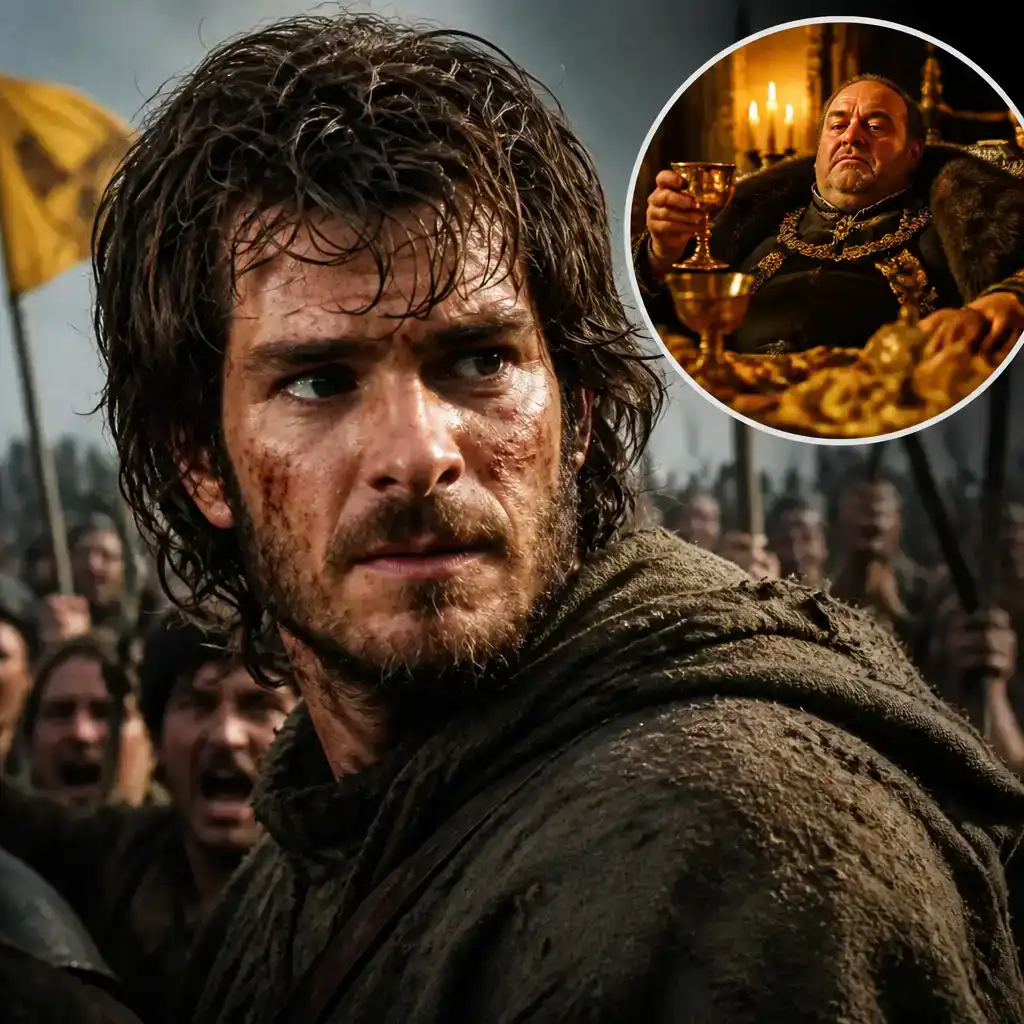
Andrew Garfield wants The Uprising to do more than turn a 14th-century rebellion into a night at the cinema. Speaking alongside director Paul Greengrass before the film’s release, the actor said he hopes modern audiences recognise their own struggles in its story. As for billionaires, his preferred reaction was less reflective: he hopes they are “scared shitless.”
Garfield plays Ploughman, a fictional farmer who joins the Peasants’ Revolt of 1381. Cosmo Jarvis portrays historical rebel leader Wat Tyler, while Jamie Bell plays the radical preacher John Ball. The film connects medieval inequality with current arguments over concentrated wealth, political privilege and a system many people suspect is not malfunctioning so much as working exactly as designed.
Why does Garfield think the story matters now?
During the question-and-answer session, Garfield said he hoped the film would be “galvanizing” and help viewers see their own difficulties reflected in characters from another time.
“I hope there’s some awakening that people feel, that we all feel like our own struggles are being reflected in the struggles of these characters from a distant time and place, and that it could be directive,” he said.
Then came the line likely to survive longer than the rest of the promotional tour: “And I hope that if any billionaires watch it, that they’re scared shitless.”
Garfield did not name any particular billionaire. His argument focused instead on extreme wealth as a moral and social problem. Referring to the film’s tagline, “There will be no peace until we are healed,” he included the ultra-rich among those requiring treatment.
“I’m going to include the billionaires in that as well, because they’re the ones that might be the most soul sick,” he said. “They’re the ones that might need the healing the most in a way.”
Greengrass has made the modern comparison equally explicit. He told The Nerd Wire that the film’s “oligarchs protecting their privileges,” corrupt royal court and public fury resembled “our near tomorrow.” Historian and adviser Dan Jones described 1381 as “a distant mirror on our world today.” Subtlety, clearly, was not the production’s main tax policy.
What actually caused the Peasants’ Revolt?
The film’s premise is rooted in Richard II’s England, but the uprising was not simply a response to one brutal tax imposed on the poorest people. The immediate trigger was the third poll tax, designed to collect an average of 12 pence per person to support the costs of war.
That demand landed in a society already destabilised by the Black Death. Labour shortages had allowed workers to seek better wages and conditions, while authorities tried to hold pay down and preserve serfdom. Resentment also centred on war spending, legal restrictions and the wealth of the Church.
Tens of thousands marched on London. Their demands included:
- Ending serfdom
- Removing restrictions on wages and labour
- Redistributing Church wealth
- Reforming a political order built around royal and aristocratic privilege
The rebellion reached its decisive point on June 15, 1381, when Wat Tyler was killed during a meeting with the young king. Richard II later withdrew concessions he had offered the rebels, and the revolt was suppressed.
The uprising failed in immediate political terms, but it exposed how quickly a government could lose control when taxation, labour policy and entrenched privilege collided. Seven centuries later, that combination has not exactly become difficult to recognise.
Is the film really a Robin Hood origin story?
The marketing has been noticeably less settled than the history. Some promotional material suggested the revolt helped create the Robin Hood legend, and Focus Features said the uprising inspired the familiar figure. Greengrass similarly told NPR’s Fresh Air that the events transformed Robin Hood into a popular symbol.
Britain’s Entertainment Film Distributors, however, insisted the movie is “not Robin Hood.” The campaign was rapidly adjusted, leaving distributors to perform the useful modern ritual of clarifying what audiences had just been encouraged to believe.
The historical problem is straightforward. References to Robin Hood existed before 1381, and traditional versions generally place him around two centuries earlier. Garfield’s Ploughman is fictional, not a newly discovered identity for the outlaw.
A more defensible reading is that the film borrows Robin Hood’s symbolic territory: resistance to unjust authority, redistribution of wealth and popular anger against an elite protected by law. That makes the connection thematic rather than a literal origin story. It is a less marketable sentence, which may explain the confusion.
How does religion shape the rebellion?
The film also argues that medieval power rested on more than royal taxation. Religious authority helped justify the social hierarchy, while Church wealth made the institution a target for rebels.
Garfield told The Christian Post that the story dismantles what he called a “bastardized form of Christianity.” Greengrass has described its world as “rigged, deeply unfair,” with wealth and political authority reinforcing each other.
John Ball’s presence is central to that theme. The preacher challenged inherited rank and became one of the revolt’s leading ideological voices. Through him, the film treats religion as contested ground rather than simple decoration around the monarchy. Faith could support the established order, but it could also provide language for equality and resistance.
That gives the movie a broader target than billionaires alone. Its concern is the network of institutions, beliefs and laws that protect inequality, followed by the familiar surprise when public anger becomes impossible to ignore.
When will audiences see it?
Release listings are not entirely consistent. The Associated Press gives the United States theatrical opening as September 11, while NPR, Rotten Tomatoes and several cast interviews cite September 10.
The promotional campaign has already reached Fortnite, where a custom five-on-five experience lets players fight for the rebels or the royal forces. Separate cinematic endings play depending on which side wins. History did not offer Wat Tyler a rematch, but branded interactive entertainment is more accommodating.
Away from the revolt, Garfield recently acknowledged that he had not yet watched Tom Holland in Spider-Man: Brand New Day or The Odyssey, and therefore had not congratulated his former Spider-Man co-star on their success. For now, he appears more occupied with frightening billionaires than reviewing Holland’s release schedule.