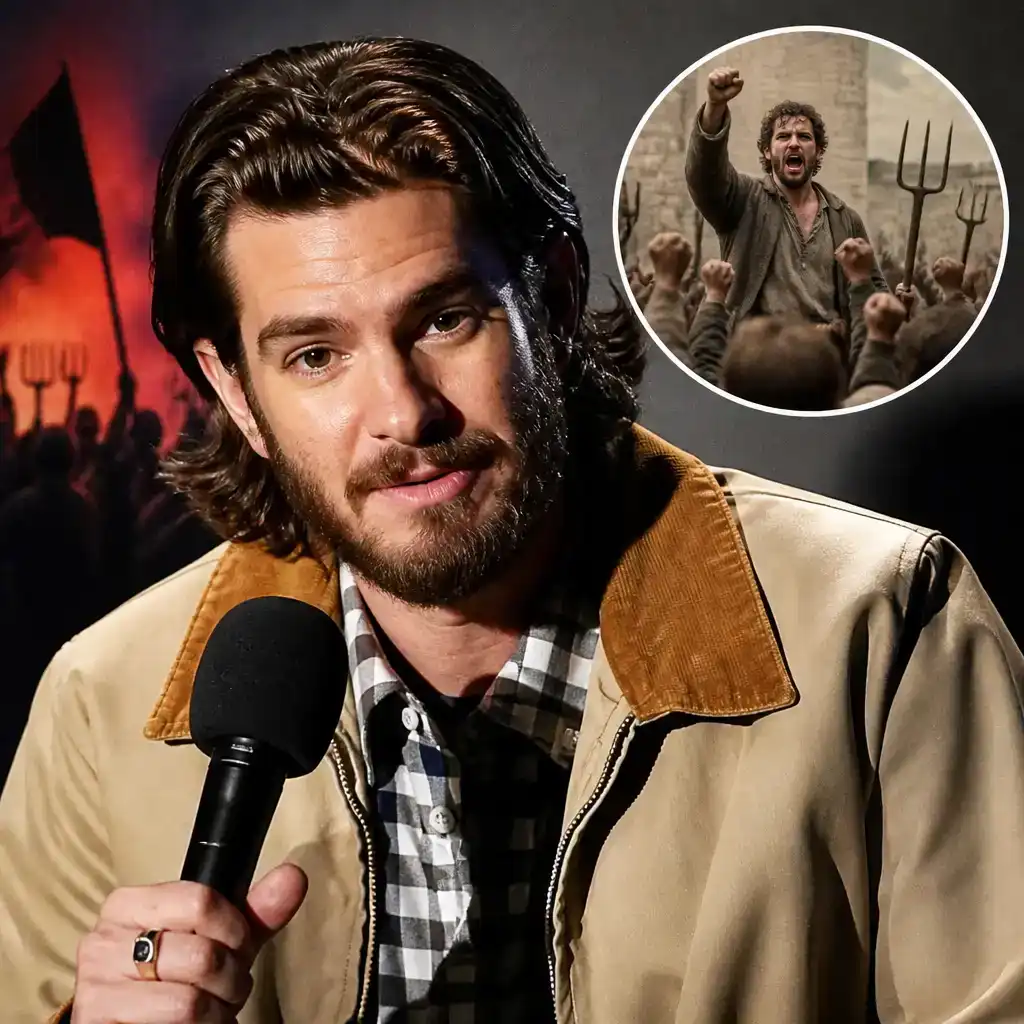
Andrew Garfield’s billionaire remarks have shifted attention from medieval taxation to the modern economics of Hollywood. Speaking at a Los Angeles screening of The Uprising on Thursday, the actor said he hoped the historical drama would inspire audiences and leave any billionaires watching it “scared shitless.” Social media, always ready to conduct an immediate wealth audit, soon focused on Garfield’s own successful career.
During a question-and-answer session with director Paul Greengrass, an audience member asked what they wanted viewers to take from the film. Garfield first offered the conventional answer: he hoped people would actually see it.
He then said he wanted the story to feel “galvanizing,” allowing viewers to recognise their struggles in those of people from another time and place. His final comment about billionaires supplied the part destined to circulate online.
Why did the comment attract criticism?
Several critics accused Garfield of attacking extreme wealth while benefiting from a film industry financed by extremely wealthy people. Garfield has starred in major productions including The Amazing Spider-Man, Spider-Man: No Way Home and Hacksaw Ridge, making his finances an obvious target for anyone seeking an irony.
Rick Davis, an associate pastor at Providence Church in Lynchburg, Virginia, said he had initially been excited about a period film involving rebel leader Wat Tyler. He added that Garfield’s comments made the production sound like “socialist garbage.”
Substack columnist John William Sherrod accused the actor of pretending to belong to the struggling working class, while Noam Blum, chief technology officer at Tablet Magazine, suggested more billionaires were probably involved in making the film than would ever watch it.
Former Los Angeles mayoral candidate Spencer Pratt also claimed Garfield had received about $5 million to play OpenAI co-founder Sam Altman in Artificial. No reliable report has corroborated that salary figure. The Associated Press reported only that the Garfield-led production had a budget of about $40 million and was acquired by Neon after Amazon dropped it. So the most eye-catching number in the backlash remains unsupported, which rarely prevents a number from enjoying a productive life online.
What is The Uprising about?
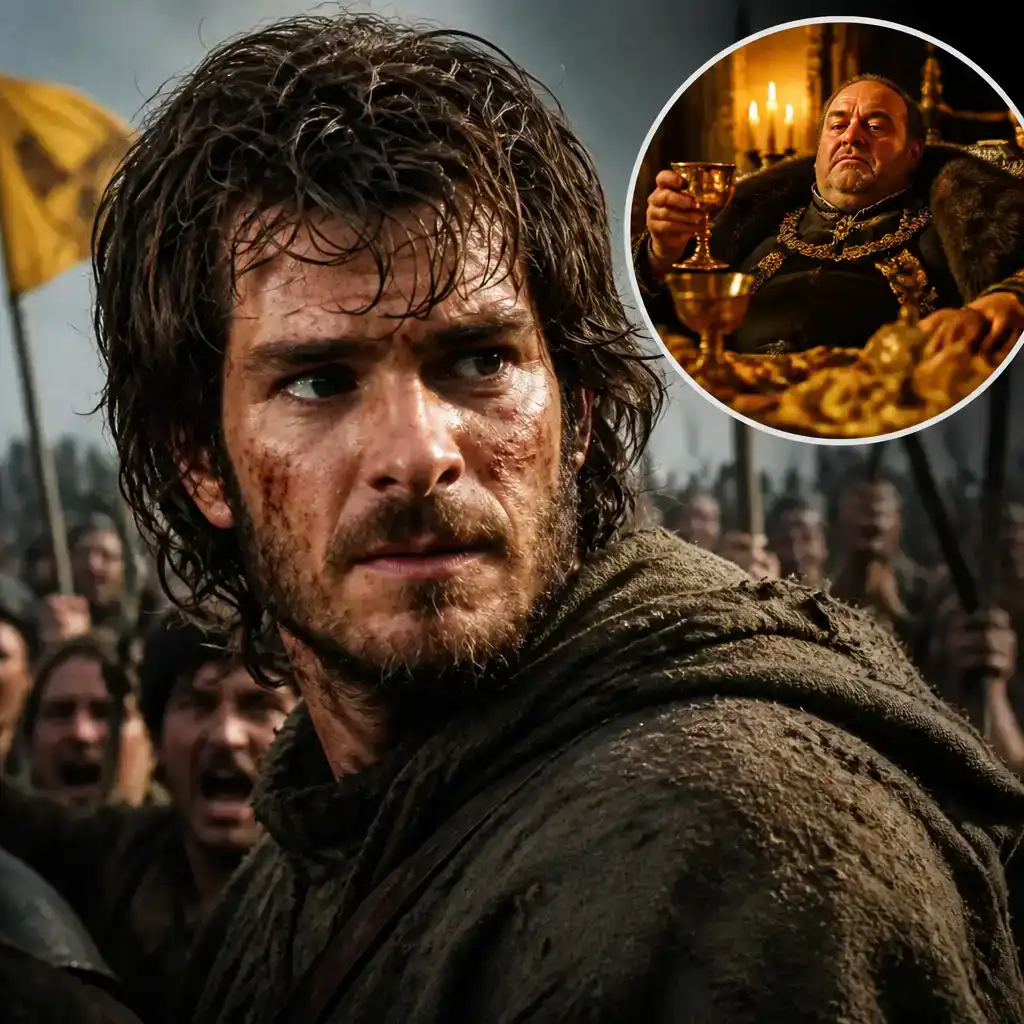
The R-rated, roughly 128-minute film follows Ploughman, a fictional 14th-century farmer played by Garfield, as ordinary people rebel against the government of King Richard II. Cosmo Jarvis portrays Wat Tyler, the historical leader associated with the Peasants’ Revolt of 1381.
England was still dealing with the economic consequences of the Black Death. The plague had sharply reduced the workforce, giving surviving labourers more bargaining power, while authorities tried to hold down wages. At the same time, the Crown needed money for the Hundred Years’ War.
Three poll taxes were imposed between 1377 and 1380. According to the World History Encyclopedia, the third was three times larger than the earlier levy and ignored whether people could afford it. Rebels called for:
- Lower taxes
- An end to serfdom
- The removal of senior royal officials
The revolt was violently suppressed and its immediate promises were reversed. The poll tax, however, was abandoned. Garfield’s comments therefore fit the film’s subject rather neatly, even if celebrity politics tend to produce more discussion about the celebrity than the politics.
Why does Paul Greengrass see a modern parallel?
Greengrass has framed the story as more than a recreation of medieval unrest. Speaking on NPR’s Fresh Air, the director connected the anger following the Black Death with the public mood after Covid and the political turmoil surrounding January 6.
“People were left numb, and then this gathering rage,” he said.
That interpretation places the film’s focus on what happens when mass death, economic pressure and mistrust of institutions arrive together. The comparison does not require the 14th century and the present day to be identical. It treats the revolt as an example of how unresolved hardship can become political violence.
That is a more substantial argument than the online dispute over whether a highly paid actor may criticise billionaires. Hollywood has never required performers to share the bank balance, occupation or living conditions of their characters. It would otherwise face a serious shortage of superheroes, medieval farmers and astronauts.
Is it also a Robin Hood film?
The production has another controversy, this time involving what story it is actually selling. Focus Features promoted the film in some markets as an account of Robin Hood’s rise. Entertainment Film Distributors, which handles the UK release, publicly rejected that description and said the Robin Hood campaign had neither been issued nor approved by the company.
The historical connection is doubtful. The Peasants’ Revolt occurred in 1381, while the Robin Hood tradition is generally placed roughly two centuries earlier. Garfield’s character is officially identified as Ploughman, not Robin Hood, and the story also includes the documented figure of Wat Tyler.
Before the film’s September 10-11 US rollout, Rotten Tomatoes listed one professional review. John Campea described it as a “sweeping epic” but criticised its disjointed narrative. That leaves the film carrying several debates into cinemas: class politics, celebrity wealth, modern parallels and a marketing campaign that appears unsure whether its protagonist is a farmer or England’s most marketable outlaw.
Fox News sought comment from Garfield and Greengrass but received no response. No later public statement from either man or Focus Features has surfaced.