WASHINGTON, June 12, 2026 — President Donald Trump says an Iran peace deal is close enough to start imagining a signing ceremony. Tehran, rather inconveniently for that storyline, says it has not made a final decision.
That gap is the story. Trump is presenting the talks as nearly finished, even saying planned U.S. strikes have been canceled. Iranian officials describe the negotiations as serious but unfinished, with major limits still in place. So yes, there may be real diplomatic movement. No, it is not a peace agreement yet.
What Trump says has been agreed
Trump said Thursday that the United States had reached what he called a “great settlement” in the war with Iran. He said the agreement could be finalized “over the next few days,” possibly with a signing ceremony in Europe.
In a Truth Social post, he said discussions had reached Iran’s highest levels and that the final points had been approved “in both concept and great detail” by the United States, Iran, Israel and several governments in the region.
He also said the U.S. naval blockade would remain in place until the “transaction” was completed. Diplomatic language, apparently, now comes with checkout terminology.
The point was to show momentum: no strikes, a deal soon, and a president saying several governments had lined up behind the framework.
What Iran is actually saying
Iran has not confirmed Trump’s account.
Esmaeil Baghaei, spokesperson for Iran’s Foreign Ministry, said Tehran had not made a final decision on any possible agreement with Washington. He also said Iran would not compromise on its “red lines.”
Baghaei described reports about the timing and location of a signing ceremony as speculative. He said much of the negotiating text had been completed, but accused the United States of repeatedly shifting its positions during the talks.
That matters because “advanced negotiations” and “finished deal” are not the same thing. A draft can exist. Mediators can narrow differences. Leaders can be briefed. But until both sides publicly confirm the terms and sign the document, Trump’s announcement remains a political claim, not a completed settlement.
What the draft deal reportedly includes
Reporting on the draft memorandum of understanding suggests the proposal is more limited than the phrase “peace deal” implies.
The draft would reportedly:
- Reopen the Strait of Hormuz immediately, without tolls
- Extend the ceasefire for 60 days
- Create a framework for further nuclear negotiations
- Tie sanctions relief for Iran to compliance
- Leave the hardest nuclear questions for a second, more detailed agreement
Those unresolved questions include Iran’s enriched uranium stockpile and parts of its nuclear infrastructure.
There is movement, but it looks more like a de-escalation package than a full peace treaty. That would still be meaningful. It could lower the risk of immediate military escalation, restore some shipping through the Gulf and create room for nuclear talks. But it would not settle the deeper conflict between Washington and Tehran.
Why the Strait of Hormuz is central
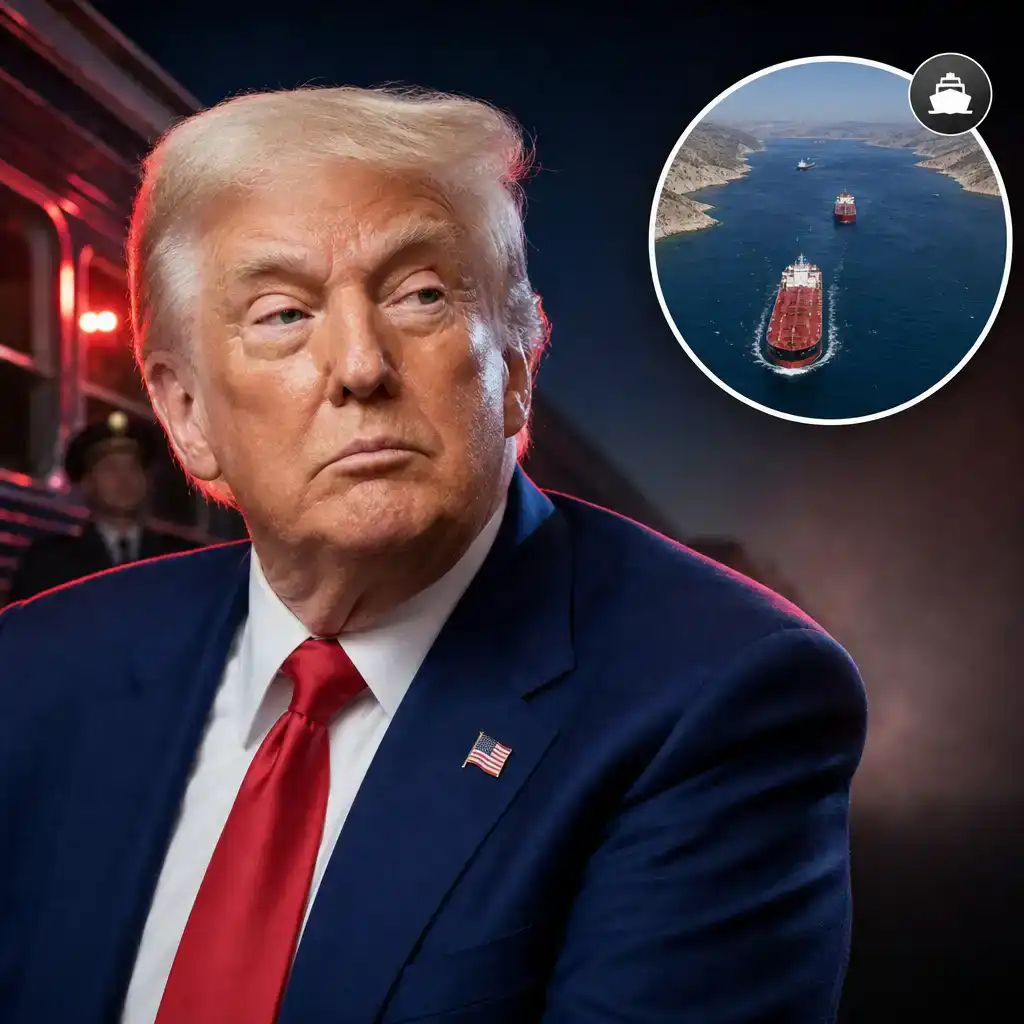
The Strait of Hormuz is not just a line on a map that diplomats mention when they want everyone to sit up straighter. It is one of the world’s most important energy chokepoints.
The International Energy Agency says that in 2025 about 20 million barrels per day of crude oil and oil products moved through the strait. That represented around a quarter of global seaborne oil trade.
The same route is also critical for liquefied natural gas exports from Qatar and the United Arab Emirates.
A real reopening of Hormuz would matter far beyond the region. It could affect oil prices, shipping costs and wider confidence in global markets. That is why even a temporary arrangement could carry real weight, especially for governments trying to avoid another shock to energy supplies.
The nuclear dispute is still the hardest part
The nuclear issue is still harder than the ceasefire language.
This week, the board of the International Atomic Energy Agency demanded that Iran fully cooperate with inspectors, provide complete information about its stockpile of near-weapons-grade nuclear material and grant access to nuclear sites.
The agency has been unable to verify the status of Iran’s stockpile since earlier military strikes. The International Atomic Energy Agency has reported that Iran maintains 440.9 kilograms of uranium enriched up to 60 percent purity. That level is technically close to weapons-grade material.
Trump says the prospective agreement would ensure Iran never obtains a nuclear weapon. But the available details suggest any immediate memorandum would start a process for addressing that issue, not resolve it.
A 60-day negotiating framework is not the same as a verified nuclear settlement. A pledge is not the same as an inspection regime. Those distinctions may be dull, but in nuclear diplomacy, dull details are where the actual agreement lives.
Why skepticism follows Trump’s claim
There is a long history behind the cautious reaction.
In 2018, during his first term, Trump withdrew the United States from the Joint Comprehensive Plan of Action, the 2015 Iran nuclear deal. He called that agreement unacceptable and argued that Washington needed a tougher strategy to deny Iran every path to a nuclear weapon.
At the time, the White House said Trump’s policy would also address Iran’s missile program, regional proxies and threats to navigation in the Gulf.
That “maximum pressure” approach did not produce a broader replacement agreement during Trump’s first term. Arms control analysts later argued that Iran responded by reducing its own compliance with nuclear commitments and expanding activities that weakened the nonproliferation benefits of the original deal.
So when Trump says pressure has brought Iran to the edge of a stronger agreement, the record is not exactly tidy.
The rhetoric shifted within hours
The latest announcement also fits a pattern of abrupt changes in tone.
Earlier the same day Trump announced progress toward peace, he threatened to hit Iran “very hard” with new strikes. Hours later, he said the planned attacks had been canceled because diplomacy was advancing.
The Associated Press noted that Trump has repeatedly said in recent weeks that a deal was close, only for no final agreement to appear.
Still, this should not be dismissed as empty theater. Multiple reports indicate serious negotiations have been underway, with Qatar and Pakistan playing key mediation roles.
Sources briefed on the talks told Axios that the sides had narrowed gaps over frozen Iranian assets, the reopening of the Strait of Hormuz and the structure of nuclear talks during a 60-day ceasefire period.
That suggests there is substance behind the announcement, even if the public version has been polished to a shine.
Why both sides need a careful landing
The political challenge is obvious. Trump wants to present the outcome as a decisive victory. Iran cannot afford to look as if it surrendered under U.S. military pressure.
That tension may make a limited, face-saving memorandum easier than a comprehensive peace agreement. Both sides could sell a temporary ceasefire extension and a reopening of Hormuz to their domestic audiences.
The harder issues remain deeply contentious:
- Uranium enrichment
- Sanctions relief
- International inspections
- Iran’s missile program
- Regional proxy forces
- Guarantees against renewed escalation
Those are not side details. They are the core of the dispute.
What would make this real
For now, the careful reading is that Trump may be closer to a temporary arrangement with Iran than he has been before. There appears to be a draft text, active mediation and pressure on both sides to avoid further escalation.
But several key pieces are still missing:
- No final Iranian approval
- No signed document
- No verified reopening of the Strait of Hormuz
- No enforceable nuclear framework
- No confirmed inspection access
If an agreement is signed in the coming days, it would be a significant diplomatic success for Trump and a possible turning point in the U.S.-Iran conflict.
If it falls apart over unresolved disputes, it will reinforce criticism that Trump often announces victory before the agreement is actually done.
The test now is not another Oval Office statement or another social media post. It is whether Iran signs, whether Hormuz reopens, whether inspectors get access and whether the promised 60 days of diplomacy produce something stronger than another fragile pause.