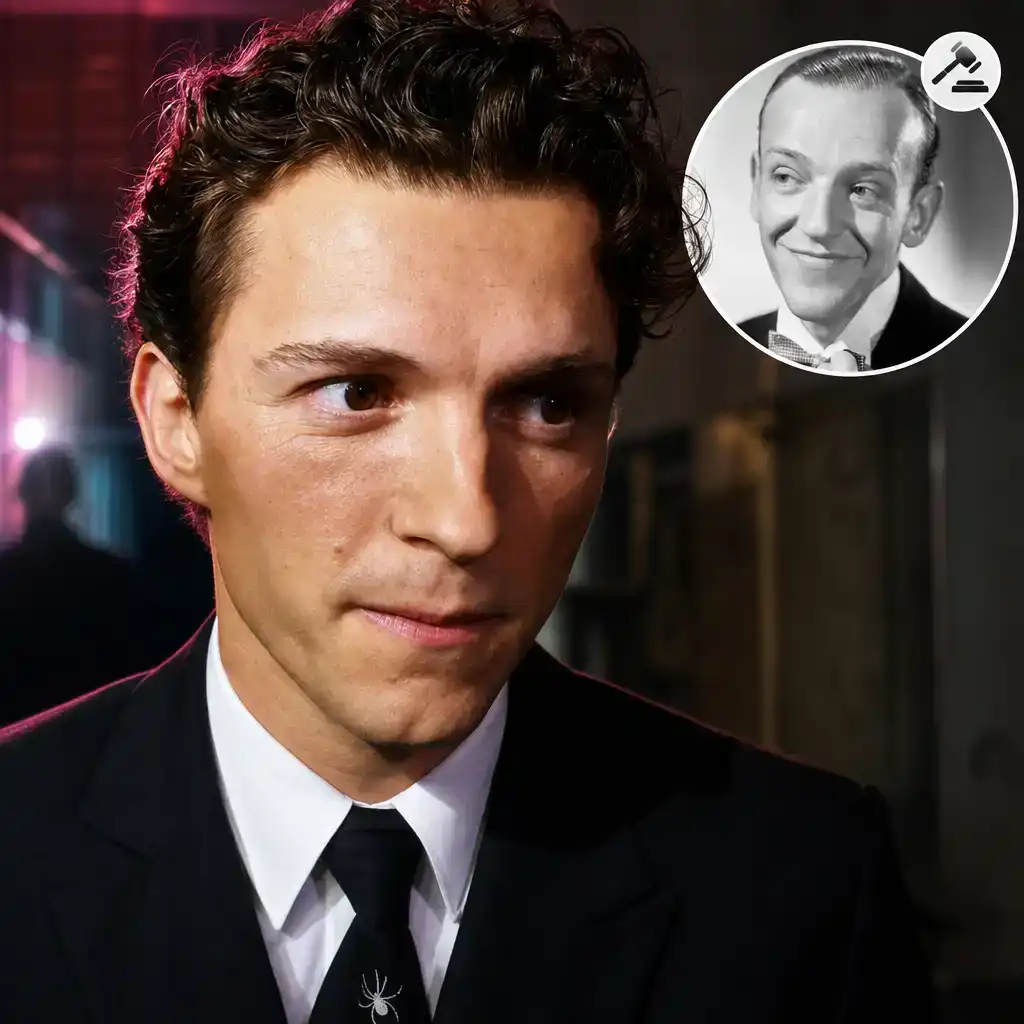
Tom Holland’s Fred Astaire biopic is shaping up as more than a difficult dance assignment. Holland plans to perform the routines himself, without doubles and in uninterrupted takes, while the production also faces a deeper complication: Astaire reportedly made clear that he did not want his life turned into a film.
The still-untitled project, first announced in 2021, is expected to be Holland’s next movie. He has already begun rehearsing and previously indicated that filming could start in January 2027.
Why Holland wants to perform every dance himself
After consecutive press tours for The Odyssey and Spider-Man: Brand New Day, Holland told George Stephanopoulos on Good Morning America that he would return directly to dance training.
“As soon as I finish with these tours, I’m diving back into the dance studio,” he said. “I did my first few rehearsals recently, and it both filled me with excitement and absolute dread because I’ve got so much work to do to try and do Fred proud.”
Doing Astaire proud, in Holland’s view, means avoiding the usual filmmaking shortcuts. He wants “no doubles,” plans “to do all of the dancing” himself and hopes the routines can be captured in single, uninterrupted shots, reflecting how Astaire’s performances were presented onscreen.
The ambition is easy to understand and difficult to execute. Astaire’s dancing looked effortless because viewers were not supposed to see the effort. Reproducing that effect requires rather a lot of it.
The role brings Holland back to his beginnings
Holland may be best known for playing Peter Parker, but dance was central to his first major stage role. As a child, he performed in Billy Elliot the Musical in London’s West End, a production that demanded extensive dance training.
He later stepped away from the discipline, a decision he now describes as one of his biggest regrets. “After I finished Billy Elliot, I quit dancing,” he said.
Preparing to play Astaire has taken him back to the central London studio where he originally rehearsed for Billy Elliot. That return gives the project a personal dimension beyond the physical challenge. Holland is revisiting the skill that helped launch his career, now with the added burden of portraying one of the most technically admired dancers in film history.
Speaking on Live With Kelly and Mark, Holland said the closely timed releases of The Odyssey and Brand New Day felt like the end of the first act of his career. For his next phase, he wants more mature work and roles that unsettle him.
“What I’m looking for in this next chapter is like the ultimate challenge, and to find things that really scare me,” he said. After his first rehearsal, he felt “really excited” and “equally terrified” by the amount of work ahead.
What the Fred Astaire film will cover
Paul King, director of Paddington, Paddington 2 and Wonka, is attached to direct. Lee Hall rewrote a screenplay originally written by Noah Pink. Hall also wrote the film Billy Elliot and its stage adaptation, giving the project another direct connection to Holland’s early career.
Rather than concentrating primarily on Astaire’s famous Hollywood partnership with Ginger Rogers, the film is expected to focus on his stage career with his older sister, Adele Astaire.
Fred and Adele became major stars in vaudeville and on Broadway and the London stage. Their partnership ended when Adele retired in 1932. Fred then moved into the Hollywood career that produced his best-known films, including his celebrated work with Rogers.
That focus could bring wider attention to a formative but less frequently dramatized part of Astaire’s life. It also separates Holland’s film from another reported project, Fred & Ginger, which has had Jamie Bell and Margaret Qualley attached.
Why Astaire’s estate objects to the biopic
Holland’s determination to honor Astaire sits awkwardly beside Astaire’s own stated opposition to a screen portrayal of his life.
TMZ reported that Astaire’s widow, Robyn Astaire, sent producer Amy Pascal a legal letter stating that the estate had neither approved nor endorsed the film. She wrote that her husband was “explicit in his Will” about not wanting his life depicted onscreen and warned the production against suggesting that it had the estate’s authorization.
Astaire previously explained the provision in blunt terms: “I have no particular desire to have my life misinterpreted, which it would be.”
A production source told TMZ that Sony owns the rights to the book on which the film is based. That claim may explain the filmmakers’ basis for moving ahead, but it does not resolve the ethical question raised by the family’s objection. Legal permission and personal blessing are not the same thing.
For Holland, the dance training is the visible challenge. The harder task may be making a respectful film about someone who apparently did not want such a film made. For now, Holland remains focused on the work in the studio. “I’m so excited for the challenge,” he said.