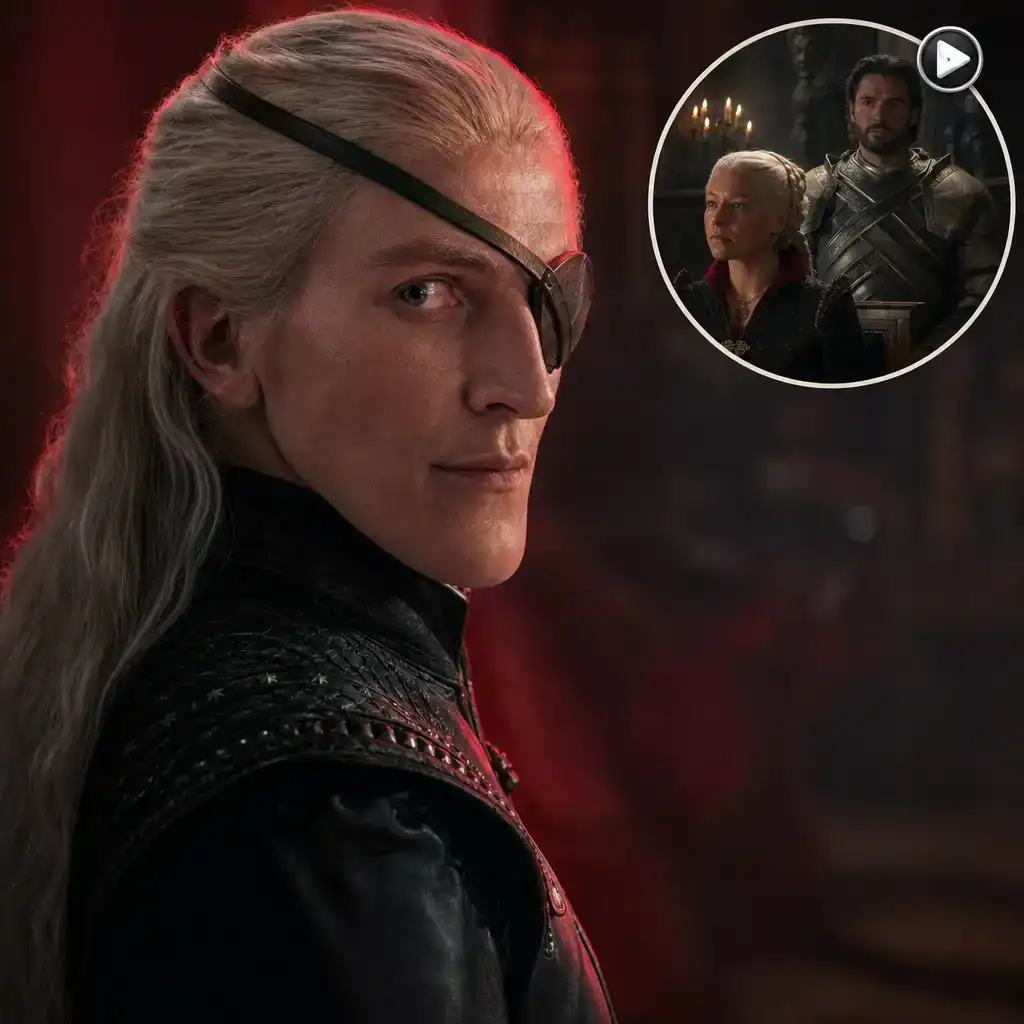
Warning: This article contains spoilers for House of the Dragon Season 3 through Episode 5.
Rhaena and Sheepstealer were both treated as incomplete long before they found each other. She was a Targaryen without a dragon, sidelined while relatives fought over a throne. He was a gaunt, mud-brown wild creature with none of the polished menace expected from a royal weapon. Their bond should have been liberating. Instead, it became a disaster with a body count, followed by exile, deception and an increasingly complicated debate over who gets to belong in Targaryen history.
That tension has made the pair one of Season 3's most emotionally charged storylines. It has also opened the door to a queer and transgender reading built around survival outside inherited structures. Yet the adaptation comes with a serious cost: HBO reached this story by removing Nettles, one of George R.R. Martin's most distinctive characters.
How the bond became a battlefield catastrophe
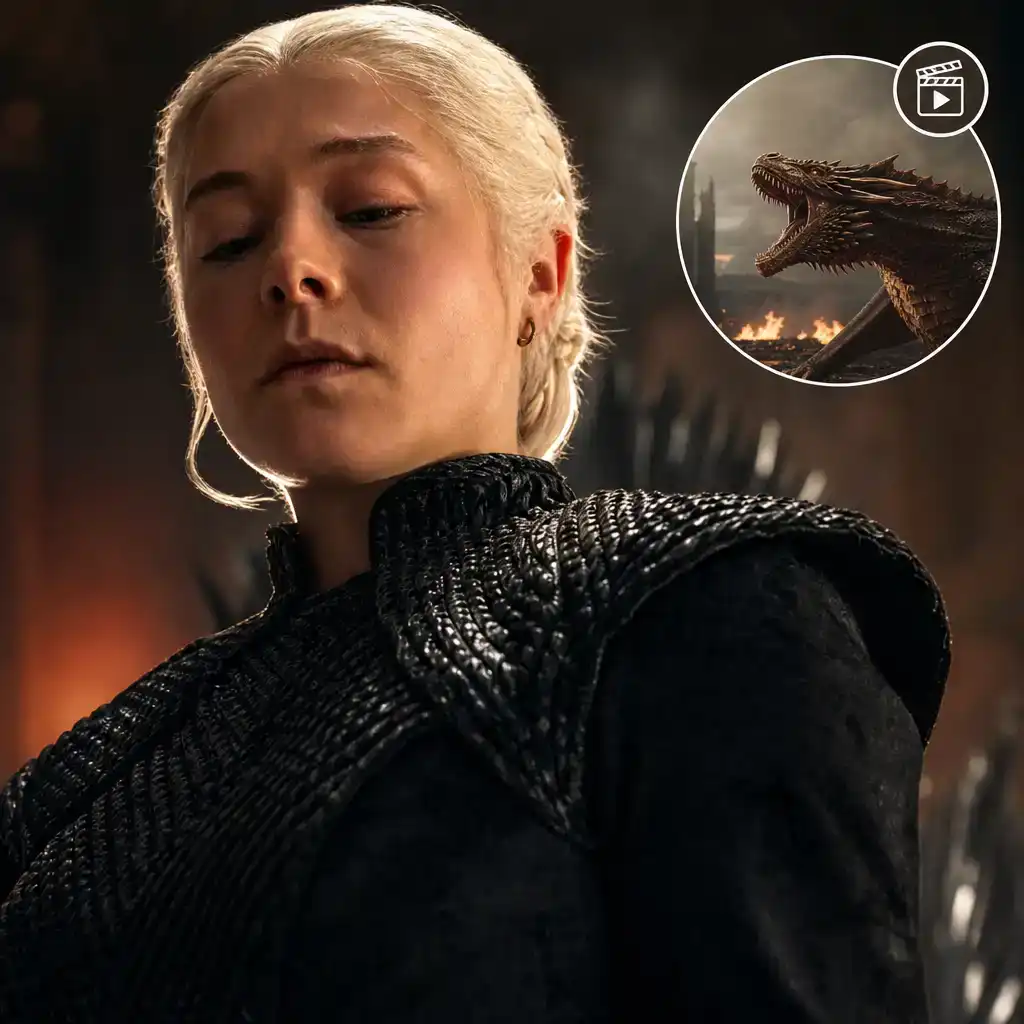
Season 2 ended with Rhaena Targaryen, played by Phoebe Campbell, facing Sheepstealer in the Vale. In the Season 3 premiere, she succeeds in claiming him, only to discover that forming a bond and controlling a wild dragon are very different achievements.
Rhaena flies him into the Battle of the Gullet while still inexperienced. Sheepstealer lashes out amid the fighting, and her inability to direct him forces Jacaerys Velaryon and Vermax into the Triarchy's firing range. Both are killed. TV Insider, ComicBook.com and TVLine have all described the dragon's actions as an indirect cause of their deaths.
The sequence turns Rhaena's long-awaited moment of recognition into what showrunner Ryan Condal called a “monkey's paw” wish. Speaking to IGN, Condal said giving Rhaena a dragon made sense because the series is “a family story,” but what she wanted most becomes “her greatest nightmare.”
That is central to the emotional force of the storyline. Rhaena does not receive instant confidence, status or safety. She gets power before she has the experience to manage it, and the consequences are irreversible.
Why Sheepstealer feels unlike a royal dragon
In Fire & Blood, Sheepstealer is described as an ugly, mud-brown wild dragon known for eating mutton. The television version preserves that roughness. He looks old, scarred and shaped by survival beyond Targaryen control, not bred for ceremonial entrances and flattering banners.
That difference matters in a franchise where dragons usually represent bloodline, conquest and political legitimacy. Vhagar, Syrax and Vermithor function as extensions of dynastic power. Sheepstealer does not fit neatly into that system. He is powerful, but he is not obedient. He can form an attachment, but he cannot immediately be turned into reliable military equipment.
Rhaena understands that lack of belonging. She has spent much of the story defined by what she does not possess, particularly the dragon expected of a Targaryen. Her father, Daemon Targaryen, has repeatedly overlooked her while pursuing his own ambitions. Finding Sheepstealer allows her to define herself, but only outside the family structure that made her feel deficient.
Their relationship therefore resembles an anti-Targaryen dragon bond. It is based less on pedigree and command than on two neglected beings recognizing something in each other.
Where the queer reading comes from
For some transgender and queer viewers, Sheepstealer offers a fantasy of being valued without first becoming polished, obedient or socially acceptable. His body remains strange by the standards surrounding him. His behavior remains difficult. The story does not make him lovable by making him conventional.
Rhaena's arc carries a related charge. She rejects the passive role assigned to her and pursues the identity she believes has been denied to her. Once she claims it, however, self-realization does not protect her from fear, blame or exile. Recognition is meaningful, but it is not a shield.
That theme lands in a political climate where formal support and lived acceptance often appear badly out of step. A 2025 Pew Research Center survey found that only 13% of LGBTQ adults believed transgender people received a great deal or fair amount of social acceptance in the United States. Roughly half said there was little or no acceptance.
By contrast, a February 2026 SSRS survey for the Human Rights Campaign found that 85% of Americans supported equal rights and protections for transgender people. The poll had a margin of error of plus or minus 3.5 percentage points.
The gap helps explain the appeal of a character who is theoretically valuable but treated as dangerous when institutions cannot control him. Recent legal fights over identity documents, bathrooms, health care and public access, including challenges involving a Kansas law, give that fantasy metaphor a fairly direct real-world edge.
What the removal of Nettles costs the story
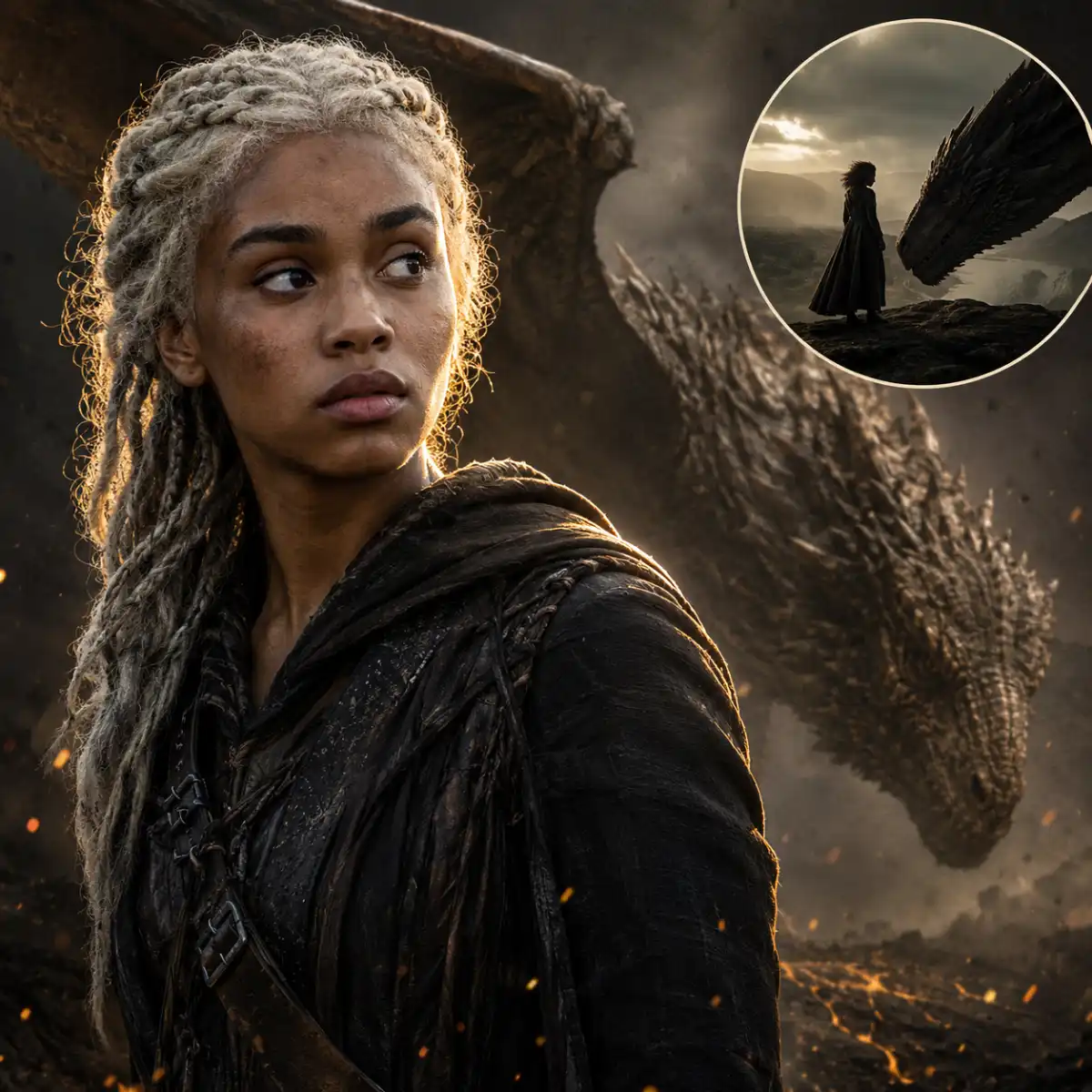
The emotional strength of Rhaena's arc does not settle the adaptation debate. In Martin's book, Sheepstealer is claimed by Nettles, a teenage dragonseed who patiently earns his trust by bringing him sheep. HBO appears to have transferred much of her narrative role to Rhaena.
Condal's explanation emphasizes family drama, and making Daemon's neglected daughter the rider certainly tightens the conflict around House Targaryen. It also gives Rhaena more agency and a politically dangerous place in the war.
But the change narrows other possibilities. Nerdist critic Michael Walsh argued that eliminating Nettles removes a lowborn Black character, weakens the suggestion that someone without confirmed Valyrian ancestry might claim a dragon, and discards the morally ambiguous relationship between Nettles and Daemon.
That ancestry question is especially important in a story obsessed with blood purity. Nettles potentially challenged the ruling family's claim that dragons naturally belong to people with the correct lineage. Rhaena, as Daemon's daughter, cannot create the same uncertainty, however alienated she may feel within her family.
There is also a lore problem. Martin's wild dragons are associated with Dragonstone, while the television story places Sheepstealer in the Vale. The adaptation gains a more intimate family conflict, but it loses part of the source material's challenge to class, race and inherited access to power.
Daemon protects Rhaena by creating a scapegoat
Episode 4 pushes the story into darker territory when Caraxes leads Daemon to Rhaena and Sheepstealer hiding in a cave. Rhaena tells her father that the dragon is “part of her” and asks him to keep their survival secret.
Daemon agrees, though naturally he chooses the most violent available method. He allows Rhaena to escape, kills an innocent shepherd and presents the man's severed head to Queen Rhaenyra Targaryen as proof that Sheepstealer's rider is dead. Rhaenyra therefore believes the person responsible for the chaos that led to Jace's death has been punished.
The cover-up is an unusually grim form of parental protection, even by Daemon's standards. It also changes the moral question. Rhaena is grieving and frightened, but she has not publicly accepted responsibility for what happened at the Gullet. Daemon protects his daughter by ensuring someone powerless absorbs the blame.
That makes Sheepstealer's outsider symbolism less comfortable and more interesting. Rhaena and her dragon are being hunted unfairly, yet their survival depends on another innocent person being treated as disposable. Found family can be protective without being morally clean. Westeros was unlikely to permit a simpler lesson.
What happens after Episode 5
The July 19 fifth episode did not feature Rhaena or Sheepstealer, leaving them in exile and their location unknown. With only three episodes remaining after Episode 5, the series still has several difficult questions to answer:
- Whether Rhaena can learn to control Sheepstealer
- Whether Rhaenyra discovers Daemon's deception
- Whether Rhaena accepts her role in Jace and Vermax's deaths
- Whether the dragon can exist as anything other than a weapon in the civil war
The storyline is unfolding before a large, if slightly reduced, audience. Warner Bros. Discovery said the June 21 premiere reached 21.5 million viewers across HBO and HBO Max during its first three days. That was 8% below the comparable 23.4 million figure for the Season 2 premiere.
Sheepstealer's appeal does not depend on him being innocent, harmless or secretly majestic. It comes from the fact that he remains difficult and visibly shaped by life outside the court, yet still forms a meaningful attachment. Rhaena's challenge is to decide whether that attachment can become something more responsible than mutual escape.
The pair may represent belonging beyond blood and royal permission, but the show has wisely made that belonging costly. Their bond offers recognition, not absolution. For viewers who understand how survival can require building a life beyond the structures that rejected them, that distinction is what gives the fantasy its emotional weight.