The Odyssey runtime has surfaced, and Christopher Nolan is once again taking audiences right up to the edge of the three-hour mark. IMAX and AMC Theatres both briefly listed the filmmaker’s adaptation of the Greek epic at 2 hours and 53 minutes, a length that puts it among the longest films of his career.
The listing has since been removed from both sites, which suggests the theater chains may have posted the information before the next round of official ticket sales was ready. Very normal modern movie business: the runtime appears, disappears, and everyone pretends they did not see it.
How long is Christopher Nolan’s The Odyssey?
At 2 hours and 53 minutes, The Odyssey would land just seven minutes short of three hours, though final credits may account for roughly 5 to 10 minutes of that total. Even with that caveat, the film is set to become Nolan’s second-longest feature.
Here is how it compares with his other major long-form releases:
- Oppenheimer: 3 hours
- The Odyssey: 2 hours, 53 minutes
- Interstellar: 2 hours, 49 minutes
- The Dark Knight Rises: 2 hours, 45 minutes
That placement matters because Nolan has long favored large-format filmmaking, especially IMAX film, and his longer runtimes are not just a matter of storytelling ambition. They are also a physical-format problem, which is a sentence that only still applies to a very small number of directors in 2026.
Why the runtime matters for IMAX screenings
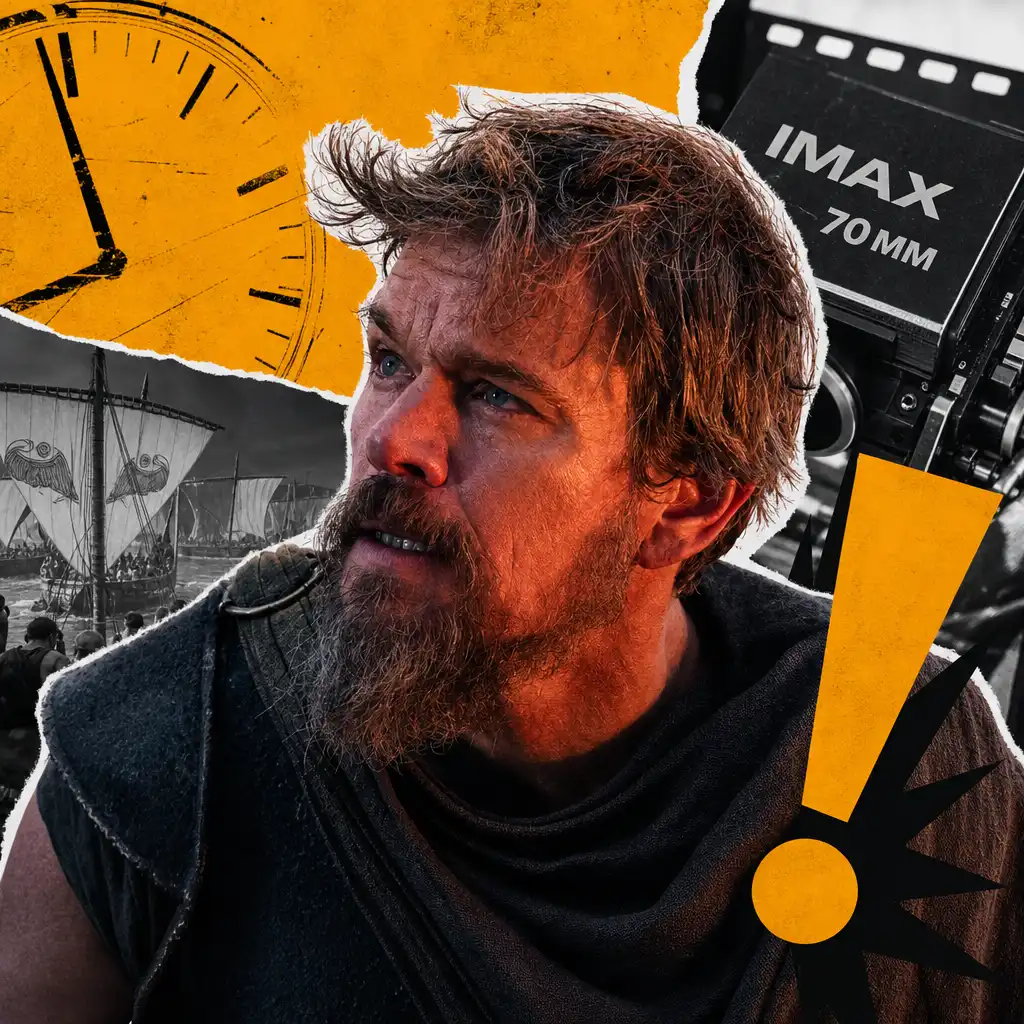
Nolan has historically tried to keep his films at or under three hours because of the limits of IMAX film projection. The platters that physically hold 70mm IMAX film reels are not built to handle much beyond that length.
For Oppenheimer, Nolan had to work with IMAX to slightly extend the platters so the film could be shown in its preferred format at exactly three hours. With The Odyssey coming in at 2 hours and 53 minutes, he is once again working extremely close to that ceiling.
It is not yet known whether Nolan had to cut material to stay within those technical restrictions. The source material, Homer’s Greek epic, is not exactly small. It covers war, gods, monsters, family, loyalty, revenge, and one man’s very complicated trip home. Compressing that into a single feature film, even a very long one, is a serious narrative challenge.
Ticket sales have already started in limited form
The runtime appeared ahead of broader ticket availability. The Odyssey already had a limited ticket presale last July, allowing fans to book seats for opening weekend 70mm IMAX showings well before the film’s first trailer was released.
More tickets are expected to go on sale soon for standard IMAX screenings and regular theatrical formats. That rollout is likely to bring more confirmed details, including whether the 2-hour-and-53-minute listing remains the final official runtime.
The film is currently scheduled to open in theaters on July 17, 2026. It is positioned as one of the biggest releases of a crowded summer season, alongside Steven Spielberg’s Disclosure Day, Spider-Man: Brand New Day, and Supergirl.
The film has already drawn online controversy
Even before release, The Odyssey has become a familiar kind of internet battleground. Some of the conversation has focused on the casting of Oscar-winning actor Lupita Nyong’o as Helen of Troy and Clytemnestra, Helen’s sister.
Nyong’o addressed the backlash directly, making clear that she does not plan to spend her time arguing with every critic online.
“I’m not spending my time thinking of a defense. The criticism will exist whether I engage with it or not,” she said.
That response is straightforward, and probably the only sustainable one. The debate around casting in major historical or mythological films tends to continue whether the people involved participate or not.
Nolan has defended the film’s historical choices
The film has also been criticized for perceived “historical inaccuracies,” particularly around accents, dialogue, and costume design. Some viewers objected to the use of the word “daddy,” which Robert Pattinson’s Antinous uses to taunt Tom Holland’s Telemachus.
That moment led to arguments about how language changes over time, how much period-accurate dialogue matters in a film, and whether audiences actually want ancient characters speaking in a way that would be historically plausible but dramatically stiff.
Others have focused on the armor shown in the film, with some arguing that it looks more theatrical than what soldiers and warriors of the era would have worn. Nolan defended those design choices in an interview with Time magazine, saying the film’s portrayal is “feasible” and was made with serious thought.
“Hopefully they’ll enjoy the film, even if they don’t agree with everything,” Nolan said. “We had a lot of scientists complain about Interstellar. But you just don’t want people to think that you took it on frivolously.”
A huge cast for a huge story
The Odyssey brings together a notably large ensemble cast, including Matt Damon, Tom Holland, Robert Pattinson, Zendaya, Anne Hathaway, Jon Bernthal, Benny Safdie, Charlize Theron, Lupita Nyong’o, and many others.
That cast, combined with Nolan’s scale of production and the cultural weight of the source material, explains why the film is already attracting both excitement and scrutiny. Audiences are not just waiting to see whether Nolan can stage the spectacle. They are waiting to see how he turns one of literature’s most famous journeys into a movie with emotional shape, not just impressive running time.
At nearly three hours, he has given himself plenty of room. Not unlimited room, because IMAX film is apparently still the strictest editor in the building, but enough to make expectations very high.