Nicolas Cage calls the MCU a “well-funded and glorified WWE,” arguing that Marvel’s films increasingly amount to highly respected actors wearing absurd costumes until the fighting begins. His comments at Fan Expo Dallas quickly spread across social media, where users either agreed or pointed toward his own substantial history with superhero projects. The internet, as ever, can hold two thoughts at once when properly motivated.
“I do say this with love,” Cage said during the convention discussion, according to The Playlist. “When I see these 50-plus and otherwise intelligent and remarkably gifted thespians putting on these ridiculous outfits and getting ready for the fight, let’s face it, it’s all cutting to the fight. It’s hard for me not to be reminded that the MCU is becoming a well-funded and glorified WWE.”
What superhero roles has Nicolas Cage played?
Cage has never appeared in the Marvel Cinematic Universe itself, but he is hardly observing comic-book entertainment from a safe distance.
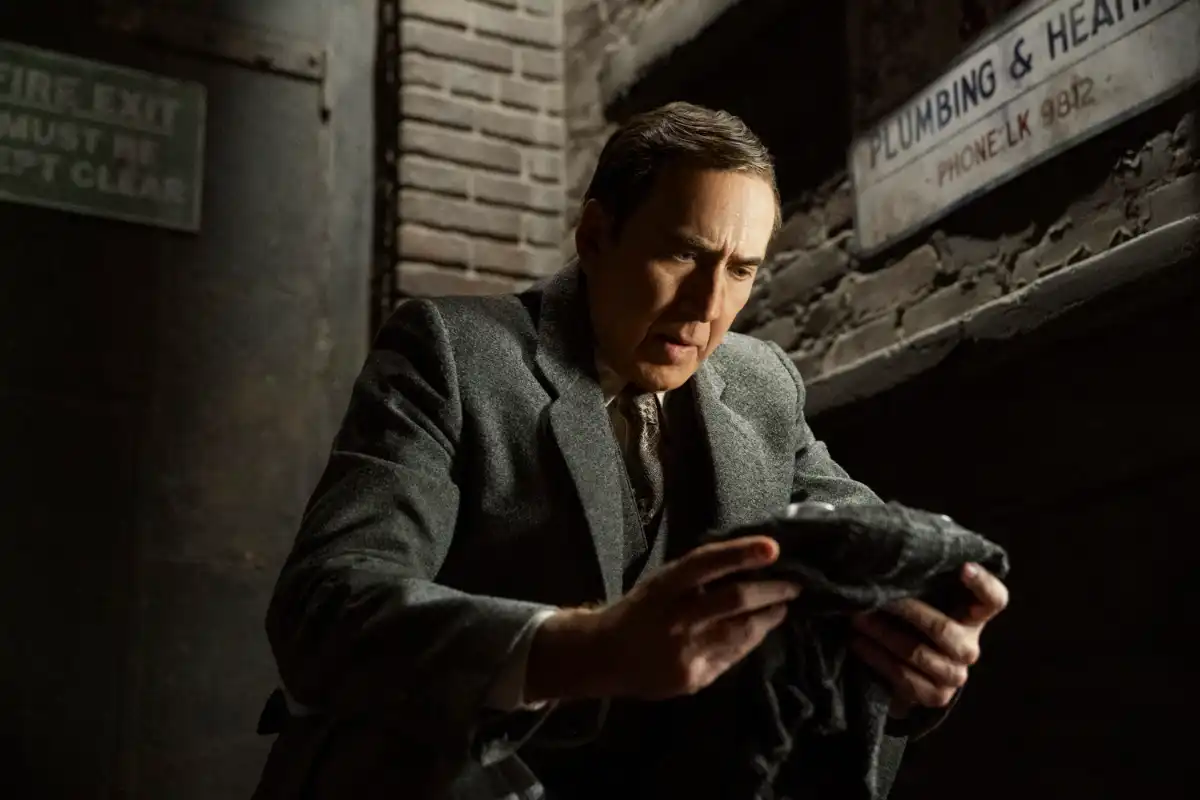
He recently starred in Sony’s Marvel series Spider-Noir, playing the title character across its eight-episode first season. The show was later canceled, leaving Cage with one full season of monochrome superhero detective work.
Long before that, he played Johnny Blaze in two Marvel adaptations:
- Ghost Rider in 2007
- Ghost Rider: Spirit of Vengeance in 2012
The character is now due to enter the MCU with Ryan Gosling taking over the role. Shawn Levy is directing the new Ghost Rider film, which is scheduled for release on July 28, 2028.
That history gave social media users ample material after Cage criticized older actors dressing up for elaborate screen battles. Still, participation does not automatically cancel observation. If anything, two flaming-skull films probably qualify as field research.
Why did Cage agree to make Spider-Noir?
Based on the Marvel Comics character Spider-Man Noir, Spider-Noir was adapted for television by Oren Uziel and set during the Great Depression.
Cage played Ben Reilly, a worn-down private investigator working in 1930s New York. Following a deeply personal tragedy, Reilly must confront his former life as the city’s only superhero.
Before the series premiered, Cage told Variety that the comic-book connection was not the main attraction. He was more interested in the decision to present the show in black and white, drawing on classic film noir and German expressionism.
“I wanted to try to create an essence of some of my favorite old world actors because I wanted to embody that style, Bogart, Cagney, Edward G. Robinson, and designed my performance to fit within the black-and-white format,” he said.
Why was television a risk for Cage?
Cage also admitted that moving into an episodic television production made him nervous. His performance combined the mannerisms of classic Hollywood actors with the heightened visual world of Stan Lee’s Spider-Man, which is not exactly the safest route to understated realism.
“It was scary, and it was risky,” Cage said. “I was constantly worried that I was going to get fired, because I was doing this thing of channeling old actors and colliding it with Stan Lee’s masterpiece that is Spider-Man to create this Roy Lichtenstein pop-art sensation of sorts.”
He added that he did not know whether the approach had worked until he watched all eight episodes.
The contrast helps explain his latest criticism. Cage has repeatedly embraced superhero material, but usually through stylized performances, noir influences or aggressively strange characters. His complaint is not that actors should avoid comic books. It is that the genre too often recruits gifted performers, places them inside expensive costumes and then proceeds directly to another fight scene.