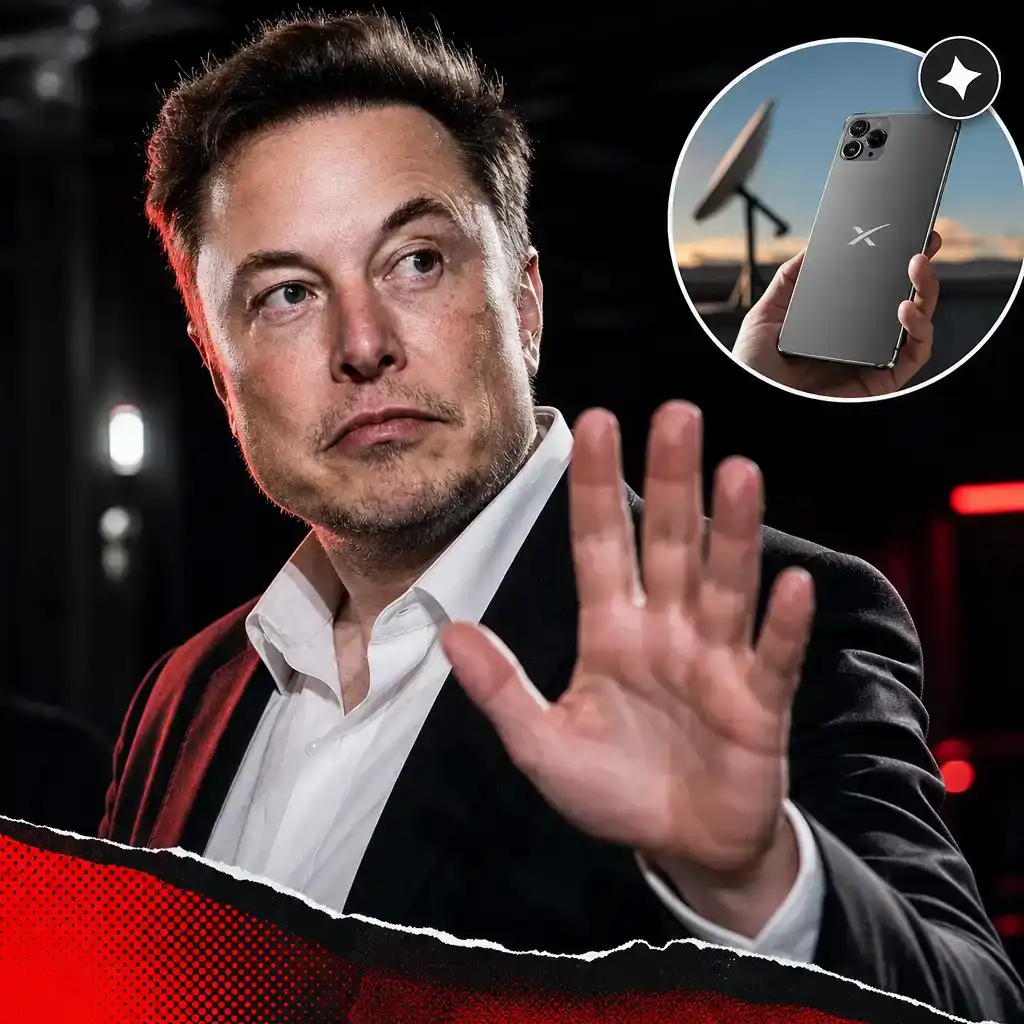
Elon Musk is pushing back hard on a report about a SpaceX AI phone prototype, calling the claim “utterly false” after The Wall Street Journal said the company had shown investors a handset-style device ahead of its June initial public offering.
The report, published Wednesday, said SpaceX displayed what was described as a “handset-like prototype” to some investors before launching what the paper characterized as a record-breaking IPO. According to the account, the device was thinner than an iPhone, because apparently even speculative hardware must begin by challenging Apple’s tape measure.
What the report claimed SpaceX showed investors
According to The Wall Street Journal, investors were told the prototype would run on a Qualcomm Snapdragon chip. The device also reportedly used a custom, AI-enabled operating system with features powered by xAI, the artificial intelligence company owned by SpaceX.
That combination would have placed the concept somewhere between a satellite-connected phone, an AI device, and a direct challenge to the consumer smartphone market. It would also have marked a notable shift for SpaceX, a company better known for rockets, satellites, and the Starlink internet network than for trying to squeeze into people’s pockets.
Musk, however, denied the report outright. His response did not leave much room for interpretation: “utterly false.”
Why Starlink keeps pulling the phone rumors back
The phone speculation has not appeared in a vacuum. Last week, the Financial Times reported that SpaceX chief operating officer Gwynne Shotwell told investors the company was considering launching a mobile service in the United States that would connect to its Starlink satellite network.
That would be a different step from building a phone, but it is close enough to keep analysts and competitors watching carefully. Some analysts have also speculated that SpaceX could acquire T-Mobile, a move that would instantly give it a major position in the wireless market instead of requiring it to build one customer by customer.
Starlink is currently SpaceX’s only profitable business, which gives every mobile-related hint more weight. A satellite network that can support direct-to-phone service could open new revenue streams, especially in rural areas, emergency zones, and places where traditional towers are either unreliable or absent.
Still, offering mobile connectivity is not the same as manufacturing a handset. One requires network infrastructure and carrier agreements. The other requires supply chains, software support, retail strategy, customer service, and the quiet despair of debugging battery drain complaints at scale.
Musk has resisted the idea before
Musk has previously made clear that building a phone is not high on his list of preferred life experiences. At an event in Pennsylvania last year, he said, “the idea of making a phone makes me want to die.”
He did not completely rule it out, though. In the same remarks, Musk added, “if we have to make a phone, we will, but we will aspire not to make a phone.”
That is the sort of statement that invites speculation, especially from investors trying to understand how SpaceX might expand Starlink beyond home internet terminals and satellite service plans. It also gives Musk room to deny any current phone project while leaving open the possibility of one if market conditions push the company there.
In February, Musk again tried to shut the door. After Reuters reported that SpaceX was working on a phone for Starlink, he said the company was “not developing a phone.”
What matters for customers and investors
For now, the confirmed picture is narrower than the rumor: SpaceX is linked to discussions about mobile service through Starlink, while Musk denies that the company is developing or presenting an AI phone as described.
That distinction matters. A Starlink-backed mobile service could affect coverage, pricing, carrier competition, and emergency connectivity in the US. A SpaceX-built phone would be an even bigger swing, putting the company into direct contact with consumers in a category dominated by Apple, Samsung, and established mobile chip and software ecosystems.
The report and denial also show the tension around SpaceX’s next growth story. Investors are watching Starlink because it is profitable. Analysts are watching wireless because satellite-to-phone service could reshape parts of the mobile market. Musk, meanwhile, is still saying he would rather not build a phone.
For anyone keeping score, that leaves the supposed handset prototype in the familiar Musk-era zone between strategic possibility, investor chatter, and a very public denial.