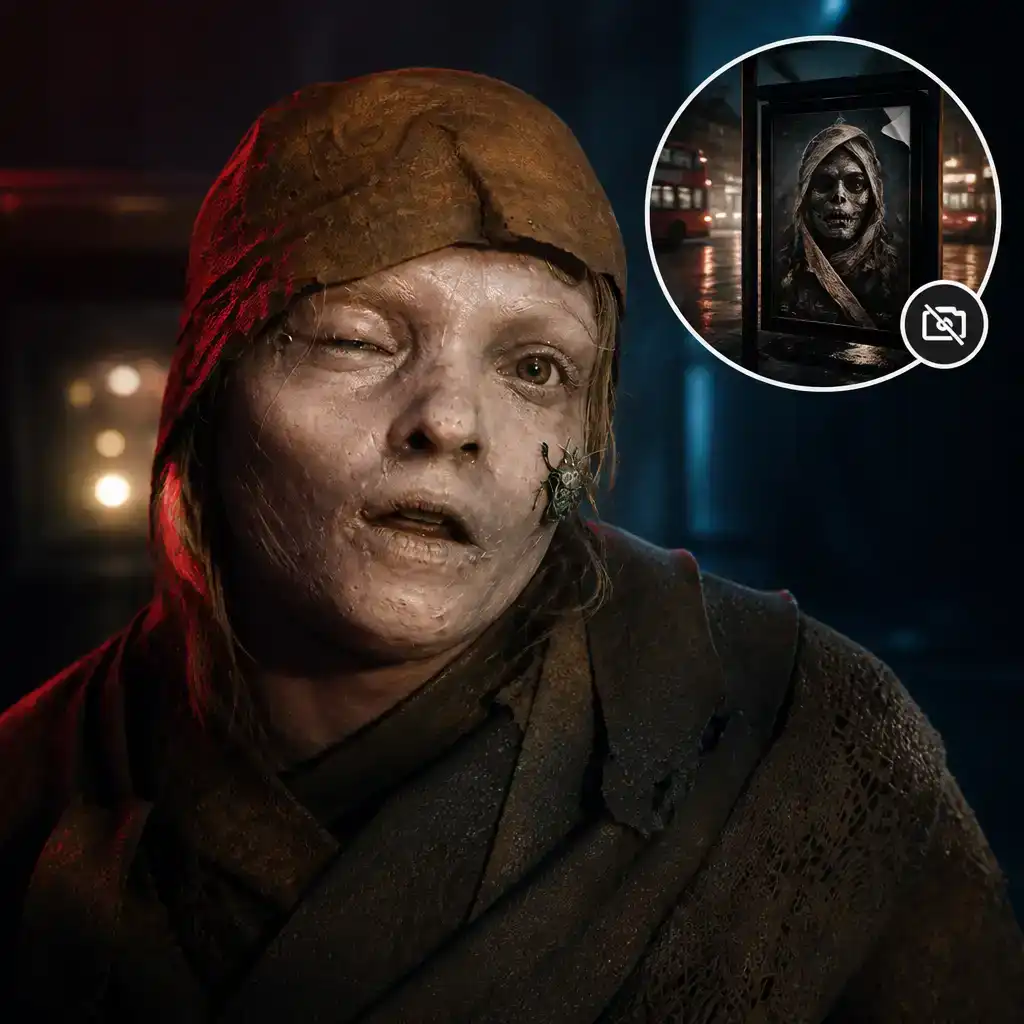
The The Mummy poster ban is not simply a case of horror advertising doing its job too well. Britain’s advertising regulator found that the campaign placed what looked like a dead child in public spaces where young children could not reasonably avoid it, including the London Underground and a site visible from a nursery.
The Advertising Standards Authority received 30 complaints about Warner Bros. Entertainment U.K.’s campaign for Lee Cronin’s The Mummy. In its August 5 ruling, the regulator upheld the challenge involving outdoor posters but cleared related television and Prime Video ads.
The distinction came down to context and control. Viewers could encounter the posters during an ordinary journey or near a nursery. The screen ads, by contrast, were subject to scheduling and audience restrictions.
Why did the regulator reject the posters?
The outdoor artwork showed a close-up of a mummified female figure with grey, ashen skin, cracked lips and one swollen-shut eye. Material resembling a burial shroud covered her body and carried hieroglyphic-style markings.
According to the ASA, those details created “a realistic impression of a dead child.” The wrapping strengthened that impression, even though the image was promoting a supernatural horror film rather than presenting a real death.
Of the 30 complaints:
- 28 challenged the posters’ suitability for media that could be seen by anyone
- Six of those also argued that the image trivialized child loss or current global conflicts
- One concerned the television ad’s scheduling
- One questioned the targeting of the Prime Video version
BBC Radio 4 presenter Samira Ahmed was among those who complained. She asked: “Why is there so little consideration of the impact of such images on children? (And one might add, on bereaved parents).”
Journalist Rebecca Reid said the poster “absolutely terrified” her three-year-old. She also questioned why public advertising could carry this type of horror imagery while fast-food and clothing campaigns face detailed restrictions of their own.
Warner Bros. said the character looked alive
Warner Bros. argued that several creative decisions were intended to reduce the image’s impact. The figure had a neutral expression, one open eye and no visible sarcophagus or restraints. The studio said the open eye indicated life and that the character was meant to be understood as a living teenager or young adult, not a corpse.
The company also pointed to its policy of keeping outdoor campaigns for horror films at least 100 metres from schools. There was, however, a practical gap: the industry dataset used for that policy covers schools and further-education sites but not nurseries. Small children apparently require a different spreadsheet.
The placement process was not entirely straightforward either. Global, which accepted the London Underground posters, had received positive guidance from the Committee of Advertising Practice’s Copy Advice team before publication. Ocean Outdoor said it received no complaints about its placement.
That advice did not prevent the ASA from reaching a different conclusion once the campaign was running. The regulator found that untargeted outdoor display made the image likely to distress young children and breached CAP Code rules 1.3 and 4.2.
The posters must not appear again in the form challenged. Warner Bros. was also instructed to ensure that future advertising likely to frighten children is not placed where they are likely to see it.
Why were the television and streaming ads cleared?
The companion television and Prime Video ads used a different approach. They showed a family receiving a call about a daughter who had disappeared eight years earlier. Her father then asked what she was doing inside a 3,000-year-old sarcophagus. The closing text read: “Some Things Are Meant to Stay Buried.”
Both versions carried a post-7:30 p.m. restriction approved by Clearcast, the organization that reviews most British television advertising before broadcast.
The ASA decided the scenes were unlikely to cause serious distress and found that the restrictions adequately reduced children’s exposure. Clearcast data showed an average children’s index of 31 across the television placements. An index of 100 represents typical child viewership, so the campaign’s measured child audience was comparatively low.
The regulator also rejected the complaint that Prime Video should have targeted the ad more narrowly. No further action was required for either screen version.
In reaching its decision, the ASA considered BCAP Code rules covering responsibility, harm, children and scheduling, along with CAP rules governing responsible advertising and distress. The ruling illustrates why the same horror campaign can be acceptable after 7:30 p.m. but unacceptable on a station wall at breakfast time.
The ruling did not uphold every objection
The ASA rejected claims that the poster trivialized bereavement or ongoing conflicts. It found that the film title and promotional text gave viewers enough context to understand that the image was fictional marketing, even if some people still considered it distasteful.
The film itself received an 18 certificate in Britain, although Warner Bros. said its classification had not been confirmed when the advertising campaign began. It opened in the U.K. on April 17, 2026.
The Numbers estimates that the movie earned about $90.6 million worldwide, including $29.2 million in North America and $61.4 million from international markets. Its reported U.K. total was approximately $3.1 million. The Associated Press reported a $22 million production budget, a $13.5 million North American opening, a C+ CinemaScore and a 45% Rotten Tomatoes rating at that stage of its release.
The campaign also encountered trouble outside Britain. In New Zealand, 11 complaints followed the appearance of a trailer during M-rated programming on TVNZ’s streaming service. That case was settled as a media-placement error rather than a finding against the trailer itself.
No later Warner Bros. response to the British ruling has been reported. The larger issue remains the uneven protection offered by outdoor advertising systems: schools may be mapped and excluded, while nurseries can fall outside the same safeguards. For parents and young children, that technical distinction offers limited comfort when the poster is already in view.