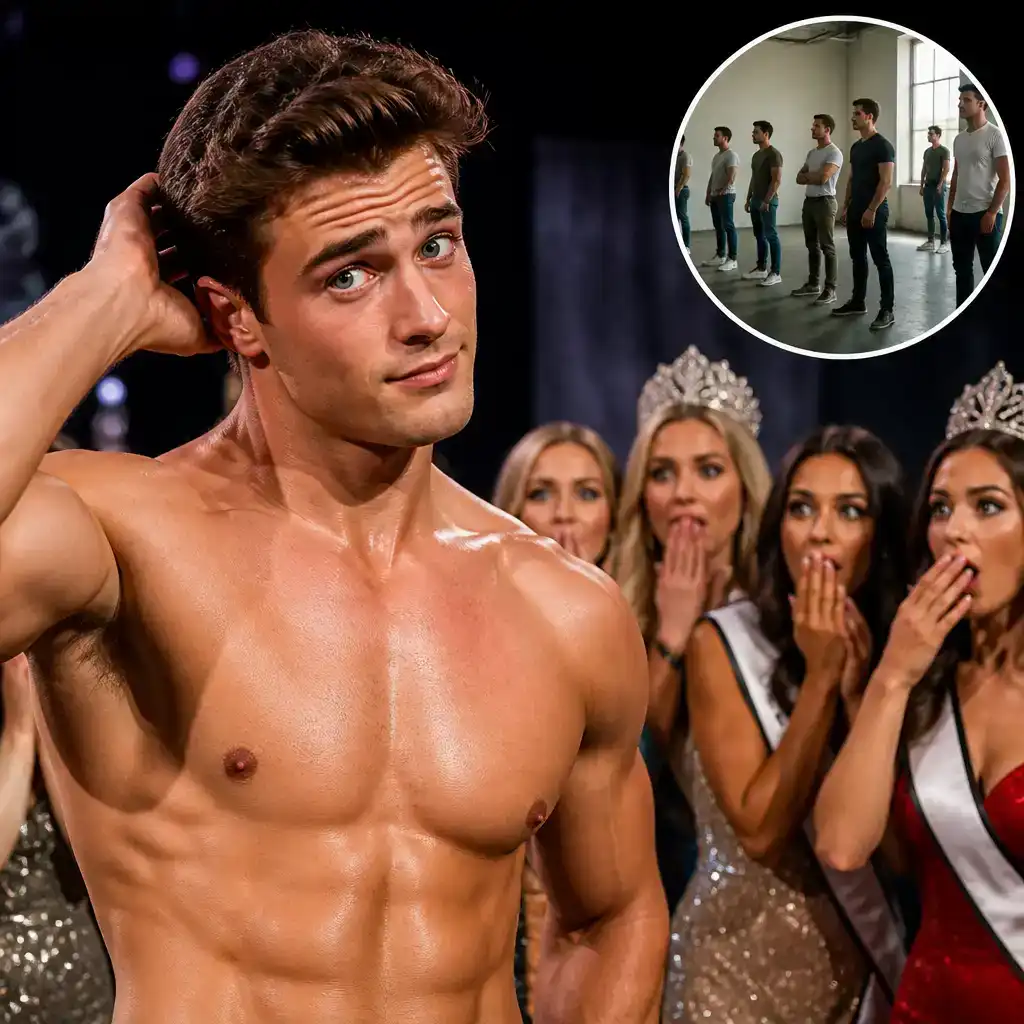
Britain appears to have encountered an unexpected national shortage: men willing to be officially judged on how much of a hunk they are.
Organisers of this year’s Mr England competition are reportedly struggling to fill the line-up for the final, with just seven men entering ahead of the event on October 11. The competition needs 12 finalists, leaving organisers searching for five more contestants — and turning to an unusual recruitment network for help.
Miss England semi-finalists are now being asked to nominate their male friends and boyfriends in an effort to bring the numbers up.
In other words, Britain may have plenty of eligible men. The difficulty, apparently, is persuading them to volunteer for inspection.
Mr England needs five more finalists
The immediate problem is fairly straightforward. According to the information provided by organisers, only seven men have entered the competition, while 12 finalists are required for the October 11 event.
That has prompted organisers to enlist women involved in the Miss England competition, asking semi-finalists to look through their own social circles for potential Mr England candidates.
Friends and boyfriends are apparently both fair game.
The recruitment push suggests the problem is not necessarily a lack of potential contestants, but a lack of men prepared to nominate themselves.
Organisers say men have been ‘slow and shy’
Mr England organiser Angie Beasley suggested that reluctance could partly reflect the different cultural positions occupied by male and female pageants.
She said men had been “slow and shy in coming forward”, raising the possibility that male competitions remain less established and socially familiar than their female counterparts.
Beasley also offered a simpler explanation.
“Maybe they are just shy about putting themselves forward,” she said.
That distinction is interesting. Entering a competition like Mr England requires contestants to make a fairly public declaration of confidence: not merely agreeing to participate after being approached, but actively deciding that they belong among the finalists.
For some prospective contestants, apparently, that may be the harder part.
Why male pageants may face a different challenge
The organisers’ recruitment problem also highlights an unusual contrast between male and female pageantry.
Beasley’s explanation is that male competitions may simply be less established and accepted. On the information available, there is no evidence establishing exactly why entries are low this year, so the shortage should not automatically be treated as evidence that men have lost interest in pageants altogether.
It could instead be a problem specific to this year’s competition, or simply reflect the awkwardness involved in voluntarily presenting yourself as Mr England material.
To my mind, the organisers’ decision to ask Miss England semi-finalists for nominations is actually the most revealing part of the story. If potential contestants are more comfortable being encouraged by somebody else than putting themselves forward, the problem may be less about finding suitable men and more about getting them over the distinctly British hurdle of publicly announcing, in effect, “Yes, I think I qualify.”
The hunt is now on for Britain’s missing hunks
With the final scheduled for October 11, organisers still need to turn seven contestants into the required field of 12.
That leaves Miss England semi-finalists with an unexpectedly important assignment: identifying the friends and boyfriends who might be willing to step forward.
Whether those nominations solve the shortage will depend on convincing five more men to do something they have so far been notably reluctant to do — put themselves forward.
Gentlemen, your country needs you. Or at least Mr England does.