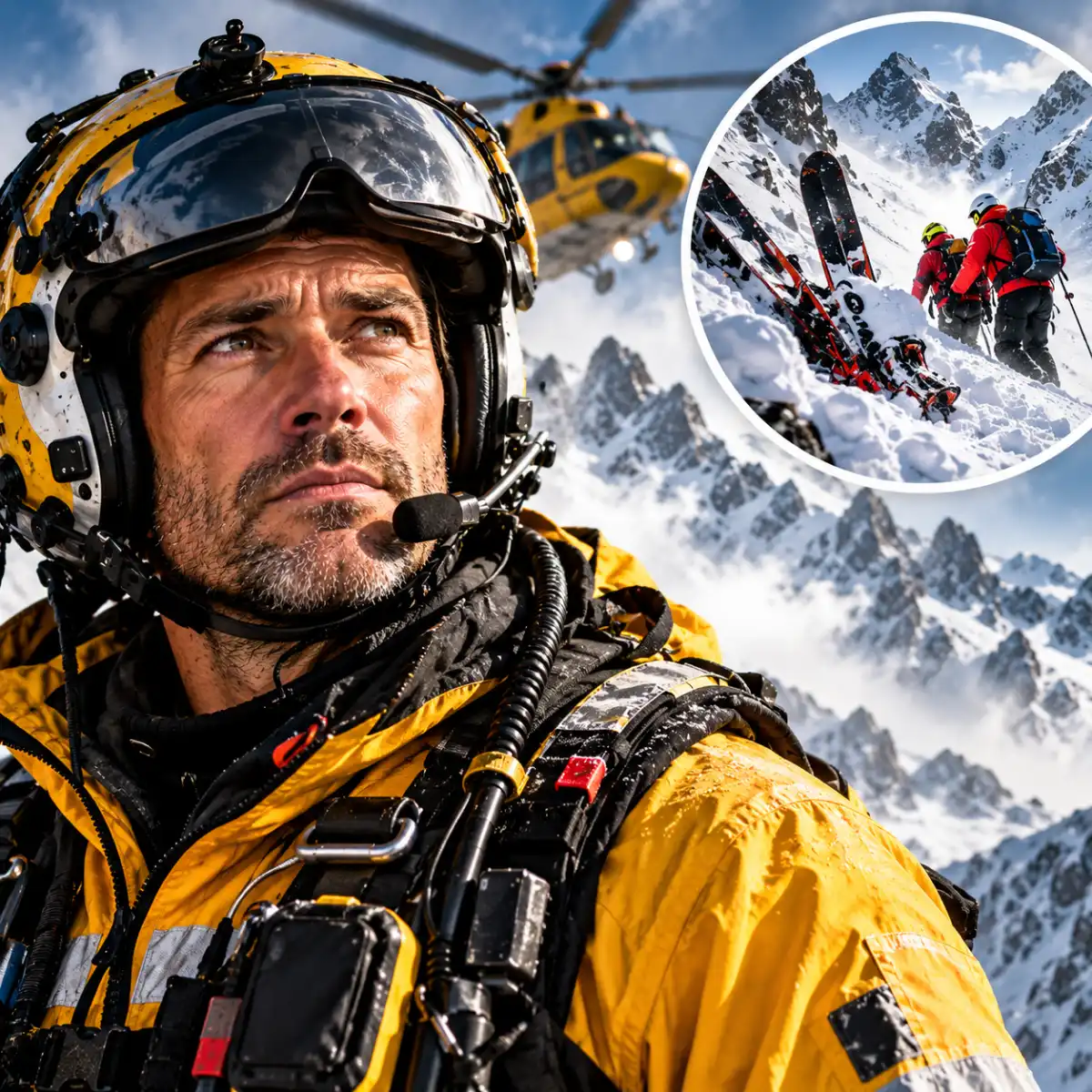
The Michael Schumacher rescue pilot who responded to the Formula 1 champion’s devastating skiing accident has described the moment he realised who his patient was, and why the celebrity surrounding the mission had to be pushed aside.
Yannick Dainese helped transport Schumacher after his December 2013 crash near the Méribel ski resort in the French Alps. The German driver had retired from Formula 1 only a year earlier, but remained one of the most recognisable figures in global sport.
Schumacher fell while skiing off-piste and struck his head on a rock. Although he was wearing a helmet, he suffered a traumatic brain injury and was later placed in a medically induced coma.
How the rescue crew learned Schumacher was injured
Speaking to French sports newspaper L’Équipe, Dainese recalled that a rescuer and a doctor jumped from the helicopter before one of them announced: “We’re going to Schumacher!”
His first reaction was disbelief. Given the circumstances, assuming it was a joke was not entirely unreasonable. That changed when the mission commander imposed unusual restrictions on the crew.
“But when the commander ordered us to remove our microphones and GoPros, and to forbid journalists from accompanying us, I understood that it was true,” Dainese said.
Authorities closed the slope to the public, allowing the rescue team to work without crowds or media interference. Schumacher was then flown to a hospital in Grenoble for treatment.
Dainese admitted that the identity of the patient added an unavoidable layer of pressure. “Subconsciously, the pressure was there because I knew he was worshipped like a god,” he said.
Even so, the crew had to treat the situation as it would any other critical emergency. To the medical team, Dainese explained, Schumacher was ultimately “just another seriously injured person”. Fame may alter the security arrangements, but it does not make emergency medicine any less urgent or complicated.
What is known about Schumacher’s condition
In the 13 years since the accident, Michael Schumacher’s family has kept details of his health strictly private. He has withdrawn entirely from public life, and those closest to him have disclosed very little about his condition.
Reports have claimed that Schumacher cannot communicate verbally and can sit in a wheelchair at his homes in Switzerland and Mallorca. His family has not provided a detailed public medical assessment, leaving much of what circulates about his health unconfirmed.
That privacy has remained consistent despite intense international interest. Former colleagues and people involved in the immediate aftermath of the crash have occasionally shared memories, but verified updates about Schumacher himself remain rare.
Dainese’s account does not offer new medical information. Instead, it provides a view of the tightly managed operation on the day of the accident, from the removal of recording equipment to the decision to keep journalists away from the helicopter.
The precautions were hardly excessive. Schumacher was a seven-time Formula 1 world champion, and news of his injuries immediately became a global story. The rescue crew, meanwhile, had the less glamorous task of getting a critically injured patient off a mountain safely.
What does Netflix’s Schumacher ’94 cover?
Interest in Schumacher’s career has continued even without public appearances from the former driver. Netflix has now released Schumacher ’94: The Birth of a Legend, a documentary centred on his first Formula 1 Drivers’ Championship with Benetton.
The film examines his early racing career but does not provide fresh information about his current health. It also revisits the 1994 San Marino Grand Prix at Imola, one of the darkest weekends in Formula 1 history.
Archival footage recounts the crashes that killed Austrian driver Roland Ratzenberger and Brazilian three-time world champion Ayrton Senna. Schumacher and his wife, Corinna Schumacher, are shown dealing with the emotional impact of those deaths. The documentary says Schumacher even considered retiring after witnessing Senna’s fatal accident.
Corinna comes closest to discussing their life together now when she talks about Paula Abdul’s song Rush Rush, which she associates with the early years of their relationship.
“That was our song back then. When I hear that song now and I’m in the car, I have to cry,” she says.
The documentary is available to stream on Netflix. It focuses on the driver Schumacher was becoming in 1994, rather than answering the questions about his health that his family has chosen, quite firmly, to keep private.