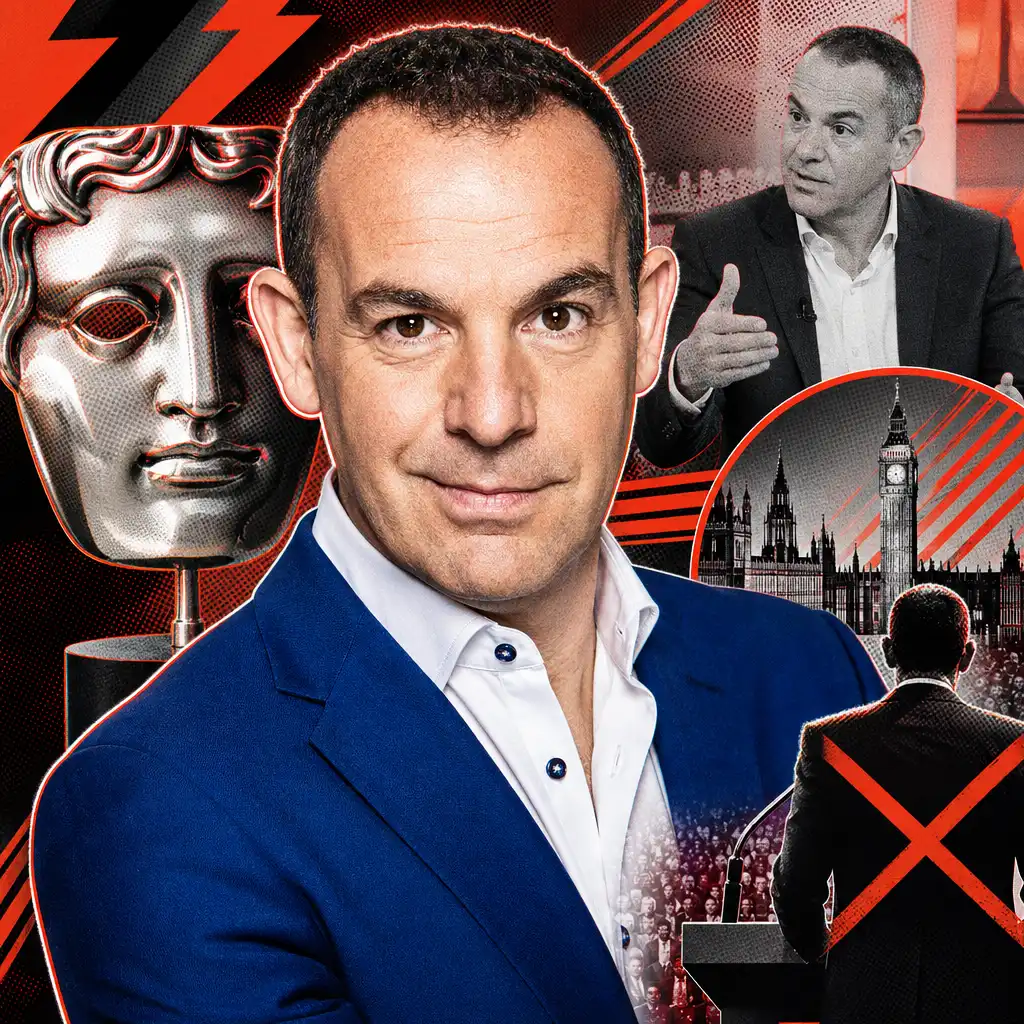
Martin Lewis has spent years pushing ministers, councils and regulators on money issues that affect millions of people. That does not mean he wants a seat in Parliament.
On April 29, it was announced that the 53-year-old journalist and consumer campaigner will receive the Bafta TV Special Award at this year’s Bafta TV Awards, which take place on Sunday, May 10. The honour recognises his impact on the British public through shows including The Martin Lewis Money Show Live, as well as his regular appearances on ITV’s Good Morning Britain and This Morning.
At a media event attended by Metro, Bafta CEO Jane Millichip interviewed Lewis about his career, including the awkward space he occupies between public service broadcasting, campaigning and government policy. Asked whether any political parties had approached him to represent them, Lewis said no official party had done so, though new groups had tried.
“No official parties have asked. There’s often, over the years, been new parties trying to set up, and they’ve come and said, ‘Listen, we’re looking for a party leader,’” he said.
His answer was not exactly ambiguous.
“As I tend to say, I would prefer to wire my nipples to electrodes, not in a pleasant way, than go into politics. I’m not sure I can be any clearer. So it’s not going to happen.”
Why Bafta is honouring Martin Lewis
Bafta’s TV Special Award is reserved for figures and programmes judged to have made a significant contribution to television and the wider public. Previous recipients include:
- ITV for Mr Bates vs The Post Office
- Lorraine Kelly
- David Olusoga
- Horrible Histories
- Shonda Rhimes
- This Morning
Lewis’ selection reflects a career built on practical financial advice, delivered to mass audiences at moments when household money has become a national pressure point. His work is not just about explaining interest rates or energy bills. It often involves turning individual confusion into policy questions that ministers have to answer.
“A-party-political,” but still political
Lewis stressed that his campaigning is deliberately not aligned with any party, even when the issues are clearly political.
“I don’t want to confuse everyone. A lot of the work I do, the campaign work, is innately political, but it’s a-party-political,” he said. “One of the reasons I think I managed to retain the connection with people is that it’s no fear and no favour.”
He said his focus is always on the people in power at the time.
“I’m focused on governing parties. Whoever the government is, is the people I talk to, because it’s not a political job. It’s an active job. It’s a what’s-happening job. I will criticise any government of any party, but I will also commend any government of any party.”
That distinction matters to Lewis. His public role depends on trust across a broad audience, including people who may agree with his advice but not each other’s politics. It is also the reason he says he can apply pressure to governments without becoming part of the party system himself.
His biggest win this year
Lewis named council tax debt collection as his “biggest win” of the year, a policy area affecting around three million people annually.
He said that every year, 1.7 million people have bailiffs sent in for council tax debt collection within three months of missing a monthly payment. He also highlighted the speed at which the system can escalate: within three weeks of a missed monthly council tax payment, councils are legally allowed to demand the full year’s bill, and Lewis said most councils do.
Two years ago, Lewis began campaigning on the issue with his charity. He said they met Angela Rayner, who “got it and was brilliant.”
Following a government consultation, it was announced two weeks before the Bafta news that the deadline had been extended to 63 days. Lewis noted that two months is widely treated as a “breathing space” period that can allow people to stabilise their finances.
He said he would have preferred a longer gap, but described the change as “a hard fight” on an issue that had been in place for 34 years.
“If you don’t say thank you when they do the stuff you’ve asked for, they’re not going to do it again, because you need to give them some political credence,” he said.
“So I stay resolutely apolitical, because that way you can criticise and commend, and I think it’s important to criticise and commend, but not because I have any support. I’m not a member of any party. I’m not interested in any of that type of stuff. So thank you, but I’ll stay out.”
The pressure of being trusted
Lewis is widely seen as one of the UK’s most trusted public voices on personal finance, but he made clear that trust can be heavy.
Asked by Metro whether he feels the pressure, he replied: “Only constantly. My anxiety levels are always high. They are always high. I had it in the early days, ‘You’re like a god to me.’
“I wouldn’t be able to leave the house the next day when that was said to me. I couldn’t cope with it. I’ve got a little bit better now.”
He also warned against following his guidance without understanding the reasoning behind it.
“The worst thing people say to me is, ‘Oh, I’m not sure I understand it, but I always do what you say,’” he said. “You have to understand it because what I say is specified for different individuals.”
Lewis said that when he gives financial guidance, he tries to include clear caveats so people using his Money Saving Expert website understand the possible risks as well as the benefits.
“I know so many of those people say to me, ‘I just do it, because you say I do it,’ and I’m sitting there going, ‘Did I go too soon?’ Because I can’t know, and you have to make a call at some point. Do I feel the pressure? Yes,” he said.
The Bafta TV Awards take place on Sunday, May 10.