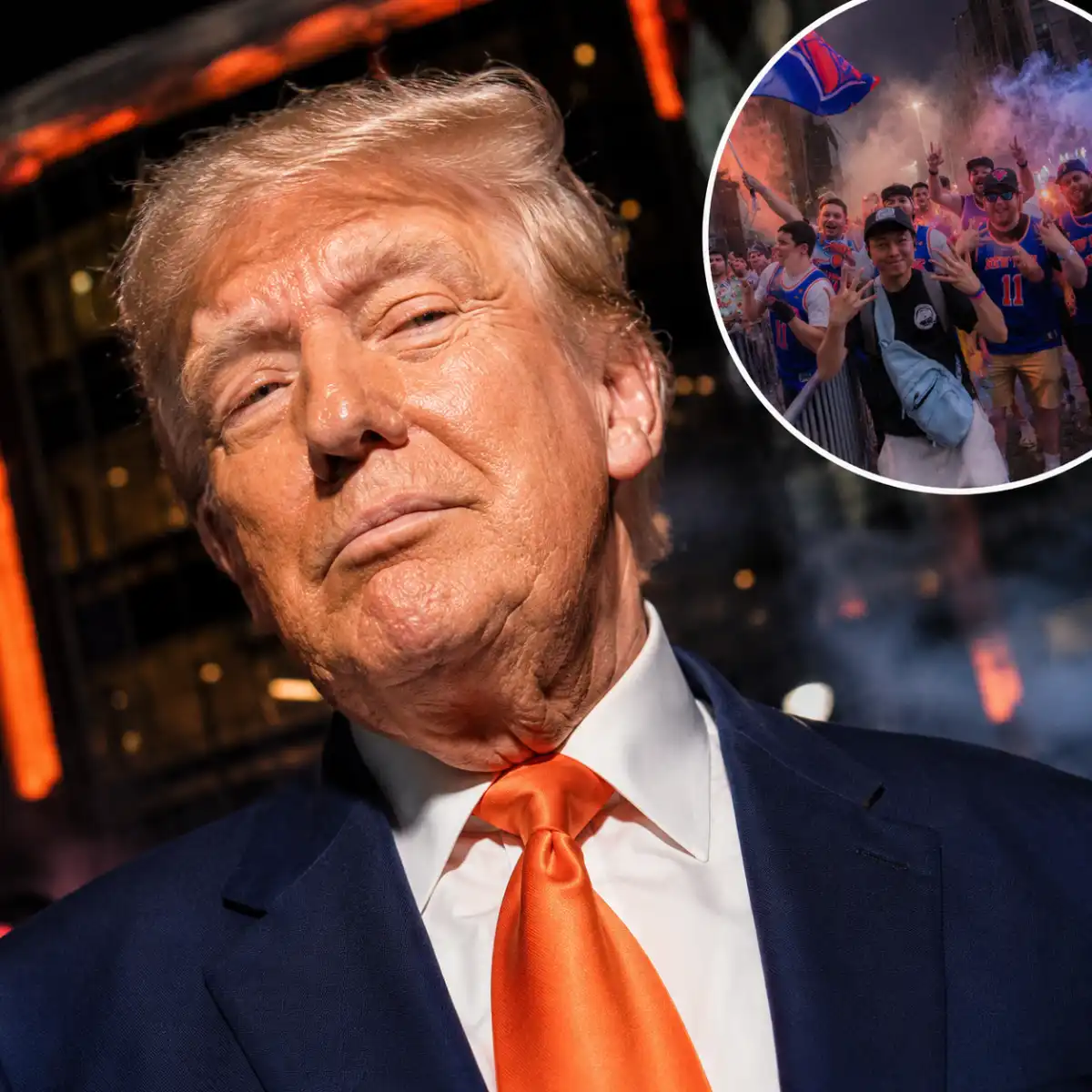
At 3 p.m. on Wednesday, a few hours before Game 4 of the Knicks vs. Spurs NBA Finals, some New Yorkers outside Madison Square Garden reached for copal and sage. The point, depending on your tolerance for ritual, was either ceremonial cleansing or civic maintenance. Either way, Knicks fans blame Trump for bringing the wrong kind of energy into the building on Monday night.
“We’re saging the Madison!” said Deisy, who wore a bohemian orange-and-blue outfit in the Knicks’ colors, with layered necklaces and ceremonial ornaments. “We had really bad energy in this space on Monday. MAGA Mussolini was here, and we gotta get rid of that energy!”
Why fans were burning sage outside Madison Square Garden
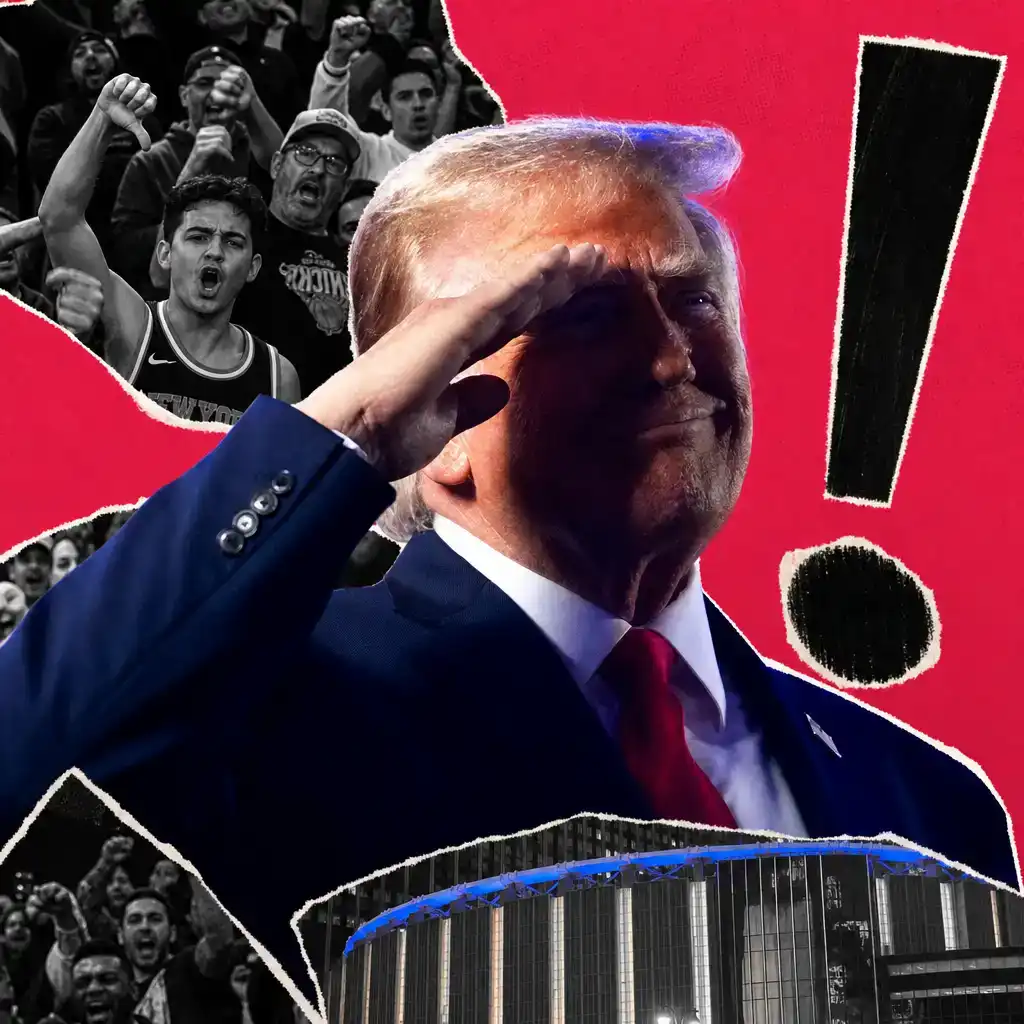
The phrase “MAGA Mussolini” was aimed at President Donald Trump, who attended Monday’s game and became the first sitting U.S. president to appear at the NBA Finals.
His visit was not exactly a warm, bipartisan sports moment. When Trump appeared on the Jumbotron during the National Anthem, thousands of fans booed. Later, videos spread on social media that seemed to show him nodding off while seated beside New York Knicks owner James Dolan and his granddaughter, Kai Trump.
White House spokesperson Davis Ingle rejected that idea with the calm tone for which modern political communications are so widely admired. “Anyone ridiculously claiming the President was asleep is either lying or has severe brain damage,” he said.
By Wednesday afternoon, outside the Garden, the mood had become a mix of playoff nerves, superstition, politics and crowd-control frustration. Variety spoke with dozens of Knicks fans and spectators around the arena before Game 4. After the Knicks opened the series with a 2-0 lead and then dropped Game 3, some fans had found a convenient explanation: Trump had brought “bad voodoo,” “weird energy” and “out-of-the-blue fights that weren’t happening before.”
How Trump became part of the Knicks’ playoff mythology
Avery, a Knicks fan wearing an oversized gold chain and holding a sign that read “F*ck Trump. Let’s go Knicks,” put the case in classic sports-fan terms: evidence, emotion and absolutely no hesitation.
“He’s a curse to every team that he picks,” Avery said. “He picked the Chiefs to win. They lost. He went to a Mets game. They lost. He went to the Knicks game, picked them to win. We lost.”
That is not exactly peer-reviewed analysis, but playoff fandom rarely waits for a committee.
The complaints were not only about partisan politics or supernatural blame-shifting. Trump’s attendance on Monday also brought tighter security around Madison Square Garden, and that changed the atmosphere for fans who had gathered outside during Games 1 and 2.
A 12-block barricade, staffed by hundreds of New York Police Department officers and security personnel, blocked access to anyone without a game ticket or “business specific to that area.” That meant the huge street-level watch parties outside the Garden, one of the more visible signs of the Knicks’ run, were effectively shut down.
What the barricades meant for fans and vendors
For some people outside the arena, the barricades were less about politics than logistics. Sadat, one of the many vendors selling Knicks merchandise near the perimeter, said the restrictions “absolutely” hurt independent sellers as well as nearby storefronts that had hoped to benefit from the crowds.
“When you have to walk three blocks this way, four blocks that way, it makes a difference,” he said.
By Game 4, there were no Secret Service agents in view, but the barrier stayed up. Madison Square Garden had requested a permit for a watch party of 500 to 999 fans, and Mayor Zohran Mamdani said the city approved a permit for 999 people. Dolan, however, ultimately canceled the event.
“Mr. Dolan has now decided to cancel the watch party,” the mayor wrote on X. “I know this is breaking hearts across our city, but if there’s one thing Knicks fans don’t need permission for, it’s showing up for our team wherever we may be, no matter the block or the borough. Knicks in five.”
Inside the perimeter, a hip-hop artist running a DJ stand said younger fans were trying to be part of something larger than a game on a screen. “That’s cool, they’ve got energy,” he said. “What’s missing is accountability from the old heads to tell them, ‘Young boy, chill out!’”
Not everyone saw the security as overreach
Some fans were more accepting of the expanded police presence. Knicks supporter Row Jones said he was comfortable with the barriers because “safety is number one.” Officers, he said, were working overtime “to keep people safe” and were “doing the best with what they have.”
Getting officers to discuss the scene was not simple. Around 2 p.m., hundreds gathered for duty in Herald Square before spreading out along the barricades near the Garden. Most declined to speak, and some said they had been told to stay quieter than usual during the hectic shift.
Officer Niwa, stationed across from Moynihan Hall, was more willing. His partner, wiping sweat from his forehead in the muggy 86-degree heat, offered a concise scouting report: “He’ll talk to you. He don’t care.”
“It’s crazy, I’ve never seen New York like this before. This is insane,” Niwa said, adding that many officers were working 16-hour shifts. “We had some small incidents [during Game 3], but nothing crazy. And that’s fine, we’re going to take that.”
Where Knicks fans gathered when MSG was locked down
With the area around Madison Square Garden restricted, fans improvised. Some went to the official watch party in Bryant Park. Others listened to the game on the radio outside packed bars in the Financial District. At Pig Beach BBQ in Astoria, fans waited more than two hours to get inside, where ESPN cameras were set up near an outdoor screen to capture the crowd’s reactions.
The workarounds showed the obvious: if Knicks fans cannot gather in one place, they will gather in several. Still, for some, the restrictions around the Garden made the moment feel smaller and more controlled than it should have.
“Honestly, it’s the antithesis of what New York should be about,” said Pierre, a Knicks fan wearing a gold chain with a platano charm, a good-luck symbol honoring Dominican player Karl-Anthony Towns. “Just let us be free to celebrate and support our team. We’re not caged animals!”
Pierre said he understood why officials worry about crowd behavior, but argued that a few troublemakers should not define everyone outside the arena.
“I understand there are some bad apples,” he said, “but that doesn’t represent the entire Knicks fan base.”
For one afternoon, Knicks fandom outside Madison Square Garden became a strange New York blend: playoff hope, police barricades, street vendors, political resentment, spiritual smoke and the firm belief that a basketball team’s fate can be altered by one unwelcome guest. In sports, people call that irrational. In the playoffs, they call it preparation.