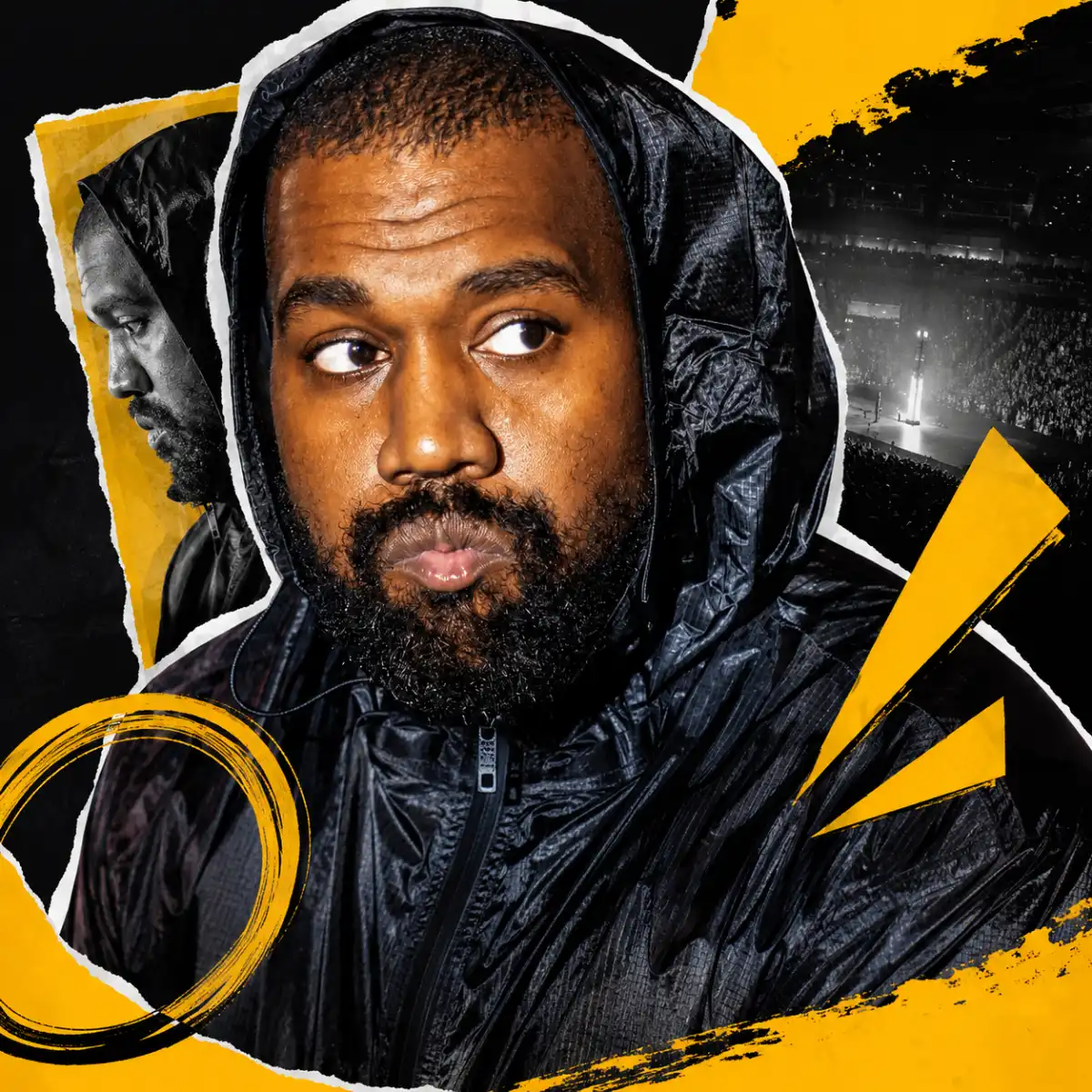
West’s planned Italy concert has become the latest European show to be blocked, postponed or scrapped, as officials weigh public safety concerns around an artist whose recent controversies are hard to separate from the stage.
The 48-year-old rapper, who has gone by Ye since 2018, had been scheduled to appear at the Pulse of Gaia Festival at RCF Arena in Reggio Emilia on July 18. Local prefect Salvatore Angieri has now prohibited the event, citing concerns over public order, expected crowd numbers and the possibility of counter-demonstrations.
Why did officials cancel the Reggio Emilia show?
The Reggio Emilia government said the decision followed a committee review of public order and safety issues linked to West’s concert and another major event planned at the same venue.
In a translated statement, officials said: “The meeting was dedicated to examining the public order and safety issues associated with [West’s] concert and the Travis Scott event, also scheduled at the RCF Arena.”
They added that, after further checks, the prefect “ordered the prohibition of both concerts.”
The statement said the decision involved “two events scheduled for consecutive dates at the RCF Arena, a venue with a capacity of approximately 103,000 spectators,” and was made “to ensure public order and safety.”
Officials also pointed to the practical reality of hosting two very large events within 24 hours, which is the sort of logistical puzzle no local authority enjoys inheriting.
Travis Scott’s festival date was also stopped
The second event, due to take place on July 17, was set to feature Travis Scott. That festival was also cancelled because of the back-to-back scheduling and the size of the expected crowds.
The government statement referenced the “close temporal connection between the events and the large crowds expected within 24 hours.” It also said the review considered the cancellation of previous concerts by West in other countries and “the real risk of counter-demonstrations.”
Scott’s own live event history was part of the wider context. In 2021, 10 people died during a crowd crush at his Astroworld festival in Houston, Texas. The Reggio Emilia statement did not suggest the two situations were the same, but it made clear that crowd safety was central to the decision.
West’s recent comments remain part of the concern
The cancellation comes after a long run of controversy around West, including remarks widely condemned as antisemitic. He also released a song titled Heil Hitler and advertised a T-shirt featuring a swastika on his website.
Those actions have followed him onto the live calendar. Authorities and promoters are not just booking a rapper with decades of hits behind him anymore. They are also taking on the public reaction to statements and stunts that have drawn anger from Jewish communities, anti-hate groups and many former business partners.
This is where a celebrity news story becomes something bigger. A concert is not only a performance, especially when it is staged for tens of thousands of people. It is also a public gathering, and officials in Italy decided the risk around this one was too high.
Other European dates have already run into trouble
Italy is not the first country where West’s planned performances have faced serious resistance.
In April, his planned appearance at London’s Wireless festival was cancelled after the United Kingdom Home Office refused to grant him a visa. The Home Office said his presence “would not be conducive to the public good.”
Soon after that, West announced he would postpone a show in Marseille, France, following calls for him to be barred from entering the country.
Other planned shows in Poland and Switzerland were later cancelled. His scheduled appearance at Algarve Stadium in Portugal, however, has not been called off.
Torcato Jorge, chief executive and co-founder of organiser Raya Culture, told Euronews Culture in April: “It’s a music event that’s going to happen.”
Portugal’s Ministry of Internal Affairs also told the outlet it was “closely monitoring the situation” for any possible threats to national security or public order.
The controversies that changed West’s public standing
West’s public image has shifted dramatically over the past several years. Once one of the most commercially powerful names in music and fashion, he was dropped by major brands including Adidas and Gap after behaviour condemned as “hateful” and “inexcusable.”
Those business breaks hit hard. His net worth reportedly fell from around $2 billion, or £1.3 billion, to about $400 million, or £348 million.
His other controversial statements and positions have included:
- Praising Adolf Hitler
- Opposing abortion and gay marriage
- Supporting gun rights
- Endorsing Donald Trump
- Defending Sean “Diddy” Combs against allegations of rape and sexual assault
- Saying the continuation of slavery for 400 years “sounds like a choice,” a comment he later apologised for
- Calling the Black Lives Matter movement a “scam”
In December 2022, shortly after his divorce from Kim Kardashian was finalised, West claimed his bipolar disorder had been a “misdiagnosis from a Jewish doctor.”
West later apologised in a full-page letter
In January this year, West took out a full-page advertisement in The Wall Street Journal titled “To Those I’ve Hurt.” In it, he apologised for his polarising behaviour and antisemitic remarks.
The letter opened with West describing a car accident 25 years earlier, which he said caused an injury to the right frontal lobe of his brain. He claimed the crash caused “serious damage” to his mental health and contributed to his bipolar diagnosis.
“When you’re manic, you don’t think you’re sick,” he wrote. “You think everyone else is overreacting. You feel like you’re seeing the world more clearly than ever, when in reality you’re losing your grip entirely.”
He added: “Once people label you as ‘crazy,’ you feel as if you cannot contribute anything meaningful to the world. It’s easy for people to joke and laugh it off when in fact this is a very serious debilitating disease you can die from.”
West said he had “lost touch with reality” in recent years and ignored the problem. He also wrote: “I said and did things I deeply regret. Some of the people I love the most, I treated the worst. You endured fear, confusion, humiliation, and the exhaustion of trying to have someone who was, at times, unrecognisable. Looking back, I became detached from my true self.”
He directly addressed the swastika imagery, writing: “In that fractured state, I gravitated toward the most destructive symbol I could find, the swastika, and even sold T-shirts bearing it.”
He denied being a Nazi or an antisemite
After the letter, West told Vanity Fair that he is “not a Nazi or an antisemite.”
He said the apology was not about trying to repair his sales, arguing that his music had remained commercially strong through the backlash.
“This, for me, as evidenced by the letter, isn’t about reviving my commerciality,” he said. “This is because these remorseful feelings were so heavy on my heart and weighing on my spirit.”
He added: “I owe a huge apology once again for everything that I said that hurt the Jewish and Black communities in particular.”
West continued: “All of it went too far. I look at wreckage of my episode and realize that this isn’t who I am. As a public figure, so many people follow and listen to my every word. It’s important that they realize and understand what side of history that I want to stand on. And that is one of love and positivity.”
He also said: “Not until I was out of the episode and in treatment did the reality set in of what I did while I was disconnected from my true self.”
For Italian officials, the question was not whether an apology was sincere enough to reopen the gate. It was whether two huge concerts, one of them involving an artist likely to draw protest, could be staged safely on consecutive nights. Their answer, for now, is no.