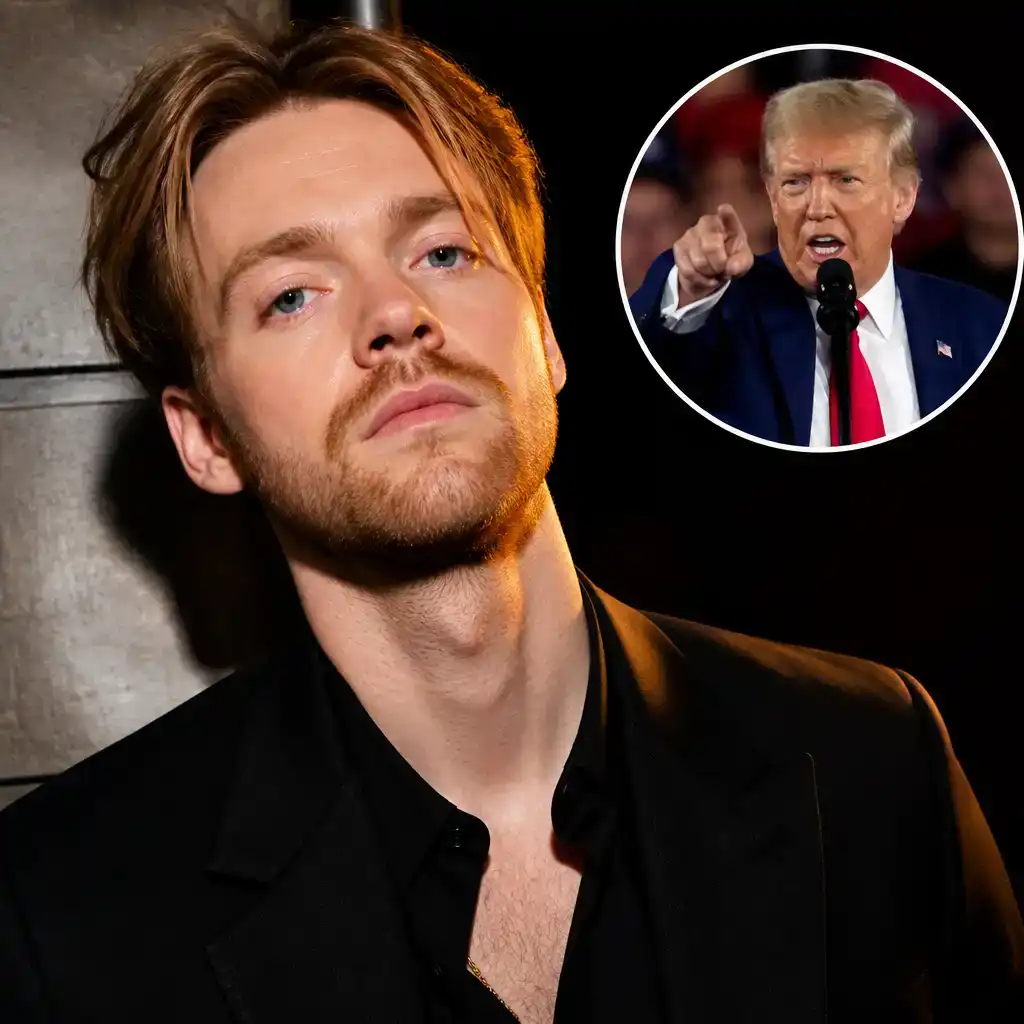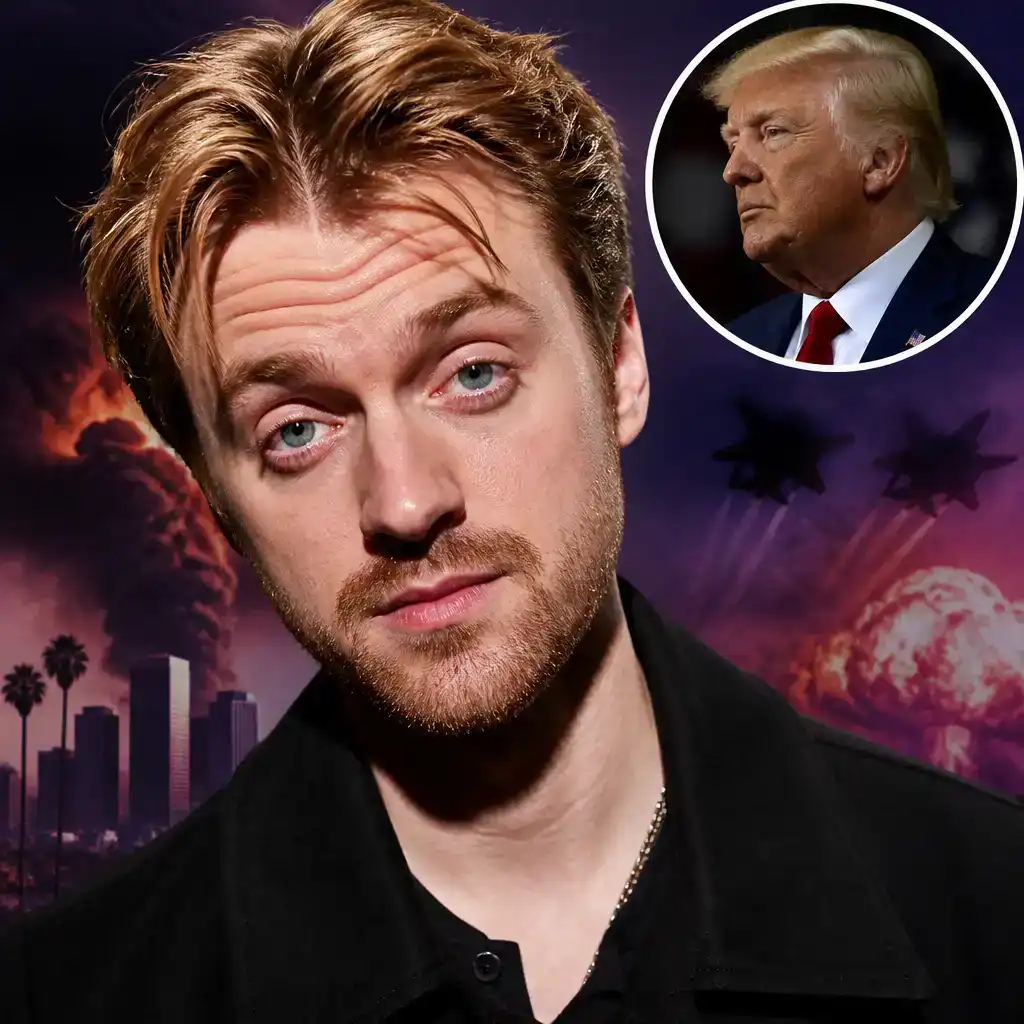
Finneas has delivered a blistering response to Donald Trump after the president made controversial remarks about Los Angeles and San Diego during a rally in Grand Island, Nebraska, suggesting that the California cities could be targets in an international conflict.
The Grammy-winning producer, best known for his work with sister Billie Eilish, responded on Instagram with an accusation that went considerably further than the criticism directed at Trump by state officials.
Rather than expressing concern about a potential Iranian attack, Finneas suggested that he feared the American president himself could be responsible for an attack on California and then attempt to blame Iran.
It was an extraordinary allegation, offered without supporting evidence, and one that illustrates just how heated the political reaction to Trump's rhetoric has become.
What Donald Trump said about Los Angeles and San Diego
The controversy began during Trump's appearance in Grand Island, Nebraska, where he addressed rising costs associated with international conflict and defended the financial burden as a necessary part of maintaining national security.
According to the remarks provided, Trump described high prices as a "small price to pay" for safety before making a statement that immediately attracted criticism.
"They can take out a city. Let them take out Los Angeles. Let them take out San Diego," Trump told the crowd.
The comments appeared to invoke the possibility of American cities being attacked, although the available account does not establish the full context of the statement or precisely whom Trump was referring to.
That distinction matters. Without the surrounding remarks, it is difficult to determine whether the president was describing a hypothetical threat, making a rhetorical argument or expressing something more specific.
Nevertheless, invoking the destruction of two major American cities while discussing the costs of international conflict was enough to provoke a political backlash.
California state officials condemned the remarks, according to the account of the rally.
Finneas responds with an explosive accusation against Trump
Finneas, who has built an internationally recognised career as a songwriter, musician and producer alongside Billie Eilish, entered the controversy through his Instagram Story.
His response was considerably more confrontational than a conventional criticism of presidential rhetoric.
"I'm not concerned about Iran bombing California. I'm concerned about Trump bombing California and trying to act like Iran did it," Finneas wrote.
The statement suggested a scenario in which Trump could orchestrate an attack on American territory and falsely attribute responsibility to Iran.
There is no evidence in the supplied account supporting that allegation, and Finneas did not provide any substantiation in the quoted statement.
His words are therefore best understood as an expression of extreme political distrust rather than a factual description of an established threat.
Even so, the response is striking because it shifts the conversation away from the possibility of foreign aggression and toward the question of whether Americans can trust their own government during a period of international tension.
That is a substantially different argument from simply accusing a president of using reckless language.
Why the exchange raises questions about political rhetoric
The confrontation highlights two separate problems that deserve to be considered independently.
The first concerns Trump's language. References to the potential destruction of Los Angeles and San Diego carry obvious weight, particularly when delivered by a president discussing international security.
Political leaders regularly use hypothetical scenarios to justify difficult decisions. But the distinction between describing a threat and appearing indifferent to its consequences can become dangerously blurred when the subject is the safety of millions of people.
The second issue concerns Finneas's response.
His suggestion that Trump might attack California and blame Iran is an extremely serious accusation. It implies deliberate violence against American civilians and an attempt to deceive the public about responsibility.
Such claims require evidence, regardless of whether they come from a political opponent, a journalist or a Grammy-winning musician.
The fact that the accusation appeared on an Instagram Story does not reduce its seriousness. Social media may encourage immediate reactions, but it does not eliminate the distinction between expressing distrust and alleging criminal conduct.
In my view, Trump's quoted remarks warrant criticism because the possibility of American cities being attacked should never be treated casually by someone responsible for national security. However, Finneas's response crosses a different line by introducing an unsupported accusation of deliberate domestic violence. His frustration may be understandable as a political reaction, but the available evidence does not justify the scenario he describes. Both statements deserve scrutiny, though for different reasons.
Why Finneas's political comments attract attention
Finneas is not simply a celebrity commenting from the sidelines of the entertainment industry.
As Billie Eilish's brother and principal creative collaborator, he has helped shape the sound of one of the most successful pop artists of her generation. His production and songwriting achievements have earned him multiple Grammy Awards and considerable visibility beyond his own recordings.
That public profile gives his comments an audience far larger than the average political reaction posted online.
It also means that a statement made in the informal setting of Instagram can become part of a much broader discussion about presidential conduct, foreign policy and public trust.
There is, however, an important difference between the cultural influence of a public figure and the evidentiary weight of that person's claims.
Finneas is entitled to express his fears and political opinions. Those opinions do not become verified facts because of his professional achievements or the size of his audience.
The unanswered questions behind the controversy
Several important details remain unresolved in the available account.
The complete context of Trump's remarks has not been provided, making it difficult to establish exactly what argument he was attempting to make when he referenced Los Angeles and San Diego.
There is also no accompanying evidence supporting Finneas's suggestion that Trump might deliberately attack California and blame Iran.
Nor does the supplied material establish whether the White House responded to Finneas's accusation or whether the musician subsequently clarified his statement.
Those omissions are important because the controversy involves two different questions: what the president actually meant and whether the response to his words has moved beyond criticism into unsupported speculation.
For now, the clearest documented development is the exchange itself: Trump invoked the possibility of attacks on major California cities, and Finneas responded by suggesting that the greater danger could come from the president rather than Iran.
The dispute illustrates how quickly discussions about national security can become arguments about trust in government. Establishing the full context of the president's remarks is the necessary next step. Treating Finneas's accusation as fact without evidence would only make an already contentious exchange less informative.