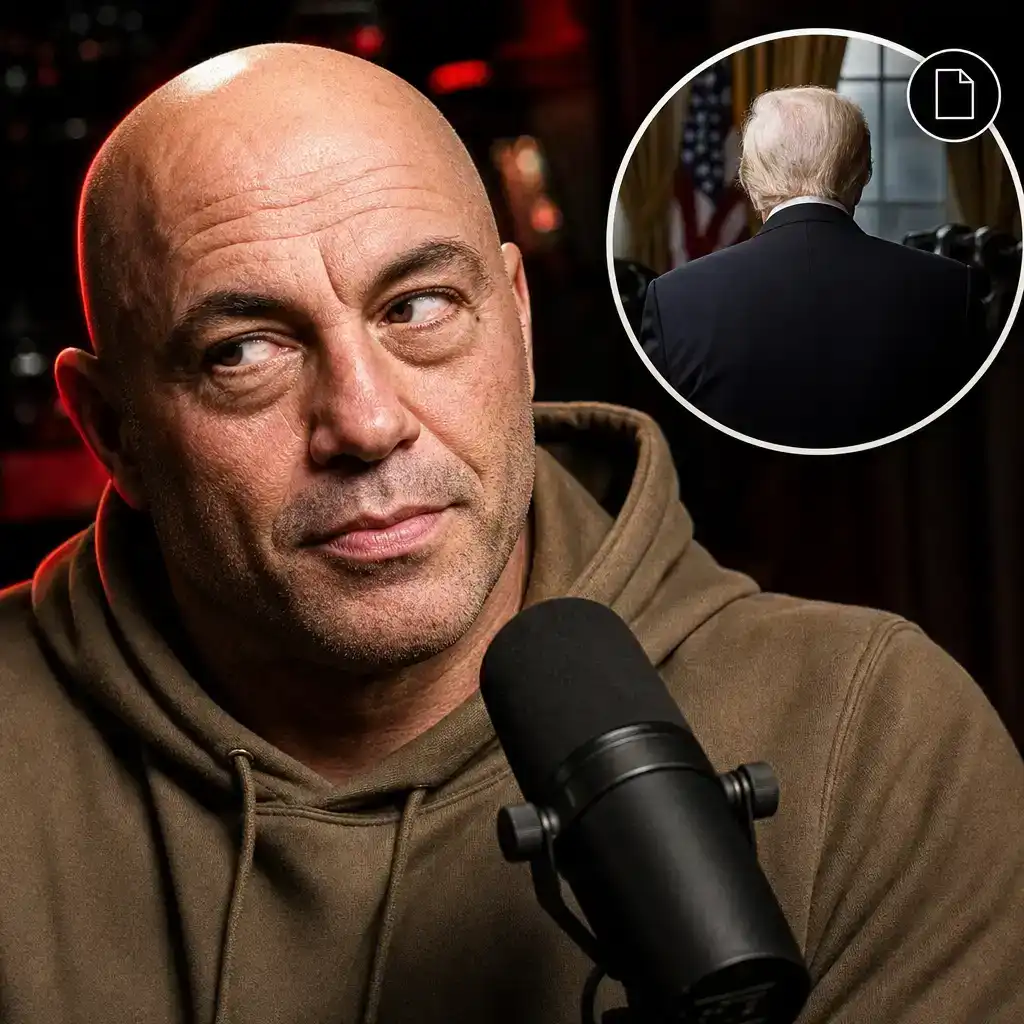
Joe Rogan’s Spotify claims now include an allegation that unnamed sitting and former US presidents tried to pressure the platform into dropping The Joe Rogan Experience over accusations of misinformation.
The podcast host made the claim during episode 2515 of his show, saying political figures and outside groups pushed campaigns aimed at weakening his position with Spotify. He did not identify the presidents he was referring to, which is a fairly important missing detail, but he described the effort as expensive and coordinated.
What Joe Rogan said about pressure on Spotify
Rogan said the push against him went beyond public criticism and involved attempts to target the business side of his podcast.
“They tried to crush my sponsors. They organized campaigns. There was PACs (political action committees) involved,” Rogan said. “I can’t even talk about it. But there was presidents involved and former presidents involved that were contacting Spotify.”
He added that he believed Spotify’s position as a non-US company helped shield the show from that pressure.
“Thank God I was on Spotify. And thank God Spotify is not an American company,” he said. “And also it helped that I was number one in, like, 90 countries and not number 90 in one country, you know? That helped. That helped a lot.”
Rogan also claimed “they spent a lot of money, a lot of money,” trying to damage or remove the show. The remarks came around the 2:13:28 mark of the episode.
Why the podcast has drawn repeated backlash
The Joe Rogan Experience has been running since 2009 and has grown into one of the most listened-to podcasts in the world. Rogan, 58, is known for long-form interviews that often run for several hours and range across comedy, politics, health, science, sport, and whatever else wanders into the room.
That reach is exactly why the show has become such a flashpoint. Rogan’s audience is enormous, and his conversations are often loose, lengthy, and unfiltered. For supporters, that is the appeal. For critics, it is the problem.
The scrutiny increased after Rogan signed a major deal with Spotify in May 2020, making the platform the main home of his podcast. Since then, Spotify has faced repeated calls to remove the show or impose stronger warnings for certain episodes.
The 2022 Spotify controversy over Covid discussions
In January 2022, several musicians threatened to boycott Spotify unless the company took action over Rogan’s podcast. The pressure centered especially on episodes discussing the Covid-19 pandemic, with critics arguing that some conversations spread misleading or harmful health claims.
The demands varied, but they included calls for Spotify to:
- Remove The Joe Rogan Experience from the platform
- Add warnings to episodes involving controversial topics
- Be more transparent about its rules on misinformation
Spotify did not remove the podcast entirely. However, a number of older episodes were temporarily taken down, and some episodes later carried advisory warnings related to health concerns and language.
Spotify’s defense of keeping Rogan on the platform
Rogan has previously said Spotify would not censor him. Spotify chief executive Daniel Ek also defended the company’s decision to keep the show available, while making clear he did not personally endorse everything Rogan says.
“There are many things that Joe Rogan says that I strongly disagree with and find very offensive,” Ek said.
Still, Ek argued that Spotify’s broader ambitions required hosting content that some people inside and outside the company might find uncomfortable. He said the platform could only reach those goals by “having content on Spotify that many of us may not be proud to be associated with.”
That position has been central to Spotify’s handling of Rogan: distancing itself from some of his comments while continuing to host one of the most valuable audio shows on the planet. It is a delicate corporate dance, assuming one considers walking through a room full of rakes delicate.
What remains unclear about Rogan’s allegation
Rogan’s latest comments are serious, but they are also incomplete. He did not name the presidents or former presidents he said were involved, did not provide documents during the episode, and did not spell out exactly how the alleged pressure campaign worked.
What is clear is that Rogan sees the past several years of controversy as more than public criticism from artists, listeners, or health experts. In his telling, powerful political actors also tried to make Spotify reconsider its relationship with him.
For audiences, the claim lands in familiar territory: a hugely popular media figure arguing that institutions tried to silence him, while critics continue to question the responsibilities that come with a platform of that size. Spotify, meanwhile, has so far chosen the simplest business answer available: keep the podcast, add some warnings when necessary, and absorb the noise.