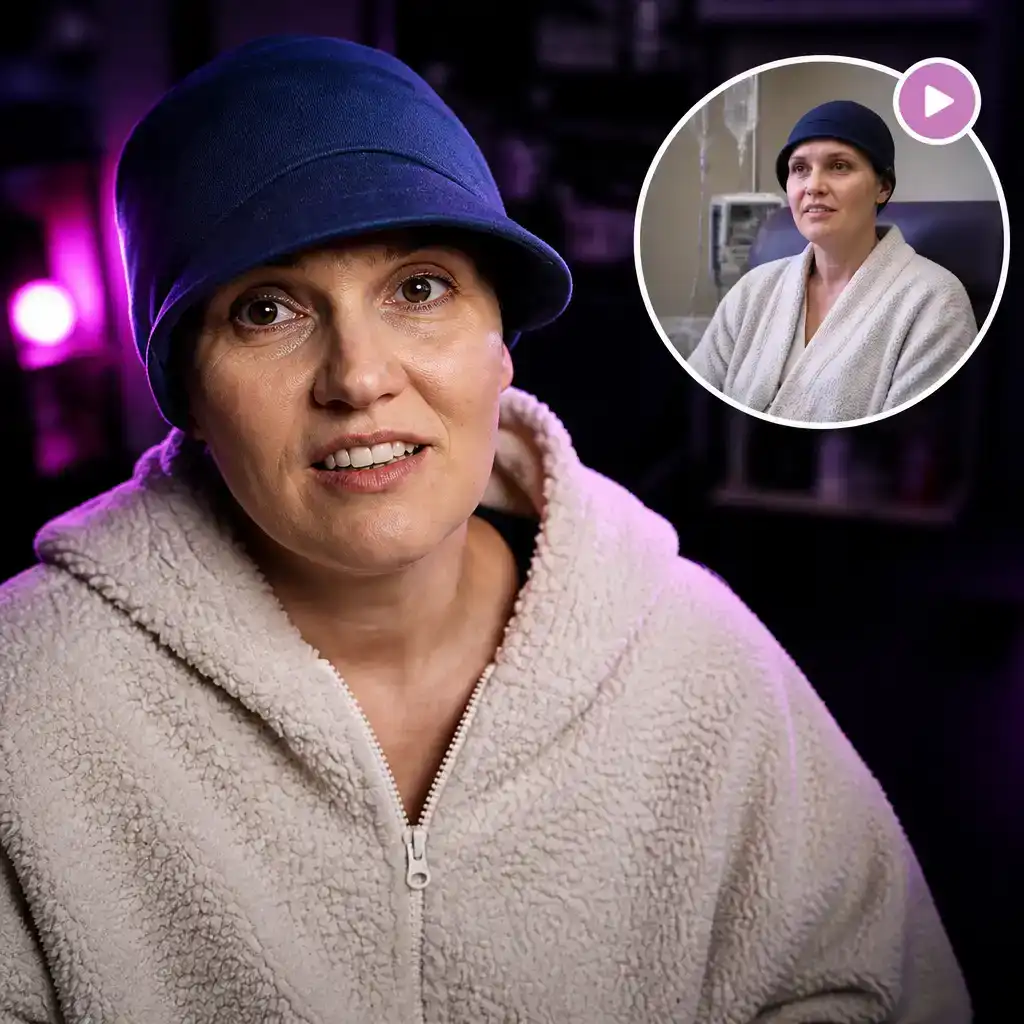
Australian art creator Josiah “Jazza” Brooks has spent years turning elaborate ideas into videos for millions of viewers. Now, Kate’s breast cancer diagnosis has pushed the family into a far more personal and uncertain project: chemotherapy, possible major surgery and repeated trips to Melbourne, all while raising two young children and trying to keep Jazza Studios operating.
In a video uploaded on July 31, 2026, Jazza said he had tried four times to record the announcement but kept breaking down. Kate eventually sat beside him and explained the diagnosis herself.
“Recently, I have been diagnosed with breast cancer,” she said. “Breast cancer is one of the most common cancers in the world, but you still really never think it’s going to happen to you until it happens to you.”
What Kate said about her diagnosis
According to the couple, Kate has an uncommon combination of triple-positive ductal and lobular carcinoma, along with ductal carcinoma in situ, known as DCIS, and lobular carcinoma in situ, or LCIS.
“We’ve since found out that my breast cancer is an overachiever,” she said. “It has all the components of breast cancer that breast cancer can possibly have, which is very rare. I’m in the less than 1%.”
Kate said she had undergone five biopsies and that doctors had identified more than one tumor. She has not been given a stage, but said her medical team is treating her “on a curative basis.” No independent medical source has verified the pathology details, and no report has contradicted the couple’s account.
The “less than 1%” figure appears to refer to the complete combination of invasive and in-situ findings Kate described. A 2025 review citing US data estimated that mixed ductal-lobular tumors account for roughly 4% of breast cancer cases, but that category alone does not cover every component in her diagnosis.
What triple-positive breast cancer means
Triple-positive breast cancer cells test positive for estrogen receptors, progesterone receptors and HER2. Depending on the individual case, treatment can include chemotherapy, surgery, hormone therapy and medicines targeting HER2.
DCIS refers to abnormal or cancerous cells contained within the breast ducts. LCIS develops in the lobules and is generally considered a sign of increased future risk for invasive breast cancer. Invasive ductal and lobular cancers have moved beyond the structures where they began.
Kate has already started chemotherapy. She said she expects to undergo a double mastectomy afterward, although the final surgical plan has not been publicly confirmed.
Her priority, she said, is “long-term survival for the family and the kids.” That focus gives the announcement its clearest emotional weight. The couple are not discussing treatment as an abstract medical schedule. They are making decisions around two young children and the hope of protecting as much of their shared future as possible.
National statistics provide context, but not a personal prognosis. Cancer Australia estimated 20,336 new breast cancer diagnoses in 2025, including 20,129 among women. Women in Australia face an estimated one-in-eight risk of a diagnosis by age 85. Five-year relative survival was about 93% for cases recorded from 2017 to 2021, though outcomes vary substantially by stage, subtype and response to treatment.
Melbourne travel adds another treatment burden
Kate has been unable to continue working during treatment, while Jazza said he has attended every medical appointment with her. Each visit can require travel of up to two hours in each direction from regional Victoria to Melbourne.
That can mean four hours on the road before accounting for consultations, tests or chemotherapy itself. The distance adds a practical burden to an already exhausting treatment process, particularly for parents arranging care for young children.
It also shows how access to specialist treatment can affect families outside major cities. The medical care may be concentrated in Melbourne, but the time, transport and disruption are carried by the patient and those supporting them.
Jazza described the diagnosis as “earth-shattering and really difficult for both of us.” His difficulty recording the video made clear that the announcement was not a polished creator update. Kate stepping in to explain her own diagnosis also allowed her to set the terms of what the audience learned, rather than leaving Jazza to speak for her through grief.
Why the fundraiser also matters to Jazza Studios
Jazza has more than 6.7 million YouTube subscribers, built through art tutorials, large-scale creations and creative challenges. Kate has been central to that work as the business manager of Jazza Studios, making her absence both a family crisis and an operational problem for the creator-led company.
The couple launched a GoFundMe campaign and an auction of Jazza’s original artwork to help cover surgery, treatment and personal care. The fundraiser had passed AU$57,000 when first reported, exceeding its AU$35,000 target. A same-day post in the r/Jazza community later claimed the total had reached about AU$77,000, although that figure was not independently verified.
Jazza said the channel would continue concentrating on art and creativity. That decision keeps a familiar space intact for viewers while the family deals with treatment privately, but it also reflects the awkward reality of a small creative business losing its manager at the moment she needs to focus entirely on her health.
Audience responses in the Jazza community were largely supportive. One commenter who identified herself as a breast cancer patient of Kate’s age wrote, “I also have breast cancer,” and thanked the couple for speaking publicly. No named celebrity, clinician or organization had issued a public reaction by July 31.
For viewers, the video connected a channel known for ambitious creative work to the less visible structure behind it: a couple, a family and a business dependent on both of them. There has been no later health update, leaving the immediate picture unchanged. Kate is receiving chemotherapy, surgery is expected to follow, and the family is organizing its life around treatment one appointment at a time.