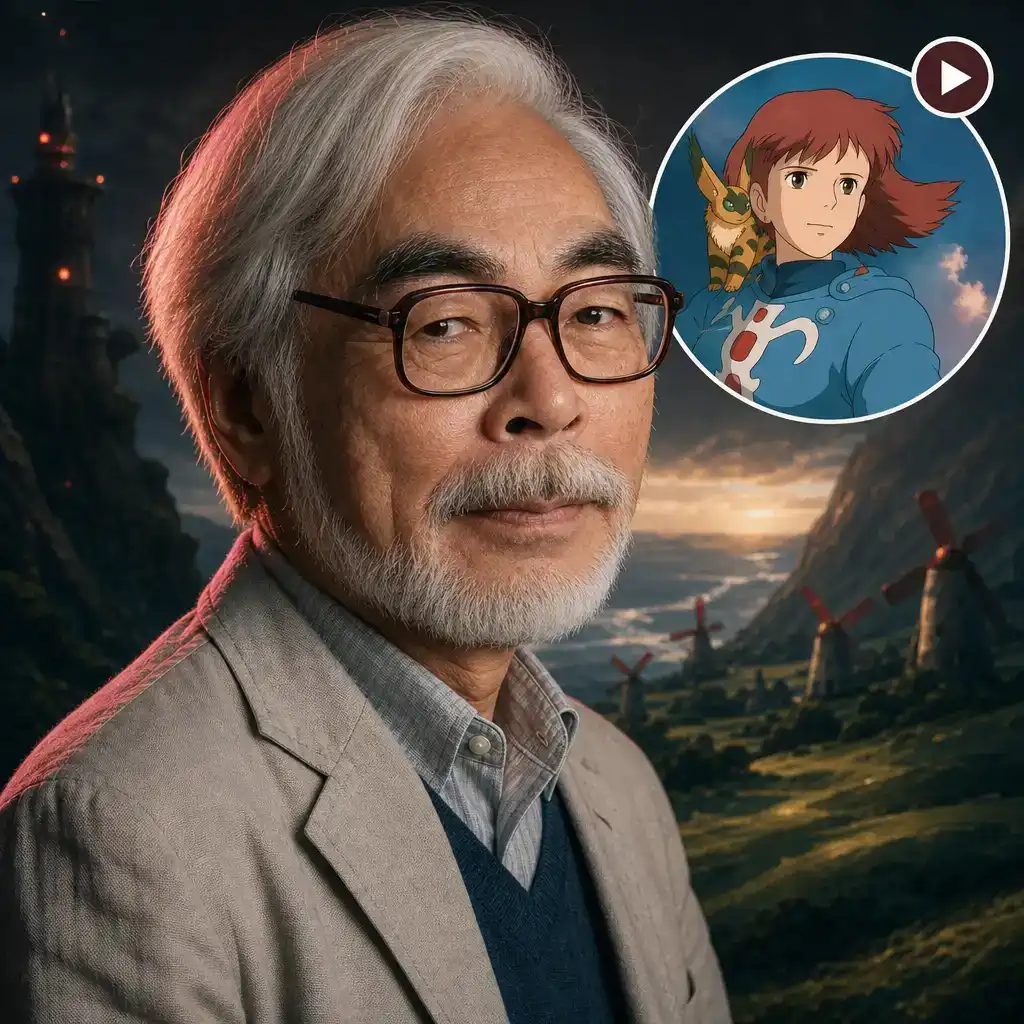
Nausicaä of the Valley of the Wind begins with a name borrowed from Homer, but Hayao Miyazaki did not simply turn a supporting player from The Odyssey into an animated action hero. He took the compassionate Phaeacian princess who helps a shipwrecked Odysseus, combined her with a Japanese princess fascinated by insects, and built a heroine whose strength lies in understanding a damaged world rather than conquering it.
That distinction matters as Christopher Nolan’s The Odyssey brings Homer’s epic back to theaters on an enormous scale. Nolan’s film has earned an estimated $639.6 million worldwide after two weekends, according to Variety, while Miyazaki’s far looser engagement with the poem remains compelling precisely because it heads somewhere else.
How Homer’s princess inspired Miyazaki
In Homer’s poem, Nausicaa is the daughter of King Alcinous and Queen Arete of the Phaeacians. She encounters Odysseus after he washes ashore and helps him obtain shelter, clothing and safe passage. Her role is brief, but her kindness provides a crucial step in his journey home.
Miyazaki’s route to the character was indirect. He said he first encountered Nausicaa not through Homer’s text, but in Bernard Evslin’s mythology book Gods, Demigods & Demons. Miyazaki recalled being “instantly attracted” to Evslin’s portrayal of the princess.
He paired that inspiration with The Lady Who Loved Insects, a 12th-century Japanese tale about an unconventional young woman who studies caterpillars instead of admiring butterflies. The resulting Nausicaä carries qualities from both figures: hospitality and emotional intelligence from the Greek princess, plus curiosity about creatures that others find repellent.
That makes the film less a direct adaptation of The Odyssey than a cultural borrowing expanded into something original. Homer supplied a compassionate archetype. Miyazaki gave her a glider, a poisoned landscape and rather more responsibility.
Why Nausicaä’s empathy drives the story
Released in Japan on March 11, 1984, the film follows Princess Nausicaä through a post-apocalyptic world still scarred by the Seven Days of Fire, a civilization-ending war that occurred roughly 1,000 years earlier. Human settlements now survive beside the Sea of Corruption, a toxic forest filled with giant insects, including the armored Ohmu.
Nausicaä refuses to treat those creatures as mindless enemies. She studies them, calms them and recognizes that their violence is often a response to human aggression. Her approach places her at odds with powers such as Tolmekia and Pejite, whose leaders remain convinced that military force can secure survival.
Like Odysseus, she crosses hostile territories, navigates political conflict and repeatedly survives disasters. Unlike him, she is not trying to restore her place after war. She is trying to stop frightened societies from producing another one.
The emotional appeal comes from that refusal to accept fear as policy. Nausicaä is capable in combat, but the film treats her curiosity and compassion as more consequential than physical dominance. Miyazaki would revisit that tension between human ambition and the natural world in works including Princess Mononoke, while later protagonists such as Chihiro in Spirited Away would similarly prevail through attention, courage and empathy.
The film and manga tell different ecological stories
The 1984 film presents the toxic forest as a purification system. Beneath its poisoned surface, the plants are cleansing soil contaminated by earlier human destruction. What appears to be nature’s attack on humanity is actually part of the planet’s recovery.
That revelation gives the movie a comparatively hopeful environmental argument: people have misunderstood the forest, and a more peaceful future may become possible if they stop trying to destroy what they fear.
The manga is considerably less tidy. Miyazaki began publishing it in Animage in February 1982, but only 16 chapters existed when the film opened. He continued the story until chapter 59 in March 1994, giving the printed version another decade to grow darker and more complicated.
Researcher Caitlin Truran has argued that the later manga challenges the film’s optimistic conclusion through its treatment of mutation, extinction and manipulated ecosystems. The completed story reveals that the toxic forest is not simply nature healing itself. It is a human-created purification system, raising harder questions about engineered environments and what forms of life are expected to survive them.
The film remains emotionally direct. The manga is more suspicious of easy restoration, including the comforting idea that ecological damage can be repaired without difficult consequences.
What the two epics say about war
Homer’s Odyssey follows a warrior returning from the Trojan War after 10 years of fighting. Victory has not delivered peace. Odysseus spends another long journey confronting loss, temptation and the consequences of violence before he can reclaim his home.
Miyazaki approaches similar concerns from the perspective of someone trying to prevent history from repeating itself. In Nausicaä’s world, kingdoms keep reaching for armies and ancient weapons, believing one more show of force will finally create security. Each attempt instead moves humanity closer to annihilation.
Nolan told The Associated Press that audiences understand what a title such as The Odyssey promises, adding that he hoped the filmmakers had “made good on that promise.” Moviegoers appear receptive: Variety estimated a worldwide total of $639.6 million after two weekends, including $286.4 million in North America and $353.2 million internationally. Its $87 million second domestic weekend was Nolan’s best, and Universal Pictures said it marked the strongest hold for any film that opened above $100 million. The broader summer box office also passed $3 billion, according to the Associated Press.
The scale is different, but the human question is familiar. What survives after people have treated conquest as the answer?
How the film helped lead to Studio Ghibli
Nausicaä of the Valley of the Wind is often treated as an early Studio Ghibli film, though the studio did not yet exist. It was produced by Topcraft, with Tokuma Shoten involved through its ownership of Animage. The film’s success encouraged Tokuma to pursue further projects with Miyazaki, and many Topcraft artists later joined the newly formed Studio Ghibli.
More than four decades later, Nausicaä still works as a companion to The Odyssey because she shifts attention away from the celebrated warrior and toward the stranger who chooses to help. Miyazaki did not retell Homer’s plot. He found a briefly seen princess, followed the qualities that made her memorable, and imagined what an entire epic built around compassion might look like.
The film is available to stream on HBO Max.