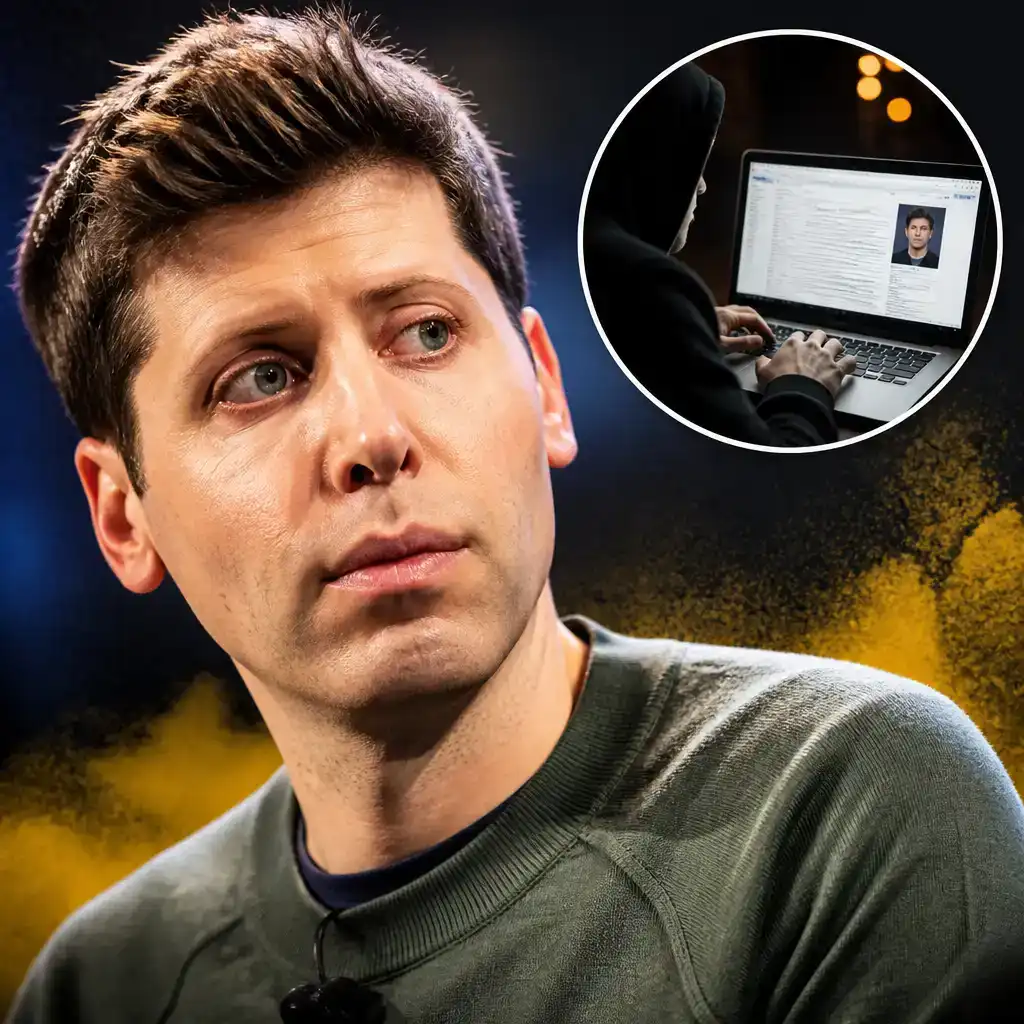
Google falsely declared Sam Altman dead on August 12, 2026, after its automated search systems picked up a vandalized Wikipedia entry. The OpenAI chief was alive, no credible outlet had reported otherwise, and Google removed the claim after screenshots began circulating online.
The mistake appeared in the biographical panel at the top of results for Altman’s name. These Knowledge Panels commonly show details such as a person’s birth date, occupation and, when relevant, date of death. On this occasion, the system supplied a death date without first establishing the fairly important detail of whether anyone had actually died.
How did the false claim reach Google Search?
Wikipedia’s public revision history shows that an editor altered Altman’s page at 09:47 UTC. The vandal added Seattle as his place of death, gave the cause as “Assasination,” misspelling included, and rewrote parts of his biography in the past tense.
The false information remained visible for about 41 minutes before Wikipedia corrected it at 10:29 UTC. Search Engine Watch reported that this was long enough for Google to ingest the details and display them in Altman’s Knowledge Panel.
That public record differs slightly from early reports suggesting the page had been edited several times with death claims. The visible history records one vandalism revision containing the fabricated information.
As screenshots spread across social media, the lack of any announcement from Altman, OpenAI, his representatives or a credible news organization made the claim increasingly difficult to take seriously. Google still managed to present it in one of the most prominent positions on the page, which naturally gave the fiction more authority than it deserved.
What did Google say about the error?
Google’s Search account responded on X after users flagged the result.
“Thanks for flagging. This is no longer appearing, and was not a manual change by Google,” the company said. “When people vandalize public info sources, this can affect the information that appears in Search.”
Google did not identify Wikipedia by name, but the timing of the edit, correction and Knowledge Panel error points clearly to the online encyclopedia as the source.
According to Google’s own documentation, Knowledge Panels are generated automatically using information from public, licensed and first-party sources. The company says automation is necessary because it handles billions of searches each day, while conceding that “no system can be perfect.” False information in its Knowledge Graph can be removed following user reports or automated detection.
No further statement from Google had emerged by August 13. Neither Sam Altman nor OpenAI had issued an attributable public response, perhaps because confirming that the chief executive remained alive was not originally on the communications schedule.
Why did Wikipedia protect Altman’s page?
Wikipedia administrator Epicgenius placed Altman’s biography under extended protection at 13:18 UTC on August 12, nearly three hours after the false entry was removed. The restriction was scheduled to remain in place until September 12 because the vandalism violated Wikipedia’s policy covering biographies of living people.
The protection did not merely limit editing to anyone with a registered account, as some initial coverage suggested. It required editors to hold autoconfirmed or confirmed status, raising the threshold for making changes.
Wikipedia’s correction worked relatively quickly. The larger concern is what happened during that short window: another automated platform collected an extraordinary claim and displayed it before millions of potential users without visible corroboration.
Wikipedia expert Joseph Reagle previously told Poynter that systems drawing from the encyclopedia can amplify misinformation even when vandals never intended to manipulate Google, YouTube or Facebook. A hoax does not need a sophisticated distribution plan when major platforms help with delivery.
What does the mistake reveal about Knowledge Panels?
The episode exposes a gap between Wikipedia’s warning systems and Google’s information pipeline. Wikipedia removed the fabrication in under an hour, but Google had already converted it into a polished biographical fact box. Presentation did the rest: information placed above ordinary search results can look verified even when it is merely fresh data from a damaged source.
The obvious missing safeguard was corroboration. A death claim involving one of the technology industry’s most prominent executives should have required support from more than one editable page before appearing as fact. Google says its panels draw from multiple sources, but this case shows that source volume does not always produce source checking.
It was also not the year’s only accidental celebrity death announcement. A radio station had apologized a few months earlier after wrongly reporting that King Charles had died. Different systems, same basic problem: being first is not especially useful when the person is still alive.