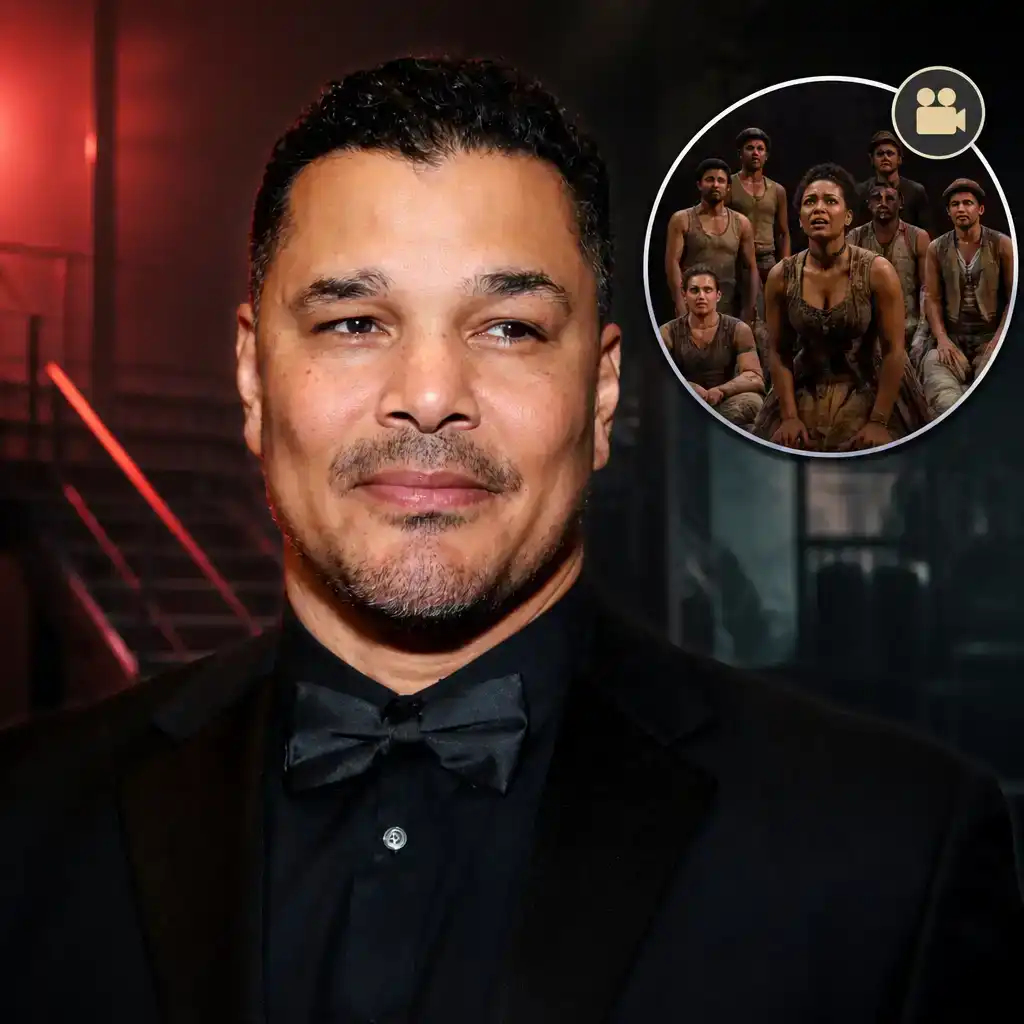
The Geno Segers Hadestown exit moved quickly from casting announcement to public apology, leaving the actor out of a major Broadway production and raising uncomfortable questions about how his publicly available social media history was missed in the first place.
Segers apologized on Instagram on Monday, August 3, after videos and posts attributed to him circulated online. Reports from Variety and The Hollywood Reporter said the material included comments about transgender people, women and gay people. Fans objected to his casting as Hades, with some calling for ticket boycotts.
“I wish to extend my most sincere apologies to everyone impacted by my words,” Segers wrote. “While I never intended to inflict harm, I recognize that the impact of my statements is what matters most.”
Why did Geno Segers leave Hadestown?
Segers was announced as the Broadway production’s next Hades on July 29. On August 2, just four days later, the producers said he would no longer join the show.
“The producers of ‘Hadestown’ and Geno Segers have mutually agreed that Mr. Segers will no longer join the Broadway production,” the statement said. “Additional casting will be announced shortly.”
Variety, The Hollywood Reporter and BroadwayWorld all reported the departure after the online criticism intensified. No identified report has contradicted the producers’ description of the decision as mutual, though it remains unclear who initiated it.
Segers addressed the production directly in his apology.
“To the cast, creative team and producers, please accept my sincere apologies for the stress my actions have brought to this production,” he wrote. “I accept full responsibility for my words and acknowledge the necessity of immediate accountability.”
He also offered his support to the company and whoever replaces him, saying he had “complete confidence” they would be “phenomenal.” As of August 4, the production had not announced a new Hades.
What did Segers say in his apology?
Segers said he was committed to listening, educating himself and raising his standards. He added that he would “work tirelessly to earn the opportunity to make things right.”
The statement accepted responsibility in broad terms, but it did not explicitly mention transgender people, gay people or women. It also did not identify the particular remarks that prompted the backlash. That omission became part of the response, with social media users arguing that an apology is harder to assess when it does not clearly name the people harmed or the conduct being addressed.
Former original Broadway cast member Eva Noblezada, who played Eurydice, responded on Instagram with “#transrights.” She also said she was assuming “incompetence from the casting team,” shifting some attention from Segers’ remarks to the production’s vetting process.
That question is likely to remain. The disputed material was described as having been publicly available for years, yet it surfaced as a major issue only after the casting announcement. Four days is an unusually short life for a major Broadway casting decision.
Why the controversy matters to the company
The dispute carries particular weight because Hadestown has a history of employing transgender and nonbinary performers. Earlier in 2026, Tony Award winner J. Harrison Ghee, who is nonbinary, appeared as Hermes.
For queer and transgender company members, casting is not merely a public relations question. It also shapes the workplace they are being asked to enter each night. The swift reaction from audiences suggests many viewers saw Segers’ reported comments as incompatible with a production whose cast and fan base have included a broad range of LGBTQ+ people.
The controversy also reached a commercially successful show rather than a production still trying to find an audience. Written by Anaïs Mitchell, Hadestown combines the Greek stories of Orpheus and Eurydice with Hades and Persephone, set to a folk and jazz score. It won eight Tony Awards in 2019, including best musical.
According to Playbill, the Broadway production has passed 2,380 performances at the Walter Kerr Theatre. Through July 19, it had grossed roughly $276 million and averaged 98.4% capacity. In that context, threatened boycotts and organized fan complaints presented both a workplace concern and a business risk.
Who joins Hadestown on September 1?
The rest of the incoming principal cast remains scheduled to begin performances on September 1. The lineup includes:
- Kayko as Orpheus
- Jasmin Savoy Brown as Eurydice
- Norbert Leo Butz as Hermes
- Amber Iman as Persephone
The production now has to fill Hades before that cast begins its run. It must also reassure performers and audiences that the concerns raised during the brief Segers casting were heard before, rather than only after, the ticket-buying public noticed them.
Segers’ apology acknowledges the impact of his words and promises further work. Whether audiences view that as meaningful accountability will depend less on the statement itself than on what follows. For Hadestown, the immediate task is more concrete: find a replacement, support the company and explain how a highly visible casting choice unraveled in four days.