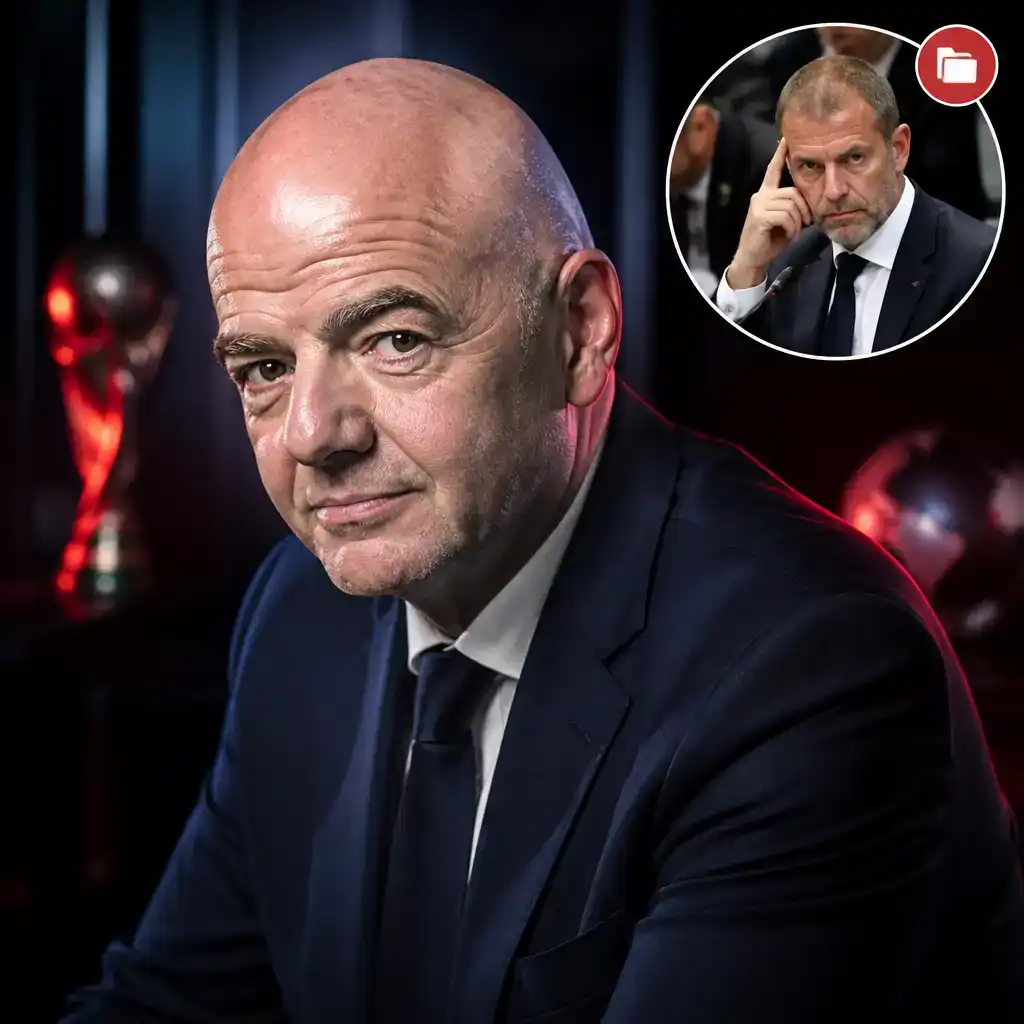
For players and supporters, the World Cup is supposed to be decided on the field, not in an investor presentation. The proposed FIFA stake sale has therefore triggered an unusually broad revolt, with all 55 members of the Union of European Football Associations threatening to boycott FIFA competitions if the plan goes ahead.
The Asian Football Confederation and the Confederation of North, Central America and Caribbean Association Football have also opposed the proposal, although neither has joined UEFA’s conditional boycott. Their objections center on ownership, transparency and whether FIFA consulted the people expected to live with the consequences.
FIFA President Gianni Infantino insists the organization is not selling football. Opponents argue that once investors own part of the business surrounding the World Cup, the distinction becomes rather less comforting.
What FIFA wants to sell to private investors
FIFA proposes creating a commercial subsidiary called FIFA Forward Enterprise, or FFE. The company would bring together major revenue-generating operations, including:
- Broadcasting rights
- Sponsorship
- Ticketing
- Licensing
- Event operations
The proposed company has been valued at about $20 billion. Outside investors could buy roughly 20%, potentially raising around $4 billion, while FIFA would keep a controlling interest and retain authority over sporting rules, competition formats and governance.
The Financial Times identified Thrive Eternal, led by Joshua Kushner, as one potential investor. Kushner is the brother of Jared Kushner, President Donald Trump’s son-in-law.
FIFA says the proposal concerns a minority stake in a commercial business, not ownership of the World Cup itself. In a July 31 clarification, the governing body blamed “incorrect media reports” for disrupting consultations and said “nobody is selling football.” It also said discussions with its 211 national associations would continue despite the boycott threat.
That technical explanation has not persuaded UEFA. Europe’s governing body says transferring any ownership interest connected to FIFA competitions would amount to privatizing part of football’s shared commercial legacy.
Why UEFA’s boycott threat matters
UEFA’s 55 associations unanimously adopted the conditional boycott position during an emergency meeting on July 30, two days after FIFA announced the proposal.
“The World Cup cannot be treated as an investment product,” UEFA said. “It is one of football’s greatest sporting legacies. It has been built over generations by players, national teams and supporters across every continent. No part of it should ever be surrendered to private investors. The World Cup is not for sale.”
The organization also said FIFA’s approach “crosses a line” and described the process as an “abdication of FIFA’s duty.” Its argument is not only about where authority formally sits. It is about what financial influence follows ownership, even when investors lack voting control.
The first practical test could arrive in October, when Women’s World Cup play-offs are scheduled. Any European withdrawal would immediately turn a dispute over corporate structure into a sporting crisis affecting players who had no role in designing the deal.
UEFA’s threat is substantial, but it does not settle the matter. FIFA operates under a one-country, one-vote system, meaning Europe’s wealth and football profile do not automatically give its 55 members control of the final decision.
Opposition now extends beyond Europe
The Asian Football Confederation joined the criticism on July 31, warning that the World Cup depends on participation across every region.
“Any proposal that risks undermining the unity and universal character of the competition must be reconsidered,” the AFC said.
Concacaf, which represents 41 associations across North America, Central America and the Caribbean, said it was “deeply concerned by the lack of due process.” It criticized FIFA for revealing the plan before consulting the relevant governing bodies and stakeholders. AS reported that all 41 Concacaf members rejected the proposal.
Neither the AFC nor Concacaf has threatened a boycott. Their opposition nevertheless weakens any attempt to portray the dispute as Europe defending its own commercial advantage.
Other regions remain undecided. The Oceania Football Confederation said its executive committee would examine the proposal in August. The Confederation of African Football is also evaluating it before taking a position. No public stance from the South American Football Confederation, Conmebol, has been reported.
That leaves Infantino room to build support, particularly among smaller associations for which FIFA development payments can determine whether facilities are renovated, youth programs continue or national teams can travel reliably.
The funding offer gives FIFA powerful leverage
Under the proposal, annual payments to each member association would rise from $2 million to $5 million. Associations would also receive a one-time payment of $20 million, with the total offer potentially reaching $40 million per member.
The Associated Press reported that associations have until September 19, 2026, to accept the funding offer. Payments would become available from January 1, 2027.
Infantino has presented the plan as a way to distribute football’s wealth more evenly. “Every FIFA member association should have an opportunity to seek a fair share of the available funding to shape its own future, deciding for itself rather than relying on others,” he said. “This is about the democratization of football worldwide.”
FIFA projects that the structure could support more than $10 billion in development investment. By comparison, its existing Forward program for 2023 to 2026 totals $2.7 billion.
For smaller federations, the offer is not abstract. Tens of millions of dollars can transform domestic football operations. It also creates an obvious political advantage for FIFA: associations being asked to judge the structure are simultaneously being offered significantly more funding from it.
Carlos Cordeiro’s resignation deepens the pressure
Carlos Cordeiro resigned as Infantino’s senior adviser on July 31, calling the proposal “a bad deal for football.” The former Goldman Sachs banker and former president of the United States Soccer Federation said he had not participated in developing it.
“I cannot stand by while FIFA considers selling a stake in the World Cup,” Cordeiro said. “Let me be clear: I had no involvement in this proposal, and I oppose it unequivocally.”
Cordeiro argued that FIFA already has billions in reserves, carries no debt and can fund development without giving private investors equity in its commercial operations. His departure gives critics an insider with both football administration and finance experience, which is not especially convenient for an organization insisting the objections are based largely on misunderstanding.
United Kingdom Prime Minister Andy Burnham also criticized the plan, saying the World Cup “was never anyone’s to sell.” Football Supporters Europe called on FIFA members to resist it, reflecting concern that investor pressure could eventually affect ticket prices, broadcasting arrangements and the way tournaments are staged.
The central question is no longer whether FIFA would literally sell the World Cup. It would not. The real issue is whether selling part of the commercial machinery around its competitions would create permanent pressure to maximize revenue, and whether promised development money is worth accepting that risk.