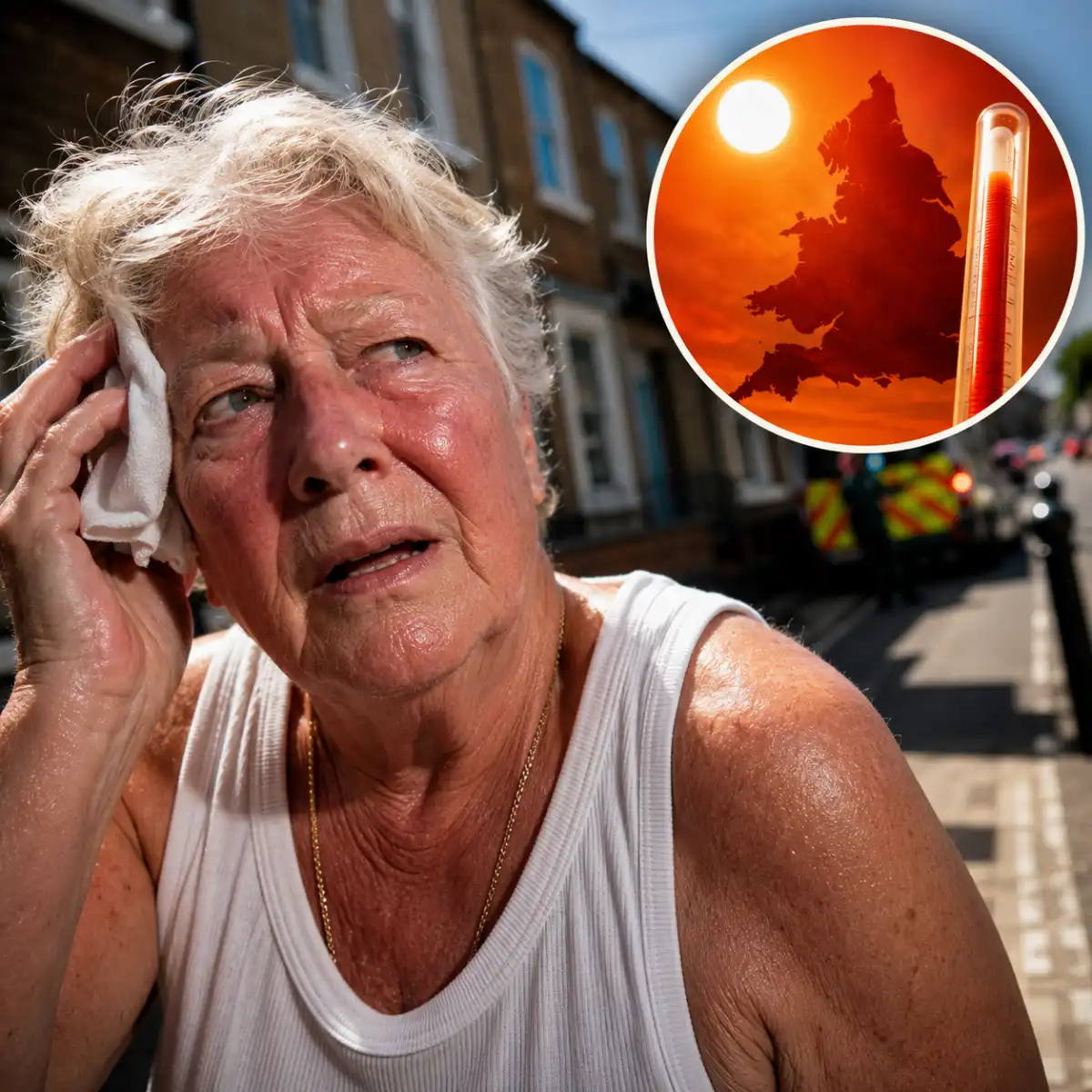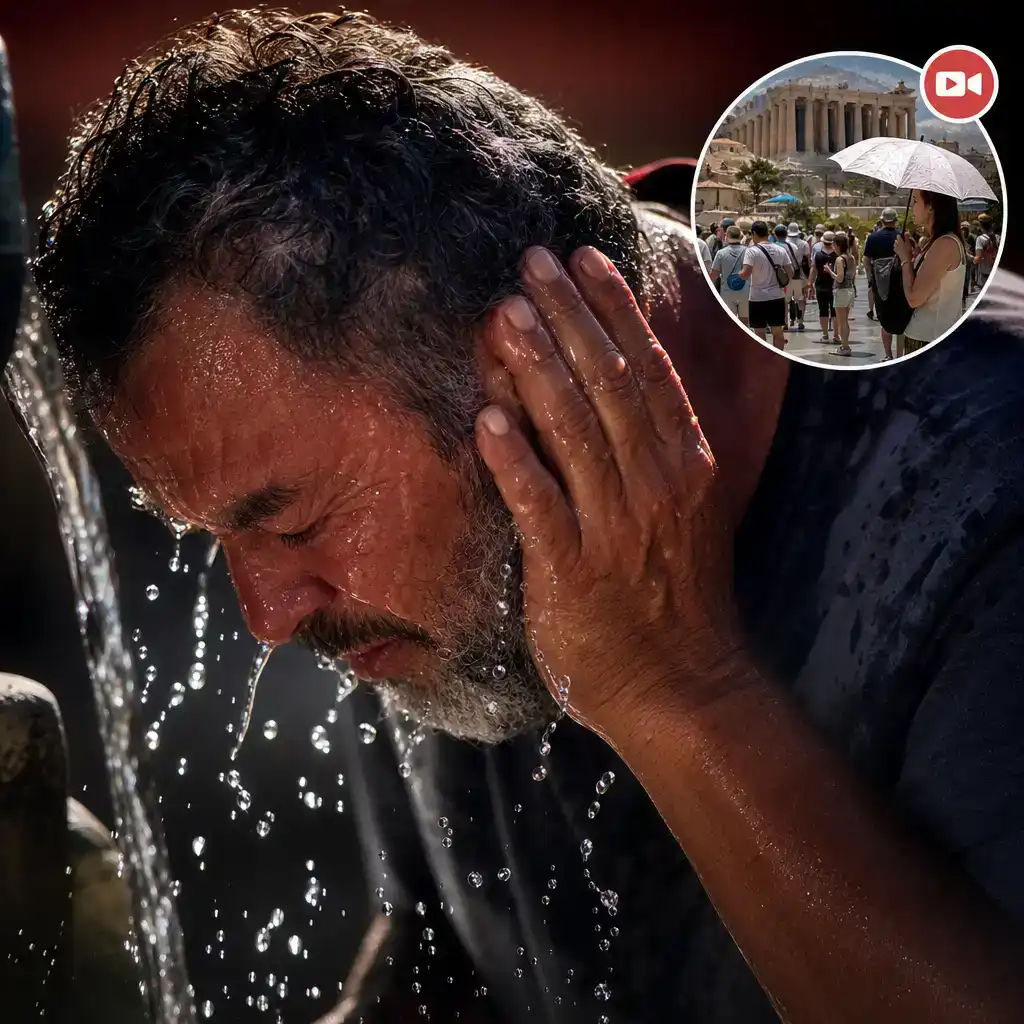
A severe Europe heatwave is pushing temperatures toward record June highs, forcing authorities across the continent to issue health alerts and warnings about transport, schools, energy supplies and public services.
Europe is already the world’s fastest-warming continent, with temperatures rising at roughly twice the global average. Europe’s housing, rail lines and public services were built for a cooler climate. That is the problem. At least the buildings hold warmth well in winter. Less charming when the pavement starts radiating heat back at everyone.
This is the second major extreme heat episode to hit the region in two months, raising new questions about how climate change is reshaping daily life, not just distant forecasts.
“People should be very concerned,” Laurie Parsons, reader in Human Geography at Royal Holloway, University of London, told Al Jazeera. “Heat stress is currently the world’s most lethal environmental hazard with almost half a million people dying each year from heat-related illnesses, according to the World Health Organization.”
Why the heat has turned deadly
France has become one of the main centres of the crisis. According to provisional figures from Météo-France, the country recorded its hottest day on record, with a national average temperature of 29.8C, or 85.6F. That surpassed a record set in 2019. One town climbed above 44C, or 111F.
The consequences have been grim. Forty people have drowned in France since Thursday, and Sébastien Lecornu has linked the deaths to people trying to escape the extreme heat. Water may look like relief, but crowded swimming spots, rivers and lakes can quickly become dangerous when people are exhausted, dehydrated or taking risks to cool down.
Other deaths have also been reported:
- Three elderly people died from heat-related causes near Bordeaux.
- Two children, aged two and four, were found dead in a hot car in southern France.
- In Spain, a 90-year-old woman reportedly died near Bilbao after suffering heatstroke in her nursing home.
- A 68-year-old man in Almeria is also said to have died from heatstroke.
Across Europe, many more people have been taken to hospital as health systems face the familiar but increasingly intense strain of prolonged high temperatures.
How public services are being strained
The pressure is not limited to hospitals. Governments are watching transport networks, schools, power supplies and water systems as the heat continues.
In the United Kingdom, temperatures are forecast to exceed 38C, or 100F. The Met Office has issued a rare red warning for extreme heat. Hundreds of schools have either closed or shifted to shortened timetables, while the public has been advised to avoid unnecessary rail travel because of possible disruption.
Rail networks are especially vulnerable in severe heat. Tracks can buckle, overhead cables can fail and air conditioning systems can struggle under heavy demand. None of this is improved by large numbers of overheated passengers waiting on platforms.
Spain has also seen exceptional temperatures. The national weather service AEMET reported highs above 45C, or 113F, in the south, and Nearly the entire country is now under some form of heat alert.
Several European countries, including the United Kingdom, Germany, France, Spain, Switzerland and Luxembourg, have issued the highest-level red warnings.
Why Europe is so exposed to extreme heat
Scientists say Europe’s vulnerability is partly physical. Many homes, offices and public buildings were not designed for long stretches of dangerous heat. In northern Europe especially, buildings were historically made to hold warmth in, not push it out.
Only about 20 percent of European homes have air conditioning. That leaves many people relying on fans, shaded rooms, public cooling spaces or simply waiting for the weather to change. For older people, young children, people with existing illnesses and those who cannot leave overheated homes or workplaces, that waiting can become dangerous.
Infrastructure faces the same problem. Roads soften, rail systems slow down, energy demand spikes and water use rises. The systems still function in many places, but they are operating under conditions they were not built to handle regularly.
Parsons said the burden is not shared evenly. “People over 65 account for around 90 percent of deaths from heat stress, while exposure to heat is shaped by socioeconomic inequality more broadly.,” he said.
“Lower-income communities are much more exposed to heat stress due to a combination of more poorly insulated housing and more physical outdoor occupations. Heat stress is thus a prime example of climate precarity in a globalised, environmentally vulnerable world.”
What is causing the current weather pattern
Meteorologists say the extreme temperatures are being driven by a heat dome over Western Europe. A heat dome forms when a large area of high pressure traps hot air over a region, preventing cooler weather systems from moving through.
This event is being sustained by an omega block, a weather pattern named after the Greek letter because of the shape it creates in the atmosphere.
Normally, the jet stream helps carry weather systems from west to east. During an omega block, that flow becomes distorted. A ridge of high pressure gets stuck between two low-pressure systems, leaving hot, stagnant air locked in place for days or even weeks.
The United Kingdom Met Office said Britain is currently sitting near the boundary between the high-pressure system and cooler air to the northwest. That has created sharp differences across the country, with hotter conditions in the south and east and cooler, wetter weather farther north.
The broad result is simple enough: the heat is not just arriving, it is staying.
How climate change is changing the odds
Scientists say climate change is making heatwaves more likely, more intense and more dangerous. Global average temperatures are now about 1.25C, or 2.25F, above pre-industrial levels. In 2024, that figure reached 1.55C, or 2.79F, according to Parsons.
That shift has changed the probability of events like this one.
“Heatwaves like we are seeing now are about 30 times more likely to happen than in the pre-climate change era,” Parsons said. “Exceptional heatwaves like the current one would previously have been a once-in-300-year event but now occur more often than once a decade.”
The World Health Organization has also warned that rising temperatures are creating growing health risks. WHO Director-General Tedros Adhanom Ghebreyesus said Europe’s heatwave was “putting people’s health at risk”.
“The data are clear: Temperatures across Europe are rising at roughly twice the global average rate, increasing the likelihood and severity of extreme heat in the future,” he said. “We cannot afford further delay. Leaders must prioritise investment in climate-resilient health systems while also accelerating climate action and mitigating the drivers of the climate crisis.”
Why the political response is under scrutiny
The heatwave is unfolding during London Climate Action Week, one of the world’s largest annual climate gatherings. Tens of thousands of delegates are attending, including heads of state and United Nations Secretary-General António Guterres.
Guterres used the event to call again for faster action to reduce fossil fuel use.
“The climate crisis and the energy crisis may seem separate, but they share the same destructive origin: fossil fuels,” he said. “They demand the same answer: a fast, fair transition to clean energy and a surge in adaptation, resilience and climate justice for those already facing climate harm.”
Parsons said public attention to climate change often rises during extreme weather, but the issue has also become deeply polarised.
“Climate change is now a highly political issue, with a concerted media pushback against climate targets like net zero.,” he said. “This is not accidental, or just a case of public attention drifting away. but has been led by media groups, such as News Corp and GB News amongst others, which have consistently pushed anti-net-zero editorial lines over the last five years.”
He added that climate policy is now tied to political identity in several countries, especially the United States. Still, major weather events tend to bring the risks back into public view.
“There is a longstanding and consistent trend of extreme weather events prompting additional public concern around the climate,” Parsons said. “These heatwaves clearly fall into that category. Now is a good time to push for stronger climate policy.”