Founded in 1947 as the International Festival of Documentary Films, Edinburgh has long billed itself as the world’s longest continually running film festival. But its recent history has been unusually turbulent. The Centre for the Moving Image, which previously oversaw the festival, went into administration in October 2022; an emergency edition followed in August 2023 under the auspices of the Edinburgh International Festival; and a new entity was established in 2023 before being recognised as a Scottish charity in March 2024. The 2026 edition is therefore not simply another anniversary year, but the third full chapter in the festival’s revived structure.
The first clear sign of momentum is scale. The 2026 programme places discovery at its centre, with 21 feature world premieres and 10 world premieres competing for the Sean Connery Prize for Feature Filmmaking Excellence, an audience-voted award carrying a £50,000 prize. That competition includes Simon Ryninks’ Welsh UFO story “Out There,” Tyler-Marie Evans’ Hollywood-set “Pretty Babies,” Frieda Luk’s “Sacred Creatures,” Kieron J. Walsh’s “Skintown,” Joseph Archer’s “Snapshot,” Ollie Gardner and Jake Harvey’s “The State of Us,” Lindsey Ryan’s “Capsized,” Thom Lunshof’s “First Zone,” Bart Simpson’s “The Mad World of Harvey Kurtzman” and Paul Wright’s “Mission.”
The second sign is the festival’s emphasis on Scottish storytelling without narrowing its international reach. The 2026 edition opened with the international premiere of “The Incomer,” the debut feature from Edinburgh-born filmmaker Louis Paxton, starring Domhnall Gleeson, Gayle Rankin and Grant O’Rourke. The festival closes on Aug. 19 with the world premiere of Louise Lockwood’s documentary “Bel,” a portrait of the late Kenyan-Scottish musician, singer and songwriter Beldina Odenyo, who performed as Heir of the Cursed.
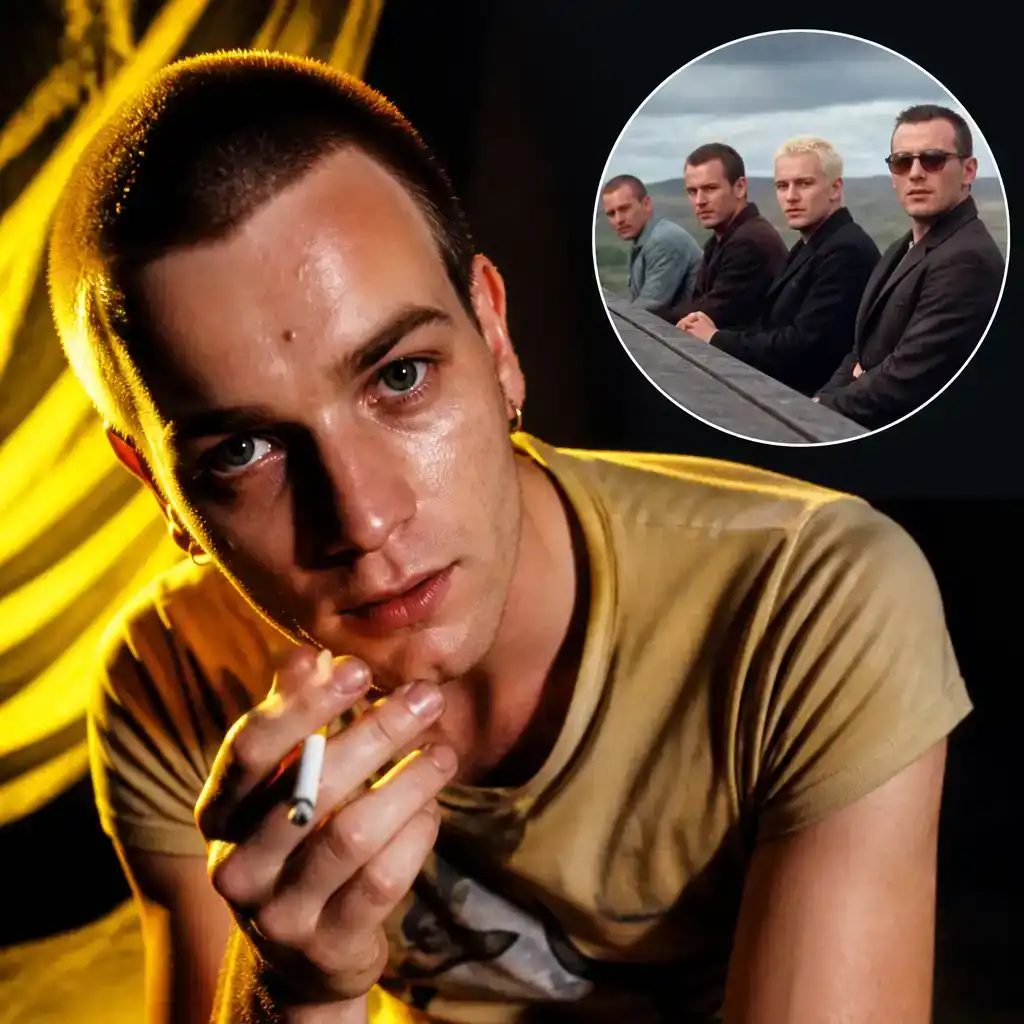
The third is the symbolic force of “Trainspotting.” Danny Boyle’s 1996 film, adapted from Irvine Welsh’s novel and starring McGregor, remains one of the most internationally recognisable screen works associated with modern Scottish culture. Edinburgh is marking its 30th anniversary on Friday, Aug. 14, at Leith Theatre with a live cast and crew commentary followed by a club night featuring DJ sets from Welsh and Darren Emerson of Underworld, an event that ties cinema, music and local memory into one of the festival’s highest-profile moments.
The fourth is the calibre of the guests. Kenneth Branagh will receive the inaugural EIFF Outstanding Contribution to Cinema Award and take part in an in-conversation event, while the programme also features major appearances by McGregor, documentary filmmaker Ken Burns, producer Christine Vachon and actor Bruce Dern. Burns is also presenting a special screening connected to his work on “The American Revolution,” giving the festival a guest slate that spans British acting, American independent production and landmark documentary filmmaking.
The fifth is the depth of the retrospective programme. Alongside “Trainspotting,” Edinburgh is staging seven special retrospective screenings, including anniversary screenings of Branagh’s “Hamlet,” Michael Bay’s “The Rock” and Takeshi Miike’s “Visitor Q,” as well as restorations of “Sexy Beast” and “Little Miss Sunshine.” The mix of Scottish touchstones, cult cinema, Hollywood spectacle and restored independent favourites positions the festival as both a launchpad for new work and a forum for reassessing films that shaped contemporary screen culture.
The sixth is the strengthened industry architecture. Central Hall returns as the Festival Hub, hosting talks, networking and in-conversation events, while the new U.K. Film Conference on Saturday, Aug. 15, is designed as a “state of the nation” discussion for independent film in the U.K. The conference opens with BFI chief executive Ben Roberts in conversation with Picturehouse creative director Clare Binns, followed by sessions on low-budget filmmaking, the modern development and distribution climate, and the current strength of genre filmmaking.
The seventh is global visibility. Variety and the Edinburgh International Film Festival have partnered to bring the first U.K. edition of the Variety Lounge to this year’s festival, supported by VisitScotland. Hosted by Variety’s Alex Ritman, the lounge will record in-depth filmed interviews with attending talent for publication across Variety and EIFF channels, placing Edinburgh within a media format already associated with major festivals such as Sundance and Toronto.
The broader programme also points to a festival seeking range rather than a single signature. Out of Competition titles include U.K. premieres of Hirokazu Kore-eda’s “Sheep in the Box,” Gregg Araki’s “I Want Your Sex” and Nicolas Winding Refn’s “Her Private Hell,” while the Midnight Madness strand opens with Chee Keong Cheung’s world premiere “Bad Day at the Office” and closes with Daniel Goldhaber’s “Faces of Death.” Together, the selections move across grounded drama, science fiction, music documentary, horror, queer cinema, genre reinvention and experimental work.
Festival director Paul Ridd has framed the 2026 edition as the point at which the revived festival begins to hit its stride, saying the lineup contains more world premieres than Edinburgh has ever screened before. Screen Scotland executive director Isabel Davis has similarly described the festival’s role as “coming into its own,” particularly as a platform for Scottish talent, international premieres and industry debate.
For Edinburgh, the stakes are larger than a single strong programme. The festival is operating in a crowded August city that also hosts the Fringe, the Edinburgh International Festival and other major cultural events, yet its 2026 identity appears increasingly distinct: intimate in scale, heavy on discovery, tied to Scottish cultural memory and more assertive about its industry function. Its return to momentum has not erased the fragility of the independent film ecosystem, but it has given Edinburgh a clearer answer to what comes after a revamp.
As “Trainspotting” turns 30 and a new generation of world premieres arrives beside it, the Edinburgh International Film Festival is using its 79th edition to bridge two forms of cultural capital: the films that made Edinburgh matter to cinema history, and the new work that may determine whether it continues to matter to filmmakers now. The result is a festival no longer defined chiefly by survival, but by the more difficult task of sustaining relevance.