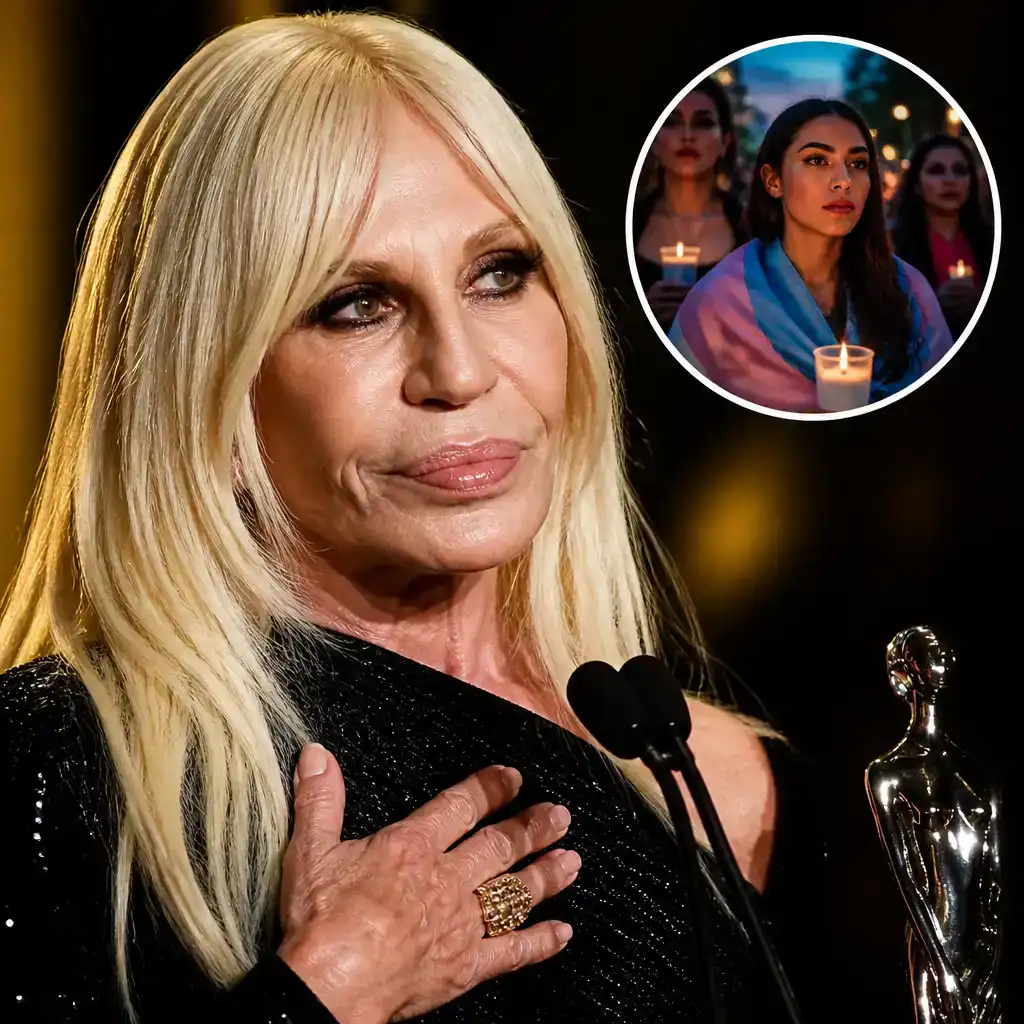
Donatella Versace has delivered a powerful condemnation of violence and discrimination against transgender women, using the spotlight surrounding her Icon Award at the Virgin Atlantic Attitude Awards to address what she sees as an increasingly hostile climate for the community.
The legendary Italian fashion designer made her feelings unmistakably clear in an exclusive interview with Attitude, expressing anger and distress at the persecution transgender women continue to face simply because of their identities.
"It shakes me to my core that trans women face violence and persecution simply for being themselves," Versace said.
For a designer whose career has been closely associated with individuality, self-expression and LGBTQ+ visibility, the statement was more than a ceremonial expression of solidarity. It was a direct challenge to the idea that someone's identity should make their safety a subject of public controversy.
Donatella Versace uses her Icon Award moment to speak out
Versace's comments came after she was honoured with the Icon Award at the Virgin Atlantic Attitude Awards, an occasion that recognised her influence and public profile.
Rather than focusing exclusively on the recognition, she used the opportunity to draw attention to the treatment of transgender women.
Her remarks addressed the violence and persecution faced by members of the community, while also reflecting her frustration with the social and political pressures surrounding transgender identities.
The distinction is important. Versace was not simply making a general statement about tolerance. She was identifying personal safety and freedom from persecution as fundamental concerns that should not depend on whether someone's identity receives public approval.
Her intervention also reflects a longstanding commitment to LGBTQ+ advocacy, a cause she has repeatedly associated with her public identity and the values she promotes.
Why Versace's message goes beyond the fashion industry
Fashion has long provided a prominent stage for conversations about identity, gender and personal expression. Versace's remarks brought those themes into a discussion about the consequences of hostility outside the world of clothing and celebrity.
In her interview, the designer made clear that protection, inclusion and safety should not be treated as optional matters to be negotiated through political or social debate.
That position places the emphasis on the people affected by discrimination rather than on the arguments surrounding their identities.
It also helps explain why Versace chose such direct language. Her statement did not attempt to soften the subject with fashionable slogans or vague appeals for unity. She spoke specifically about transgender women experiencing violence and persecution.
For someone accustomed to communicating through imagery, spectacle and high-profile fashion events, the simplicity of her words carried its own weight.
A fashion icon refuses to stay silent on transgender rights
Versace's comments are consistent with her established support for LGBTQ+ communities, but the circumstances gave her message particular visibility.
Receiving an award offers a public figure an opportunity to celebrate personal achievements. Versace instead connected that recognition to a broader responsibility to speak about discrimination.
Her remarks also illustrate the difference between celebrating diversity as a cultural ideal and addressing the hostility experienced by people whose identities remain contested in public debate.
In my view, the most compelling aspect of Versace's statement is its refusal to separate the celebration of individuality from the responsibility to defend it. Fashion frequently celebrates people who challenge convention, but that celebration means considerably less if it stops when those same people face hostility in everyday life. Her comments do not resolve the wider political arguments surrounding transgender rights, nor do they provide a detailed policy response. They do, however, establish a clear principle: disagreement over identity should never become an excuse for violence or persecution.
That is a meaningful position for a public figure to articulate, particularly when the occasion could easily have remained focused on personal achievement.
The message behind Versace's public stand
Versace's interview did not outline specific legislative proposals or announce a new campaign. Its purpose was more immediate: to condemn mistreatment and reaffirm her support for transgender women.
The statement leaves a broader question about how public expressions of solidarity translate into lasting protection and inclusion. Celebrity advocacy can attract attention, but attention alone cannot guarantee safety.
Still, the platform matters. By raising the issue during an event celebrating her cultural influence, Versace ensured that her recognition was accompanied by a message about the people she believes deserve greater protection.
The Icon Award celebrated what Donatella Versace has achieved. Her words to Attitude focused on something she believes should never have to be earned: the right to live without fear simply for being oneself.