For a filmmaker who helped teach cinema audiences to stare at the sky with something like hope, Steven Spielberg is being unusually cagey about extraterrestrials. Naturally, that has only made people stare harder.
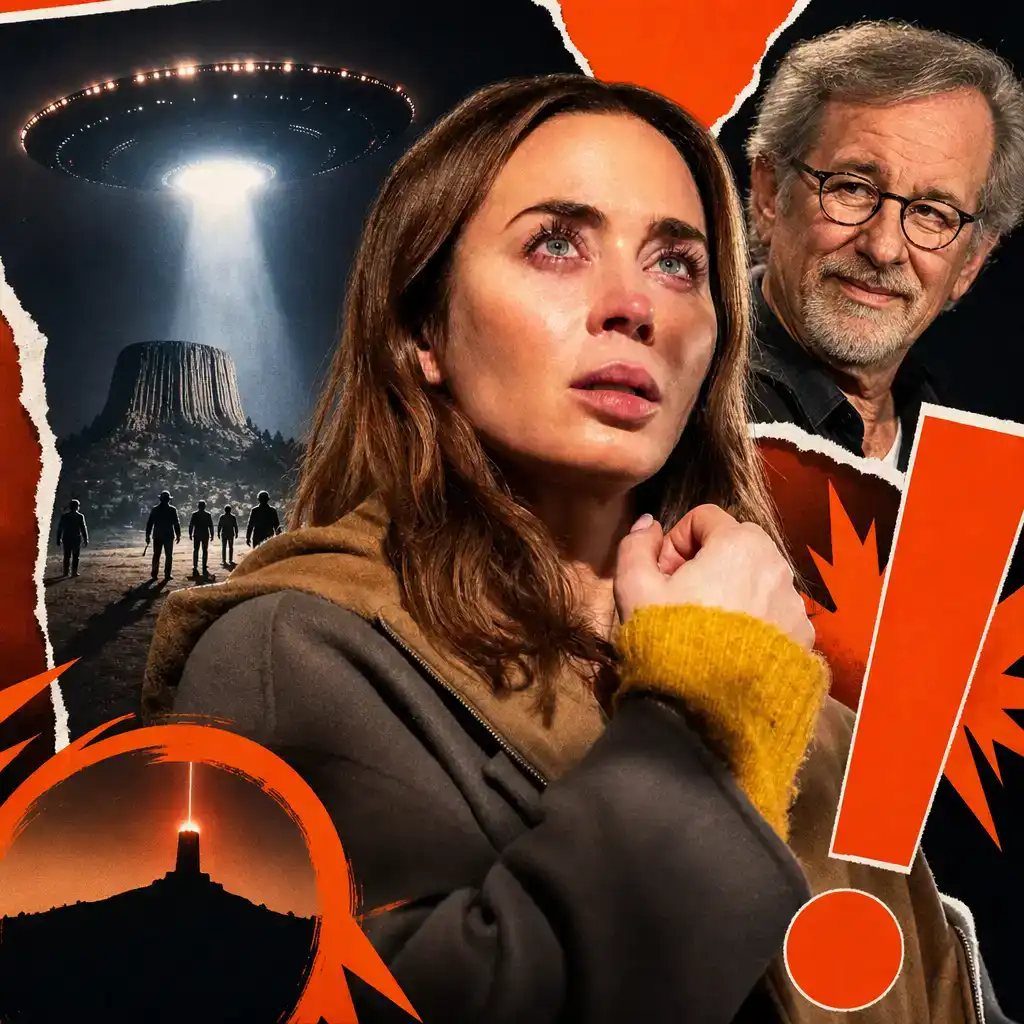
Spielberg’s upcoming UFO thriller Disclosure Day has become the center of a fast-growing fan theory: that it may be a hidden continuation of Close Encounters of the Third Kind, his 1977 sci-fi landmark about contact, awe, secrecy, and one very memorable landing at Devil’s Tower.
The idea has been gaining traction across Reddit and film forums after cast comments and careful promotional phrasing gave fans just enough oxygen to start a controlled fire. Or an uncontrolled one, depending on how many tabs they currently have open.
What is Disclosure Day about?
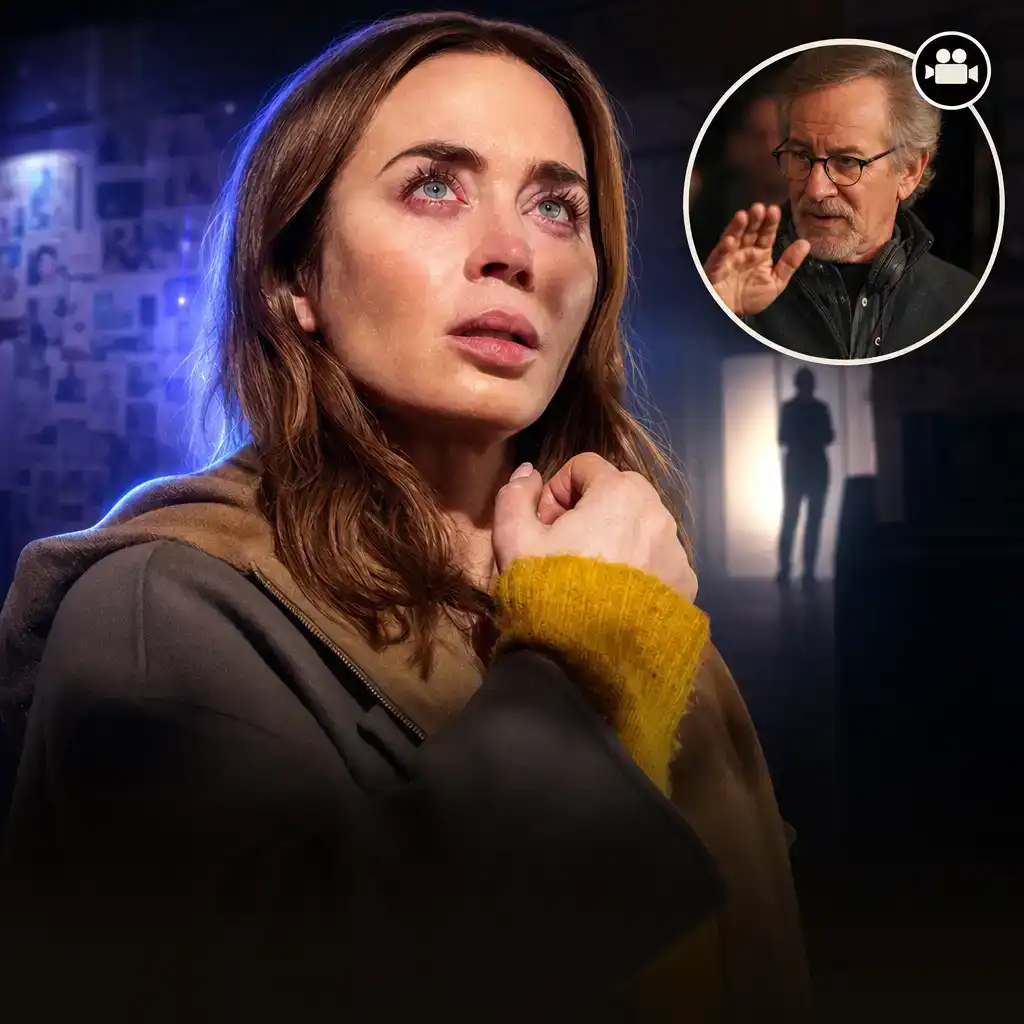
Disclosure Day is Spielberg’s latest science fiction film, written by his longtime collaborator David Koepp. The cast includes Emily Blunt, Josh O’Connor, Colin Firth, and Colman Domingo.
The official synopsis points to a large-scale government conspiracy around alien contact, describing “the extraordinary event that will change human history forever: the day of ultimate alien disclosure.” So yes, the material is not exactly hiding its Spielbergian DNA.
What has really caught attention, though, is the emotional framing. The film appears less interested in aliens as monsters and more interested in humanity’s fear, longing, and confusion when faced with the unknown. That is the territory Close Encounters mapped so well nearly 50 years ago.
Emily Blunt made the possible link harder to dismiss in an interview with Empire.
“There are definitely questions posed by Close Encounters that are answered in Disclosure Day,” she said.
That line has done more than any trailer could. Spielberg often returns to themes, but he rarely extends his own mythology in a direct way. So the question becomes fairly obvious: why name Close Encounters at all?
Why fans think it connects to Close Encounters
On Reddit, fans have been building the case for months, with several theories focused on what happened after the ending of Close Encounters of the Third Kind.
In that film, civilians witness the arrival of an alien craft at Devil’s Tower, while people who had been abducted, including World War II pilots, are returned to Earth. The ending is mysterious and emotionally overwhelming, but it does not explain what the wider world learns afterward.
One detailed post in r/Spielberg focused on the evidence left behind, including photographs taken by Barry Guiler’s mother during the events.
“Where are those photos today?” the user wrote.
The same fan noted that it remains unclear whether the world was ever fully told what happened, or whether only the people present at the landing site knew the truth.
That gap is exactly where Disclosure Day could fit, at least in theory. Fans have suggested the new film might explore decades of government suppression after the events of Close Encounters, with authorities trying to bury proof of extraterrestrial contact.
Others have connected the idea to Spielberg’s broader interest in UFO folklore, secrecy, and real-world conspiracy culture. One commenter pointed to his use of theories such as the Philadelphia Experiment in projects including Taken, arguing that Disclosure Day could combine classic Spielberg wonder with a more modern, internet-shaped paranoia.
Could Josh O’Connor be playing adult Barry Guiler?
The most energetic theory, which is a polite way of saying the one with the largest conspiracy board, concerns Josh O’Connor’s role.
Some fans believe he may be playing an adult Barry Guiler, the young boy abducted in Close Encounters. In the original film, Barry’s encounter is one of its most unsettling and tender storylines, built around a child drawn toward something his mother cannot understand or stop.
One Reddit user summed up the reaction neatly:
“Wait, there’s a theory he’s playing adult Barry?? I am all in.”
As fan theories go, it is not impossible to understand the appeal. A grown Barry, carrying broken memories of first contact into adulthood, would be a very Spielberg kind of emotional loop: awe curdled by trauma, childhood wonder revisited through adult fear.
There is no confirmation that O’Connor is playing Barry, and the rumor remains firmly in speculation territory. Still, it has caught on because it gives the theory a human center rather than just a lore connection. Audiences do not usually return to old stories for paperwork about government cover-ups. They return because someone inside the story still has something unresolved.
Why Spielberg makes the sequel theory complicated
The strongest argument against a secret Close Encounters sequel is Spielberg himself.
Throughout his career, he has generally avoided directly continuing many of his most defining films. While Hollywood has become extremely comfortable turning beloved titles into expandable property, Spielberg’s films often feel emotionally sealed, even when their worlds leave room for imagination.
Fans have also noted that Spielberg has previously expressed regret about revealing too much of the aliens in Close Encounters, because the mystery was part of the film’s power. A sequel that spells everything out could risk weakening what made the original so strange and spiritual in the first place.
One Reddit user put it plainly:
“Knowing how Steven works, he probably wouldn’t touch a prior work, regardless of how much fan service it would provide.”
That is a fair point. It is also exactly the kind of fair point that has not stopped anyone from theorizing.
Even if Disclosure Day is not a direct sequel, it seems to be talking to Close Encounters. David Koepp has described the film as sharing qualities with paranoid 1970s conspiracy thrillers such as Three Days of the Condor, while still sitting near Spielberg’s earlier alien stories in spirit.
“Conspiracies are fantastic for movies because they’re an onion,” Koepp said. “You peel away layers and find out more and more.”
That description fits a different era of alien storytelling. Close Encounters was about ordinary people discovering that reality was larger than they had been told. Disclosure Day sounds like it may ask what happens when nobody agrees on who is telling the truth in the first place.
Would a Close Encounters sequel actually work?
This is where the idea becomes risky. Legacy sequels are now one of Hollywood’s favorite habits, and the results are not always reassuring. Some revive a story with care. Others slap a familiar name on a new product and hope nostalgia does the rest. Subtle work, obviously.
Close Encounters of the Third Kind remains powerful because it does not explain too much. It leaves viewers with wonder, fear, and unanswered questions. Turning that into a dense mythology could reduce one of Spielberg’s most mysterious films to a franchise map.
At the same time, the timing of Disclosure Day is interesting. The 1977 film reflected a hopeful, almost mystical fascination with UFOs. A 2026 film about alien disclosure would arrive in a very different atmosphere, shaped by government distrust, online misinformation, and conspiracy culture that moves faster than any official denial.
That gives Spielberg room to revisit similar questions without simply repeating himself:
- What would first contact do to ordinary people?
- Who gets to control the truth?
- What happens when evidence exists, but trust has collapsed?
- Can wonder survive in a culture trained to suspect everything?
Those questions feel close to Close Encounters, but not trapped inside it. Whether Disclosure Day is a secret sequel or a spiritual companion, the emotional stakes are clear: Spielberg is returning to the sky at a moment when audiences may be less ready to believe, but more desperate than ever to know.
Disclosure Day is released in cinemas on Friday, June 12.