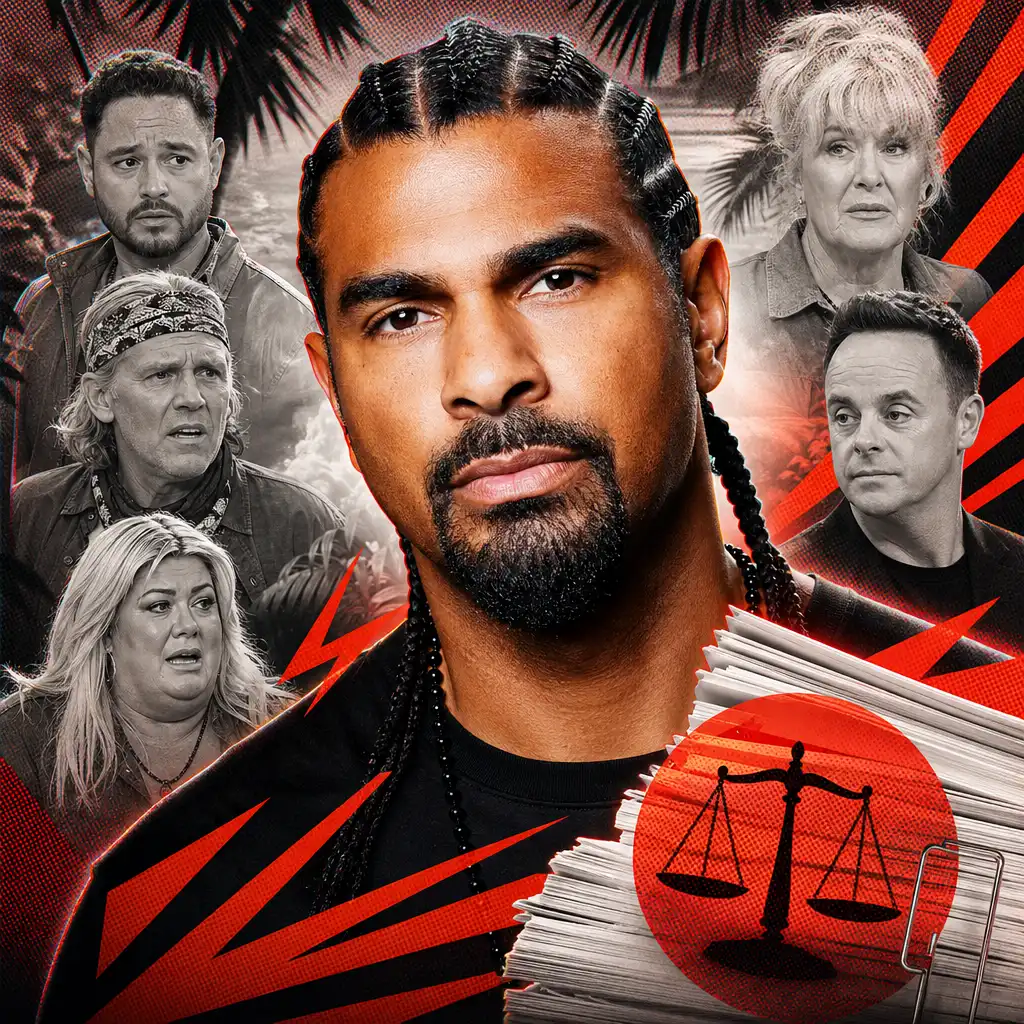
David Haye’s post-jungle fight may be moving from reality TV to the legal arena.
The former world heavyweight champion is reportedly preparing to sue ITV for up to £10 million, claiming the edit of I’m A Celebrity South Africa caused “irreparable brand damage” and cast him as the show’s “pantomime villain.”
According to The Sun, Haye, 45, has instructed lawyers to send a letter to the broadcaster and is demanding a “full investigation” into how the series was edited.
Haye reportedly claims ITV made him a scapegoat
The boxer’s time on the ITV series drew heavy criticism from viewers, particularly over his clashes with Waterloo Road actor Adam Thomas and comments about women.
Thomas was crowned Jungle Legend during Friday’s live final, a result Haye openly questioned on air by saying he did not consider him a “worthy winner.” Haye had also been accused by some viewers of “bullying” Thomas during the series.
A source told The Sun: “David is absolutely gung-ho about all of this - he is incandescent with rage about how the whole series has been handled and feels he’s being made a scapegoat by ITV.”
The same source claimed Haye believes the programme made him appear misogynistic, aggressive and bullying, while he insists he is “none of these.” He is also said to feel that online trolling followed as a direct result of how he was presented.
The insider added that Haye’s lawyers intend to examine the series “with a fine-toothed comb” for evidence and that the damages claim is aimed at recovering lost earnings.
“He is going for damages as a result of the ‘propaganda’ aired against him to recover lost earnings, which lawyers believe could total up to £10million,” the source said.
Netflix talks and brand work reportedly affected
The fallout is not being framed simply as bruised pride. The report claims Haye had been in discussions with Netflix about a potential show, but those talks have now stalled. Brand work is also said to have been “paused.”
Haye has reportedly instructed Gatehouse Chambers, described as a £500-an-hour legal firm.
For broadcasters, the edit is not a small detail. Reality television relies on condensing hours of footage into clean storylines, but participants often argue that what viewers see can flatten context, heighten conflict, or make one person carry the drama. In this case, Haye appears to be arguing that the edit did more than shape a storyline. He reportedly believes it damaged his commercial prospects.
The Gemma Collins exchange under scrutiny
One moment cited in the report involved Gemma Collins before a trial. Collins gave a motivational talk to the camp and said: “We all need to eat tonight.”
She added: “You know what I’m like without food.”
Haye responded: “You need to eat? Where was you last night? And where was I last night. What did I eat last night?”
After a pause, Collins replied: “Do you know what? Sometimes, eating a bit of humble pie makes us stronger and better as people.”
“It does,” Haye said, before Collins smiled and added: “I know you’re gonna bring it back today.”
The Sun’s source claimed Haye believes that moment was shaped by “clever editing and snide eye-rolls” to make the remark appear worse than it was.
Backlash over the “ugly duckling” theory
Haye also faced criticism during the series for what became known as his “ugly duckling” theory about women. The comments were branded “sexist” at the time by fellow campmate Beverley Callard.
That criticism has formed part of the wider viewer reaction to Haye’s appearance, with the boxer now reportedly arguing that the edit created a misleading impression of his character.
Jimmy Bullard also challenged the edit
The tension over the programme’s presentation did not end with Haye.
During the live All Stars final, Haye supported Jimmy Bullard’s demand that Bullard’s full argument with Adam Thomas be aired. Bullard, a former footballer, accused ITV’s edit of failing to show a fair or accurate version of what happened during their row, which was filmed in South Africa last year.
Host Ant McPartlin rejected Bullard’s version of events during the broadcast. McPartlin said he did not agree with Bullard’s account and explained that some of Thomas’s language could not be broadcast because it included repeated use of the C-word.
Bullard described Thomas’s conduct during the argument as “abusive, aggressive and intimidating” nine times. According to the report, that wording is significant because it is said to be a key phrase in the celebrities’ contracts defining unacceptable behaviour.
Bullard is also thought to be pursuing legal action against ITV and used Friday’s live final to gather evidence, sources claimed.
Separately, another campmate told The Sun that cast members had been “reminded” of key clauses in their contracts after the recent drama. The clauses allegedly included rules about bringing the show or ITV into disrepute, as well as ITV’s “absolute discretion and control” over programme content.
Haye polled followers on whether he was a bully
On Tuesday night, Haye addressed the backlash directly in a video shared to his Instagram story.
“Quick question ladies and gentlemen, cos I’m still kind of confused about the last couple of weeks,” he said. “Do let me know whether, off the strength of watching I’m A Celebrity… Get Me Out of Here! 2026 Legends edition, you think I’m a bully?
“Would you consider that yes, I’m a bully, or no, it was banter, and it was all good? Very interested to know the numbers cos I’ve asked a few questions and from the responses I got it seemed like I was in a massive minority thinking that my behaviour was correct?”
When the first results showed an almost even split, with 52% of respondents saying they did not think he was a bully, Haye wrote: “At least half the people have some sense!”
Two hours later, when the poll had shifted and 77% of voters said they did think he was a bully, he added: “So much for the sensible people!! Is the world truly that full of sensitive morons?!?”
Metro said it had contacted representatives for David Haye and ITV for comment.
The legal questions, if they proceed, will sit in familiar but difficult territory: how much control a reality show has over its story, how much responsibility participants have for what they say on camera, and where entertainment ends when a public image becomes a business asset.