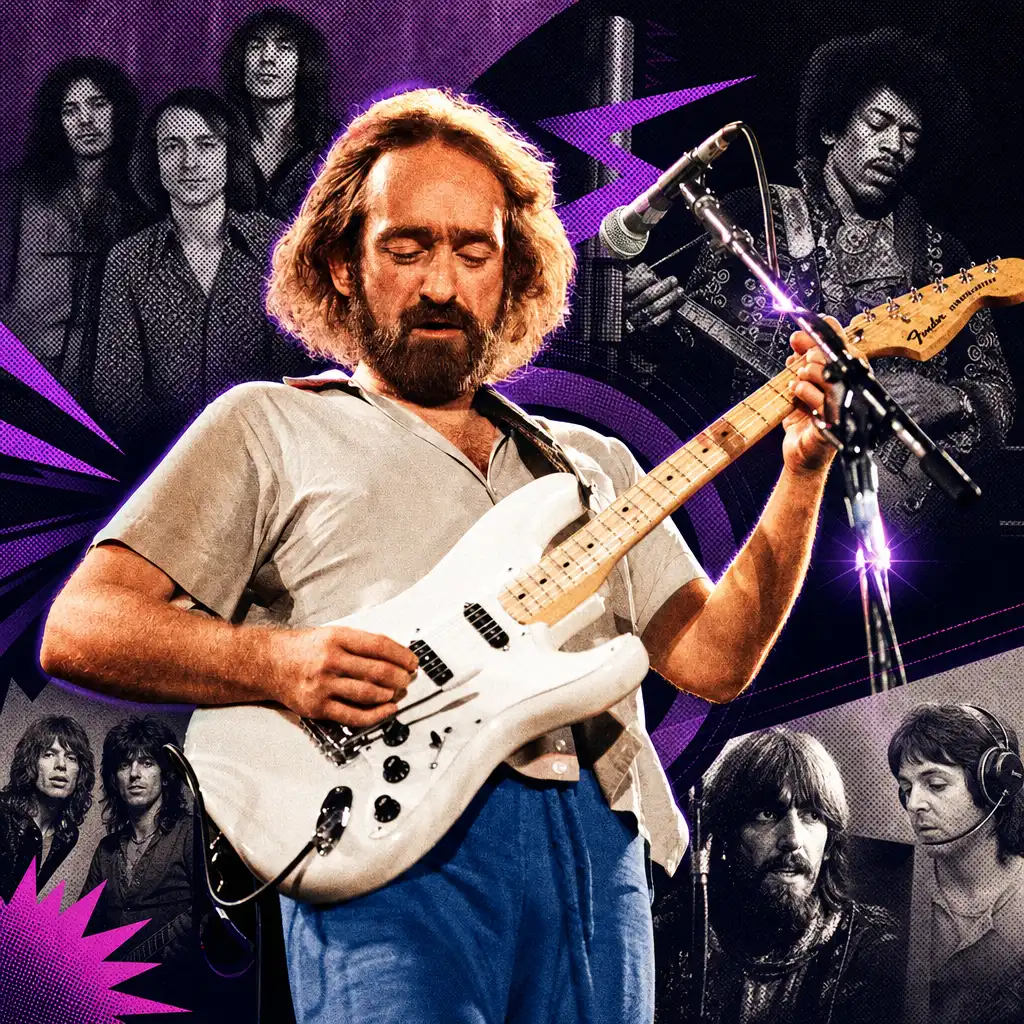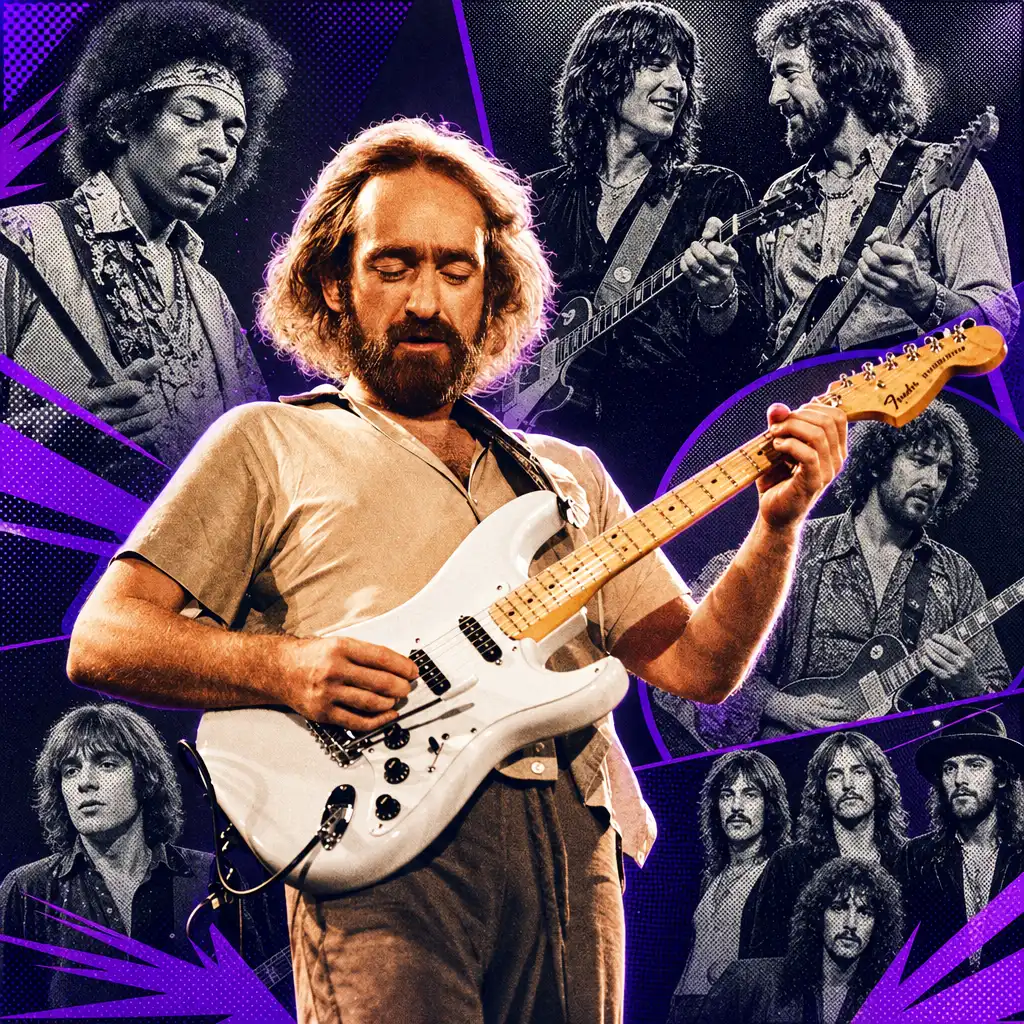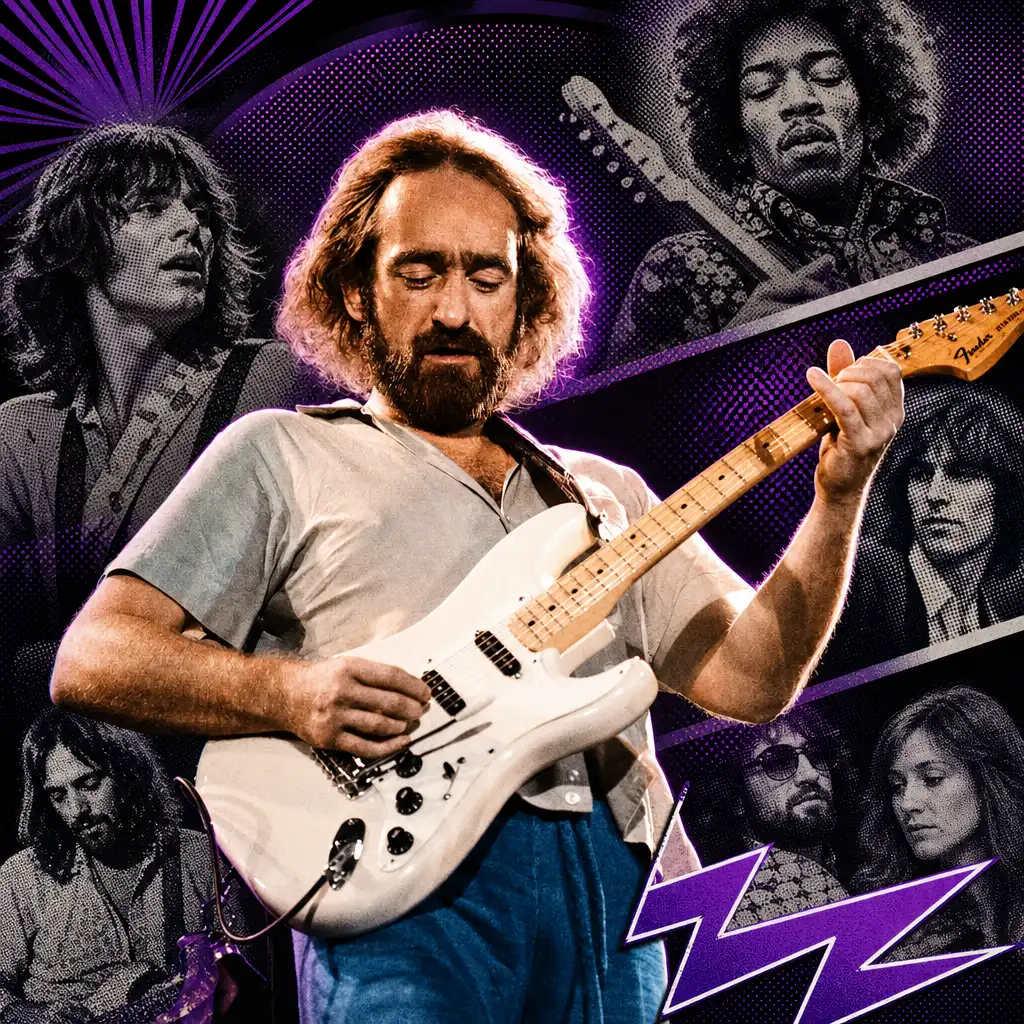
Dave Mason was not just adjacent to rock history. He kept walking into the room at the exact moment the tape was rolling.
The English guitarist and songwriter, best known for writing Traffic's “Feelin' Alright?” and for solo hits including “Only You Know and I Know” and “We Just Disagree,” died on Sunday. He was 79. A cause of death was not immediately available.
“On behalf of his family, it is with deep and profound sadness that we share the news of the passing of Dave Mason,” his publicist, Melissa Dragich, said in a statement. “Dave Mason lived a remarkable life devoted to the music and people he loved.”
Mason had announced last fall that he was retiring from touring because of ongoing health issues. A statement posted to his social media at the time said he was leaving the road “a happy man with a heart full of gratitude to his band members, business colleagues, and especially his legions of fans who made his life one of deep satisfaction and fulfillment.” It added: “The immensity of his joy remains solid as he steps back from the stage.”
The restless man inside Traffic
Mason first made his name as a co-founder of Traffic, the psychedelic British band built around Steve Winwood, Jim Capaldi, Chris Wood, and Mason himself. His song “Hole in My Shoe,” a bright, strange slice of 1967 British psychedelia, gave the group its biggest U.K. hit when it reached Number Two that year.
It also pushed Mason toward the exit. The single's success overwhelmed him, and his first departure from Traffic came almost immediately. That pattern, arrival followed by motion, would define much of his career. Mason later described himself to USA Today as “kind of the Forrest Gump of rock” while promoting his 2024 memoir, Only You Know and I Know. It was a funny line, but not an empty one. Across six decades, he turned up beside the Rolling Stones, Jimi Hendrix, George Harrison, Eric Clapton, Delaney & Bonnie, Paul McCartney, Michael Jackson, and Fleetwood Mac.
Born May 10, 1946, in Worcester, England, Mason grew up in the Midlands, not far from the neighborhoods that produced Robert Plant and John Bonham. Jim Capaldi, his future Traffic bandmate, was also nearby. Mason sang in a school choir as a child, but rock and roll did the real damage, especially Buddy Holly. He picked up guitar at 16 and began playing professionally with the instrumental rock group the Jaguars.
After the Jaguars released “Opus to Spring” in 1963, Mason moved on and joined Capaldi in the Hellions. The group toured the U.K. and Germany between 1964 and 1965 and recorded several singles in 1965, including “Daydreaming of You,” written by Jackie De Shannon and produced by Kim Fowley. The records did not break through, and the Hellions later worked as a support group for P.J. Proby.
Mason drifted again, kept playing, and picked up road work for the Spencer Davis Group, the hard-driving R&B band featuring a teenage Steve Winwood on keyboards and guitar. Mason eventually entered the group's circle closely enough to sing background on some sessions. In 1967, Winwood left Spencer Davis and formed Traffic with Mason, Capaldi, and flautist-saxophonist Chris Wood.
A cottage, a sound, and a fracture
Traffic's early mythology has the useful advantage of being true: they went to a cottage and worked up a sound. The result sat between the melodic pull of the Beatles and the more ornate, surreal corners of British psychedelia. In 1967, the band scored three U.K. Top Ten singles: “Paper Sun,” “Here We Go Round the Mulberry Bush,” and Mason's “Hole in My Shoe.”
Mason left after that last hit, released the solo single “Little Woman” in 1968, and produced Music in a Doll's House, the debut album by the progressive rock band Family. Traffic then brought him back for practical reasons. The group needed more original material for its second album.
Mason delivered. He wrote half of 1968's Traffic, including “Feelin' Alright?,” the record's only single. Traffic's version did not become a major hit, but the song had better legs than most careers. Joe Cocker's 1969 cover turned it into a rock standard, aided by a tougher rhythmic attack and a vocal that made the title sound less like confidence than accusation.
Traffic did not last with Mason inside it. After the album's release, he was fired. In his memoir, Mason wrote that Winwood told him: “I don't like the way you write. I don't like the way you sing. I don't like the way you play. And we don't want you in the band any more.” Rock bands have produced longer manifestos with less clarity.
The session player who kept landing in the center
By then, Mason was already a useful presence in major recording rooms. He played the droning shehnai on the Rolling Stones' “Street Fighting Man,” produced by Jimmy Miller, who also worked on Traffic's early albums. He later played 12-string acoustic guitar on Jimi Hendrix's “All Along the Watchtower,” one of the rare Dylan covers that practically rewired the original in public.
Mason also crossed paths with Cream drummer Ginger Baker, appeared during the sessions for George Harrison's All Things Must Pass, and was briefly considered by Hendrix as a possible member of the Experience. That idea never materialized. A reunion with Capaldi and Wood under the name Wooden Frog also collapsed before it could become a stable project.
He eventually headed to the United States. Gram Parsons, whom Mason knew through the Rolling Stones orbit, helped connect him to the Los Angeles rock world. Mason joined Delaney & Bonnie & Friends on tours of the U.S. and Britain, playing alongside Eric Clapton. On that tour, Mason sang “Only You Know and I Know,” the punchy, open-road song that became the centerpiece of his 1970 solo debut, Alone Together.
Recorded in Tulsa, Oklahoma, with players largely drawn from the Delaney & Bonnie circle, Alone Together gave Mason a strong start as a solo artist on Blue Thumb Records. The album balanced roots-rock looseness with clean melodic writing, and Mason's guitar playing favored tone and placement over exhibition. In an era full of soloists trying to win arguments at high volume, that restraint mattered.
He complicated that promising launch almost immediately by releasing a duet album with Cass Elliot in 1971. By the time Dave Mason & Cass Elliot arrived, Mason was tangled in a contract dispute with Blue Thumb. The label issued Headkeeper in 1972 and Dave Mason Is Alive! without his approval.
During that unsettled stretch, Mason accepted an invitation to join Clapton's Derek & the Dominos. He left after one gig, later finding the band's drug-heavy atmosphere draining. He also returned briefly to Traffic, playing on the tour documented on Welcome to the Canteen.
Columbia years and a soft-rock standard
Once his dispute with Blue Thumb was resolved, Mason signed with Columbia Records. He released It's Like You Never Left in October 1973, with Stevie Wonder appearing on “The Lonely One.” The albums Dave Mason and Split Coconut followed, and Mason built a steady audience through touring. The 1976 release Certified Live captured what that audience was hearing onstage.
Mason also made another high-profile session appearance in the middle of the decade, playing guitar on Paul McCartney & Wings' 1975 hit “Listen to What the Man Says.” Soon after, he landed one of his own biggest singles with “We Just Disagree,” a ballad written by his guitarist Jim Krueger.
“We Just Disagree” anchored Mason's 1977 album Let It Flow. Its softness is deceptive: the song works because it refuses melodrama, letting the vocal sit plainly inside a gentle arrangement. Mason was never a singer who needed to shove a feeling into the front row. He often trusted the tune to do the carrying.
He followed with another successful album, Mariposa de Oro, in 1978. In 1980, he closed out his Columbia contract with Old Crest on a New Wave. The title acknowledged the changing commercial weather as New Wave began pushing many classic rock acts off the charts. The album also featured a striking bridge between generations: Michael Jackson duetted with Mason on “Save Me.” Jackson took the job because he had sung “Feelin' Alright?” with Diana Ross on television when he was 12.
Out of step with the business, still working
Mason's 1980s were quieter. He later summed up the period bluntly: “The latest flavor was something I didn't want to be any part of. I didn't fit into the business at that point.”
A contractual dispute with Columbia further slowed his recording career. He toured with Jim Krueger as a duo, then released Two Hearts on MCA in 1987. It would be his final album for a major label.
In 1993, Mason joined Fleetwood Mac, another band with a long history of lineup shifts and internal weather systems. He appeared on the group's 1995 album Time, its first album in 20 years without Stevie Nicks.
Mason reunited with Jim Capaldi in 1998 for a tour that produced Live: The 40,000 Headmen Tour. Their renewed good terms did not last. Mason also had a further dispute with Winwood around Traffic's 2003 induction into the Rock & Roll Hall of Fame. In his memoir, Mason wrote that Capaldi told Winwood on his deathbed in 2005 not to reform Traffic.
Mason kept moving anyway. In 2008, he released 26 Letters and 12 Notes, his first studio album in 20 years. Future's Past followed six years later. In 2020, he revisited his debut by rerecording Alone Together.
By then, the stage had become his main workplace, even if he never seemed fully comfortable with the spotlight. In 2024, he toured under the banner “Traffic Jam,” a late-career return to the catalog that first made his name.
“I still don't like standing up there in front of the spotlight. I feel very uncomfortable up there,” Mason told Rock Cellar in 2020. “I'm not a rock star, let's put it that way. I never wanted to be. I just wanted to write great music, make some money and have fun. And when I was younger, meet girls.”
It was a modest summary for a career that was anything but small. Mason wrote one of classic rock's most durable songs, helped shape Traffic's early sound, cut a solo catalog with real craft, and left fingerprints on records by artists who defined entire wings of popular music. He was restless, sometimes difficult to place, and rarely still. The music business did not always know what to do with that. The records did.