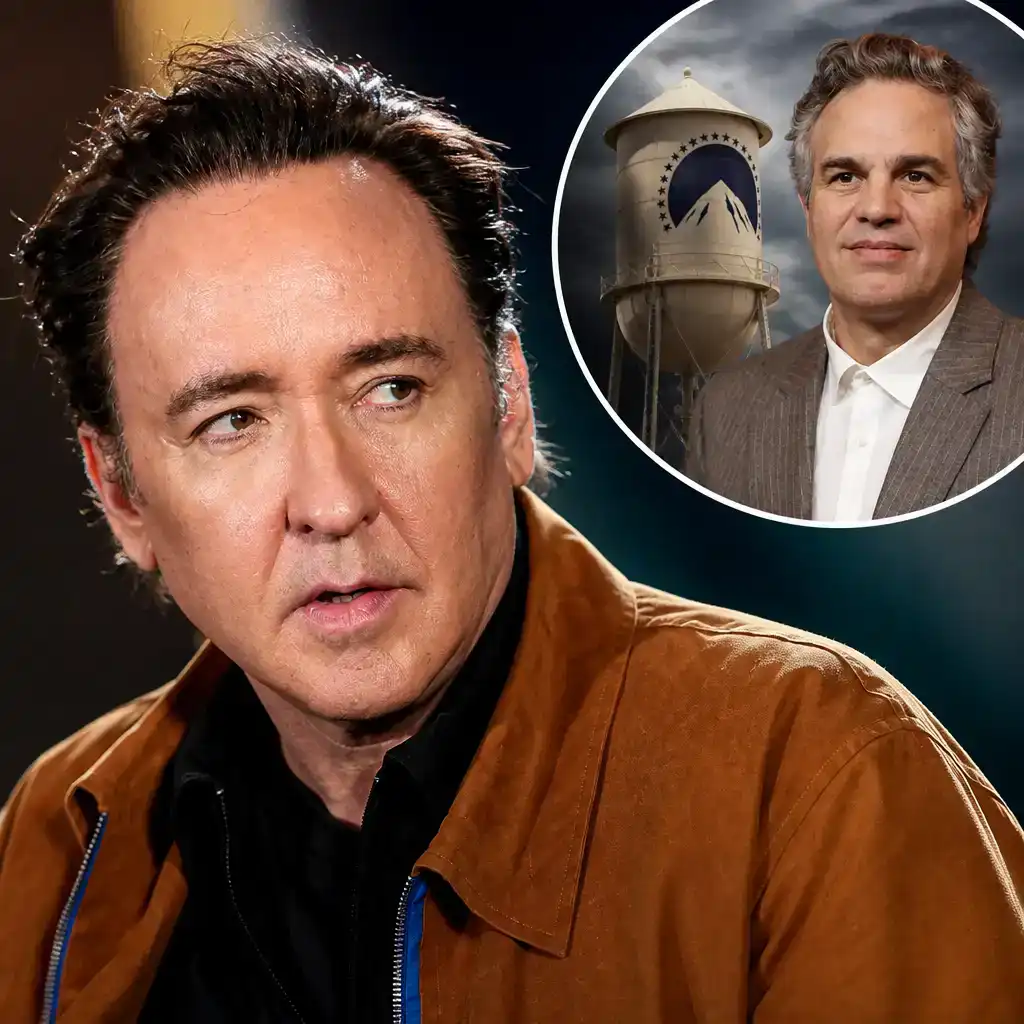
John Cusack has backed Mark Ruffalo in the increasingly heated debate over the Paramount-Warner Bros. merger, after Paramount accused Ruffalo of invoking antisemitic tropes while criticizing the proposed $111 billion transaction. Cusack responded to the actor’s defense on X with a brief endorsement: “Solidarity, well said.”
The exchange adds a celebrity dispute to a takeover already facing opposition from 12 state attorneys general, the Writers Guild of America and industry figures worried about jobs and editorial independence. The timing is particularly awkward. Ruffalo’s clash with Paramount arrived just before settlement talks in the states’ antitrust case broke down, ensuring that a complicated legal argument now comes with a public fight over antisemitism as well.
What did Mark Ruffalo say about Oracle and Paramount?
Ruffalo’s criticism focused on Oracle executive vice chair Safra Catz, who also serves on Paramount’s board. He reposted a video in which Catz discussed “really profoundly scary technologies” that Oracle used to assist the Israeli military after the October 7, 2023, Hamas attacks.
According to the Los Angeles Times, the recording was about two years old rather than a new statement. Oracle’s connections to Israel also predate the current merger battle. In 2024, Catz told Calcalist that the company had built an underground Israeli cloud facility before securing government or military contracts.
Ruffalo linked those ties to Oracle co-founder Larry Ellison and his son, Paramount Skydance chief executive David Ellison. He argued that allowing the family to gain control of Warner Bros. Discovery assets, including CNN, HBO and Warner Bros., could threaten editorial freedom and employment.
In an Instagram story, Ruffalo said Oracle’s technology could eventually be combined with one of the world’s largest media businesses and “one day used on you.” He also accused Catz of celebrating technology connected to what he described as genocide and an apartheid system of oppression.
Those terms prompted Paramount to issue a statement saying it was “troubled when antisemitic tropes are invoked” during a business dispute. The company said applying words such as “genocide” and “apartheid” to a corporate transaction was wrong and diminished the suffering those terms describe.
How did Ruffalo answer the antisemitism allegation?
Ruffalo called Paramount’s accusation “appalling and fundamentally dishonest.” He argued that criticism of the Israeli government, military technology contracts and corporate executives must not automatically be treated as hostility toward Jewish people.
“Scrutinizing the Ellisons, including Oracle’s business built on data, surveillance technology and government contracts and the serious threat to editorial freedom and the loss of a livelihood for thousands of families, is fair and necessary,” he said.
The actor also questioned the financing and potential editorial consequences of the acquisition. He said the deal would place CNN, HBO and Warner Bros. under one family’s control, partly backed by foreign money whose possible influence had not been fully explained to the public.
Ruffalo urged regulators to continue investigating and said the transaction should not proceed until national security and competition concerns receive clearer answers. David Ellison has separately promised that CNN’s editorial independence “will absolutely be maintained.” Paramount also says the deal has received regulatory approval in nearly 70 countries.
The argument therefore involves two separate questions that have become tightly entangled: whether Ruffalo’s language crossed into antisemitism, and whether his concerns about concentrated media ownership have merit. Social media, as usual, has not shown much interest in keeping the files separate.
Why did the dispute erupt during failed mediation?
The public confrontation came immediately before planned mediation in the states’ antitrust lawsuit. On August 24, California Attorney General Rob Bonta canceled a settlement meeting with David Ellison, according to Axios and TheWrap.
Bonta accused Paramount Skydance of leaking confidential details and negotiating in bad faith. The breakdown could extend a case brought by a coalition of 12 state attorneys general seeking to stop the acquisition.
Paramount has asked the court to require the states and the Writers Guild of America to post a $1.9 billion bond to cover losses allegedly caused by delaying the deal. This is not the usual pre-mediation quiet.
The companies have agreed not to complete the transaction until five days after a court rules on the merits of the states’ claims or June 1, 2027, whichever comes first. That arrangement leaves a long runway for more litigation, political pressure and famous people posting statements.
Paramount argues that the states are stretching antitrust law and that a combined company would compete more effectively against dominant streaming platforms and technology groups. The states see the same consolidation rather differently, alleging it would “extinguish competition.”
Why are federal and state regulators divided?
The case highlights a sharp split between federal and state antitrust enforcement. On June 12, the U.S. Department of Justice concluded that the acquisition was unlikely to harm competition. The state attorneys general remain unconvinced.
Their lawsuit argues that the combined company could control nearly one-third of theatrical-film distribution and basic-cable programming. Such a share, they say, could reduce competition for content, advertising and workers.
The Writers Guild of America filed a separate lawsuit on July 14. Writers Guild of America West President Michele Mulroney said the merger would create “the largest buyer of original film and television programming in the United States.” The union fears that fewer major buyers would mean less bargaining power for writers and fewer opportunities for original projects.
Employment concerns are not theoretical. The Los Angeles Times reported that Disney’s 2019 acquisition of 21st Century Fox resulted in more than 4,000 job losses. Ruffalo cited the potential impact on thousands of families as part of his case for closer scrutiny.
Paramount counters that greater scale is necessary to challenge larger streaming and technology companies. In other words, one side says consolidation is needed to compete with giants, while the other says creating another giant is precisely the problem.
Who has supported Paramount’s response?
Jim Berk, chief executive of the Simon Wiesenthal Center, praised Paramount for challenging Ruffalo’s language. He said legitimate debate must not be allowed to give way to antisemitic tropes and commended the company for drawing a clear line.
Film critic Christian Toto, founder and editor of Hollywood in Toto, was less enthusiastic about Cusack’s intervention. He suggested Ruffalo might have preferred Cusack to remain silent, pointing to the actor’s previous controversial comments about the Middle East.
Toto also argued that the merger fight could expose political divisions inside Hollywood, with some industry groups and Democrats seeking a resolution while others remain committed to blocking the transaction. He warned that the conflict could eventually damage careers.
Cusack’s post did not address the antitrust details or the dispute over Ruffalo’s wording. It simply placed him on Ruffalo’s side. Still, the intervention shows how quickly a corporate acquisition can become a broader cultural fight when it combines media ownership, Israel, antisemitism, surveillance technology and Hollywood politics. The transaction already had regulators, unions and lawsuits. Apparently, it also required a supporting cast.