Activision has finally put a date on Call Of Duty: Modern Warfare 4, and the bigger surprise is where it will land: Nintendo Switch 2 gets the game on day one alongside PlayStation 5, Xbox Series X/S, and PC. The release date is October 23, 2026, which gives the series its next major chance to steady itself after a rough year.
That context matters. Last year’s Call Of Duty: Black Ops 7 underperformed critically and commercially while Battlefield 6 gained ground, leaving Activision’s usually immovable shooter brand has taken a visible hit. This new entry was already in motion long before that reaction fully landed, because annual development cycles are not exactly known for emotional flexibility.
Why Modern Warfare 4 is a delicate follow-up
As leaks had suggested, this year’s game is a sequel to 2023’s Call Of Duty: Modern Warfare 3, one of the least warmly received entries in the franchise. That makes the positioning slightly awkward. Activision is following a stumble with a sequel to another stumble, which is certainly one way to test brand loyalty.
Still, Modern Warfare 4 was shown as more than a routine continuation. Developer Infinity Ward is leaning on a new setting, changes to movement and shooting, and the return of DMZ to suggest this installment has more going on than a fresh coat of camouflage.
The game does not look like a total reinvention, at least from what has been shown. But it does appear to be trying to shift some familiar pieces around, especially in its campaign setup and multiplayer systems. For a series locked into a yearly release rhythm, that may be the realistic version of bold.
The campaign moves the conflict to Korea
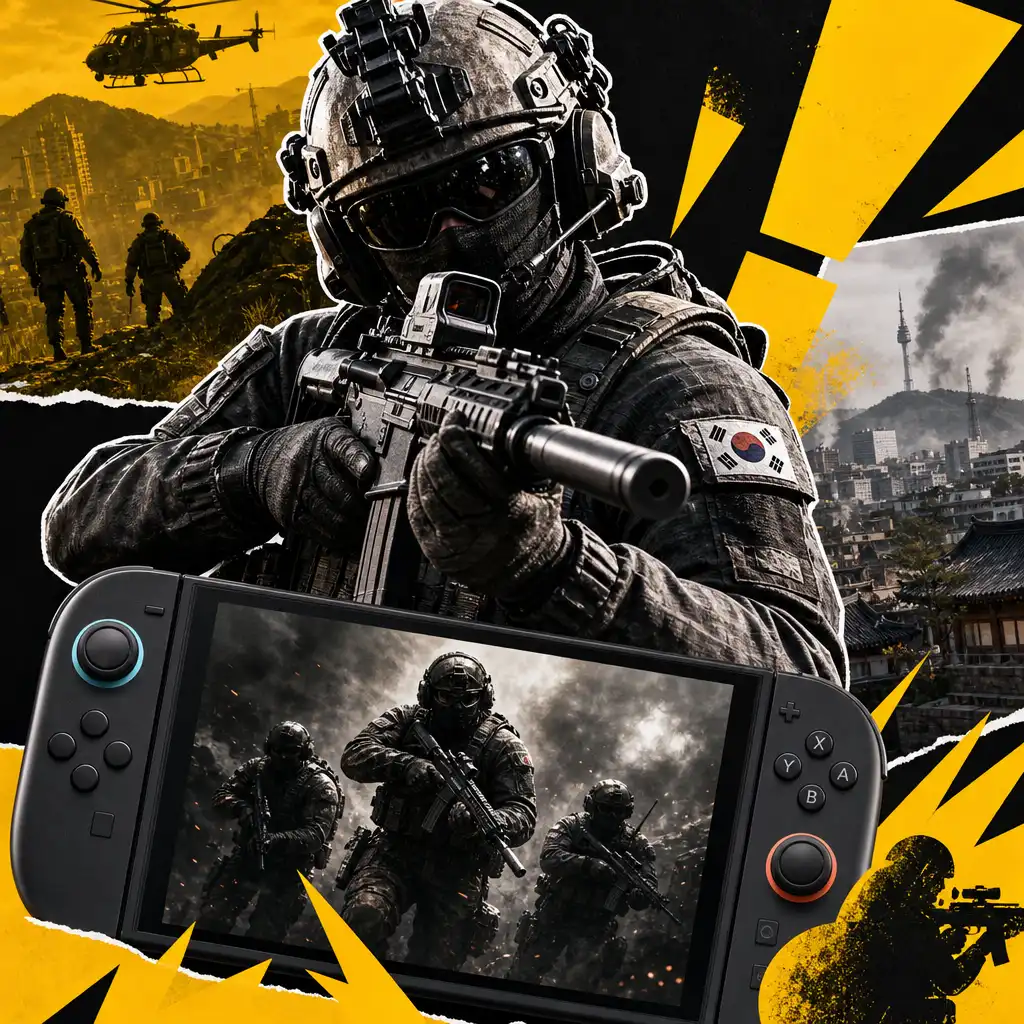
The most substantial campaign change is the setting. Modern Warfare 4 centers on a war between North Korea and South Korea, a conflict that threatens to spiral into a wider global crisis.
In a press preview, Activision described the campaign’s full level structure. Players move between two strands of the story:
- A combined unit of Korean and United States soldiers operating in Korea
- Captain Price’s separate missions tied to the broader conflict, with locations including Paris, Mumbai, New York, and other cities
The Korean squad is the more immediately interesting idea. Because South Korea has mandatory military service, some of the soldiers are framed less as elite career warriors and more as regular people caught in terrifying circumstances. That gives the story a human angle Call Of Duty has not explored much since it moved away from Second World War settings and toward the kind of military heroics where everyone seems genetically engineered to speak in gravel.
Whether the full game can carry that tension remains unclear. The preview suggests those Korean characters share the spotlight with Captain Price, who remains important to Modern Warfare continuity but is, frankly, the less fresh dramatic prospect here.
Captain Price still anchors the wider plot
Captain Price’s role appears designed to connect Modern Warfare 4 directly to Modern Warfare 3 and keep long-time series followers grounded in familiar territory. He is dealing with the conflict beyond Korea and, according to the preview, going rogue across multiple international missions.
That structure gives the campaign a broader, globe-trotting scale, which Call Of Duty has used many times before. The risk is that the more grounded Korean storyline could be diluted by the franchise’s usual appetite for international escalation.
There is an obvious emotional pull in following soldiers who are not presented as mythic operators, but as people underprepared for the danger ahead. If Modern Warfare 4 gives that material enough room, it could make the campaign feel sharper than recent entries. If not, it may become another case of an intriguing premise being politely escorted offstage by a man with night vision goggles and a very serious beard.
Multiplayer is faster, smoother, and more technical
Infinity Ward is also making several multiplayer changes, though some will matter more to dedicated players than casual weekend participants trying to remember which button throws a grenade.
The studio is promising more fluid movement, with smoother transitions between sliding, mantling, and climbing. The recent omni-movement system has been expanded too. Players will be able to:
- Fire while hanging from ledges
- Shimmy around corners
- Launch into a “super slide” onto their back with a quick double tap
The aim appears to be greater control and flexibility during combat. For competitive players, those animation and movement tweaks could meaningfully change how fights unfold. For everyone else, it may mostly mean getting eliminated by someone upside down, moving very quickly, and somehow still perfectly calm.
Infinity Ward is also introducing what it calls “Ballistic Authority,” a broad label covering improved gun animations, clearer player visibility, and shooting changes.
What Ballistic Authority changes in gunplay
The most notable part of Ballistic Authority is the removal of weapon bloom. In previous games, hip-firing could send bullets slightly away from the center of the crosshair through a small amount of random spread. That system encouraged players to aim down sights for better precision.
In Modern Warfare 4, that random inaccuracy is being removed. In theory, this rewards skill and makes gun behavior more predictable. In practice, it could also make aiming down sights feel less necessary in some situations, depending on balancing.
The change seems aimed at players who want tighter competitive consistency, not those who enjoy blaming invisible bullet spread for every lost duel. Still, precision is a major part of how Call Of Duty feels, so this could become one of the more debated adjustments once players get their hands on it.
There are also quality-of-life additions. A new “Gunny” system in the Gunsmith lets players quickly create weapon builds using pre-selected criteria. Loadouts are also more flexible, with players able to apply different setups to different operators more easily.
New modes, new maps, and one unusual arena
Infinity Ward says Modern Warfare 4 will launch with more than 12 multiplayer modes. Three of those are new and are called Inflation, Hijack, and Counter Attack.
The game will also include 12 brand new multiplayer maps at launch. The standout is Killblock, which sounds like the most experimental of the announced arenas. It is described as a procedurally generated map built from different environmental slabs that can be randomly assembled into more than 500 combinations each time players enter.
That could give multiplayer a useful dose of unpredictability, assuming the procedural design still produces fair, readable matches. Randomness is exciting right up until one team spawns into architectural nonsense.
Even so, Killblock suggests Infinity Ward is at least testing ways to make the standard map rotation feel less static. For a franchise with such a fixed annual cadence, small structural changes can carry more weight than they might elsewhere.
DMZ returns after its beta debut
The third major pillar is DMZ, the extraction mode that returns after its beta version in 2022’s Call Of Duty: Modern Warfare 2.
Call Of Duty has been experimenting with extraction-style modes for several years, including the Endgame mode in Black Ops 7. Modern Warfare 4’s version will need to show how it differs from those earlier attempts and whether it can become a lasting part of the package rather than another side experiment.
Extraction modes rely on tension, risk, and the possibility of losing what you brought in. That can fit Call Of Duty well when the pacing is allowed to breathe, though the series has not always been comfortable slowing down long enough to let dread do its job.
For now, Activision is confirming the mode’s return, but the practical differences remain unclear. More details are likely to matter here than the headline itself.
Switch 2 gets Call Of Duty on day one
The platform news may be the biggest business development. Modern Warfare 4 will be the first Call Of Duty game to launch on Nintendo Switch 2, arriving the same day as the PlayStation 5, Xbox Series X/S, and PC versions on October 23, 2026.
No footage from the Switch 2 version was shown during the preview, so there are still obvious technical questions. The series has long treated 60 frames per second as a core part of its feel, especially in multiplayer. Whether the Switch 2 version can maintain that standard is not yet known.
Some compromises are likely, whether in resolution, effects, or other technical areas. The key question is whether those compromises affect the responsiveness that Call Of Duty players expect.
For Nintendo players, though, day-one parity is still significant. It brings one of gaming’s biggest annual releases to the platform at launch rather than much later, or not at all.
A cautious reset rather than a revolution
Modern Warfare 4 does not currently look like the dramatic reinvention some might expect after Black Ops 7’s disappointing reception. It probably could not be, given how far in advance these games are built.
What it does offer is a Korean campaign with a potentially stronger human focus, multiplayer tweaks aimed at fluidity and precision, the return of DMZ, and a major platform expansion through Switch 2.
That combination may not silence every criticism around the series. But it suggests Activision and Infinity Ward know the next game has to do more than simply arrive on schedule. For Call Of Duty, that alone counts as a noticeable shift.