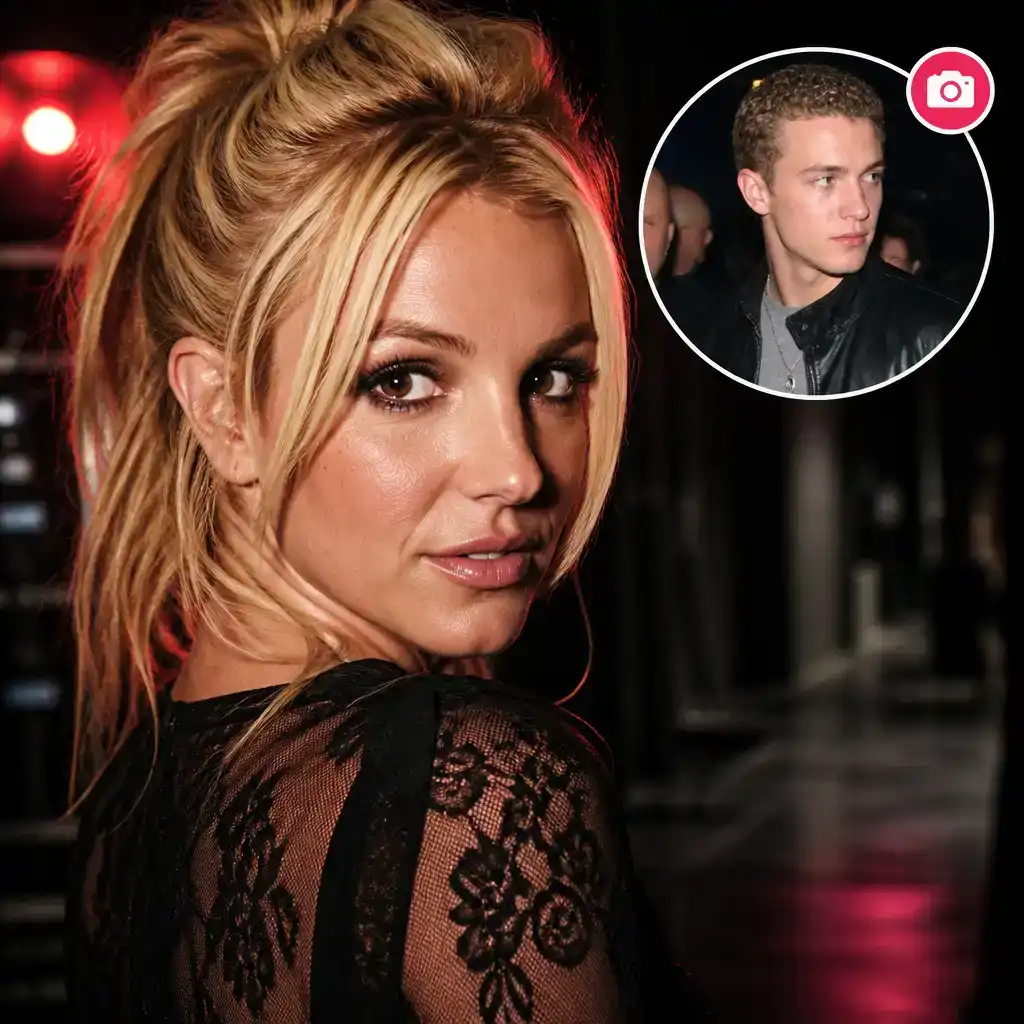
The Britney Spears breakup text story has returned again, this time through music video director Chris Applebaum’s appearance on Hyperfixated with Joseph Shepherd. His account places a private emotional blow inside an already punishing production: Spears allegedly learned that Justin Timberlake was ending their relationship while she was filming “Overprotected (The Darkchild Remix),” then went back before the cameras within minutes.
It is a striking story, but not a new revelation. Applebaum first described the incident publicly on Instagram in April 2022 and repeated it to ABC News in November 2023. Spears also confirmed the basic circumstances in her October 2023 memoir, The Woman in Me. The latest retelling adds color while showing how small details can shift when pop history is revisited more than two decades later.
What happened during the “Overprotected” shoot?
Applebaum directed the remix video in Los Angeles, with Brian Friedman handling choreography. Most accounts place filming during the first weekend of March 2002, although some reports have dated it to February. Applebaum’s original account said the second day was designed as a 24-hour operation, with one crew replacing another after 12 hours.
That schedule matters. Spears was not simply finishing a routine afternoon shoot when the message arrived. She was working through an industrial-scale production built to keep moving around the clock, because apparently sleep was considered an optional feature of early-2000s pop videos.
According to Applebaum, the crew was preparing for a final sequence when Spears withdrew to her trailer. Friedman warned him that the situation inside was sensitive. When Applebaum was eventually invited in, he found Spears visibly upset. She showed him a message on her flip phone from Timberlake.
Billboard reported Applebaum’s recollection of the message as “It’s over.” Earlier coverage of his Instagram post rendered it as “It’s over!!!” The punctuation is disputed; the meaning is not. Spears wrote in her memoir that Timberlake ended their relationship by text while she was working on the remix video.
Why did Spears return to the set?
Applebaum said he offered to stop filming, which would have been the reasonable response to a performer receiving devastating personal news in the middle of a marathon workday. Spears and Timberlake had dated from 1999 to 2002, and their relationship had been treated as public property throughout much of that time.
The director recalled noticing animal crackers in the trailer and trying to redirect the moment. He suggested Spears could either leave or return to set and give a performance strong enough to make the breakup look like Timberlake’s mistake.
Spears chose to continue. Applebaum told ABC News that she came back “on fire,” delivering the intensity seen in the video’s bridge sequence. His account presents that performance as a display of discipline under pressure, but it also carries a less comfortable implication: a 20-year-old star was expected to convert heartbreak into usable footage almost immediately.
That tension helps explain why the story still lands with audiences. The finished sequence looks controlled, sharp and defiant. Behind it, according to both Spears and Applebaum, was someone trying to function through a deeply personal rupture while an expensive production waited.
How the story changed over time
The basic timeline has remained consistent across the major accounts:
- Applebaum first shared the incident on Instagram in April 2022.
- Spears described the breakup by text in The Woman in Me, published in October 2023.
- Applebaum discussed it again with ABC News in November 2023.
- His later podcast appearance returned the episode to public attention without prompting a new response from Spears or Timberlake.
Some details have varied, including the exact wording of the message and the month of filming. The better-supported date is early March 2002, based on contemporary summaries of the production. Applebaum was also the video’s director, despite some later reports incorrectly identifying him as its producer.
Time reported another detail from Spears’ memoir: Timberlake later visited her family home in Louisiana and brought a framed breakup letter. That does not alter how the relationship ended, but it adds a strange second act to an already heavily documented split.
Timberlake has not publicly answered the memoir’s specific claims. In February 2021, however, he apologized to Spears and Janet Jackson, writing, “I know I failed,” and acknowledging that he had benefited from a system that gives advantages to white men.
Why “Overprotected” carries more weight now
“Overprotected” appeared on Spears’ 2001 album, Britney, and centered on control, surveillance and the demand to make her own choices. Rodney Jerkins produced the Darkchild remix, giving the song a harder R&B sound for the United States market.
Applebaum’s remix clip was separate from the original “Overprotected” video directed by Billie Woodruff. In the remix version, Spears and her friends evade guards and surveillance while pushing against restrictions placed around them. Brian Friedman’s choreography became one of the production’s defining elements and was associated with recognition from the MTV Video Music Awards and the Music Video Production Association.
The song also had a substantial life beyond its connection to the breakup. It reached No. 4 on the U.K. Official Singles Chart and earned a nomination for Best Female Pop Vocal Performance at the 2003 Grammy Awards. Norah Jones won the category for “Don’t Know Why.”
In retrospect, the video’s themes are difficult to separate from what Spears later revealed about her life and career. The point is not that the clip secretly documented the entire reality around her. It is that audiences now understand how often her polished performances coexisted with pressure, scrutiny and limited room to step away.
A performance shaped by pressure
Spears described the breakup in her memoir as devastating and connected it to a period of isolation and anxiety. Applebaum’s recollection narrows that larger experience to a few minutes in a trailer, followed by a return to work.
That is the human reason the story keeps resurfacing. It is not merely an anecdote about two famous former partners or a newly discovered piece of celebrity trivia. It shows how efficiently the pop industry could absorb a young performer’s distress and turn it into part of the finished product.
Spears’ performance remains compelling because viewers can see force and precision in it. Knowing the reported circumstances does not make that work less impressive. It makes the cost behind it harder to ignore.