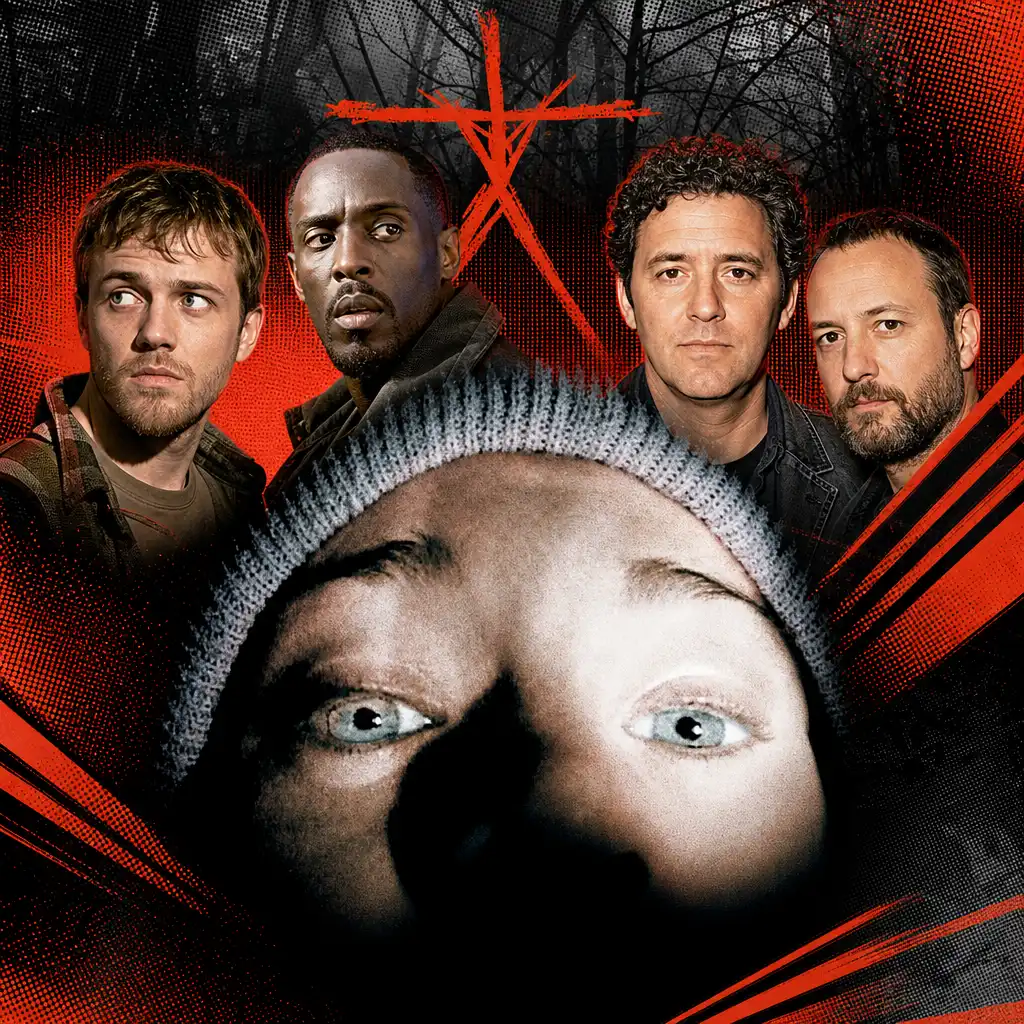
The Blair Witch Project turned three unknown actors into the faces of one of the most profitable independent films ever made. It did not, however, make them financially secure.
By the summer of 1999, Heather Donahue, Michael C. Williams and Joshua Leonard were watching a film they had largely improvised become a cultural phenomenon while still working ordinary jobs and struggling to pay rent. Donahue drove to temp work in a 1984 Toyota Celica. Williams was moving furniture in New York. Leonard was catering.
The contrast became difficult to miss. Donahue's car broke down beneath a billboard carrying her own face. Williams' boss wondered why someone appearing on the cover of Newsweek was still hauling furniture. Leonard served food to his agent only days before appearing on "The Tonight Show."
"My agent asked me what the fuck I was doing," Leonard says. "I said, 'You know that I haven't made any money.' We were all struggling to pay the rent."
The actors say the situation was more than a disappointing Hollywood payday. They had helped create the performances, operated the cameras and sound equipment themselves and spent months supporting a marketing strategy that required them to behave as though they might actually be dead. Yet as the film's earnings climbed into the hundreds of millions of dollars, they say the financial rewards never followed.
The actors helped create the illusion that made the film famous
Directors and writers Daniel Myrick and Eduardo Sánchez built The Blair Witch Project around an unusually stripped-down production method.
Donahue, Williams and Leonard, then in their early 20s, were trained to use the cameras and sound equipment before being sent into the woods. Rather than working from a conventional screenplay, they received story prompts and improvised the film's dialogue and much of its action.
That roughness became one of the movie's defining strengths. The finished film was presented as recovered footage shot by student filmmakers who disappeared in the Maryland woods, helping turn its low-budget limitations into a central part of the experience.
The deception did not end when filming stopped.
After the movie erupted out of the Sundance Film Festival in January 1999, the actors were expected to remain largely invisible so audiences could continue believing the premise. Artisan Entertainment, which acquired the film at Sundance for $1.1 million, maintained the fiction aggressively.
The three actors were barred from appearing at the film's Cannes premiere that May. Donahue hired a publicist, only for interviews to be prohibited. When Leonard later landed a role in another independent film, he was admonished because acknowledging that he was an actor would also reveal the rather inconvenient fact that he was alive.
For a marketing campaign built around disappearance, actual publicity from the stars was apparently considered a design flaw.
A $248 million hit, but no windfall for its stars
The gamble worked spectacularly for the film.
Made for about $35,000, The Blair Witch Project eventually earned $248 million worldwide and became one of the defining horror releases of its era. Its success helped demonstrate how internet-driven mythology, minimalist filmmaking and a carefully maintained fiction could turn a tiny independent production into a global event.
Donahue, Williams and Leonard initially believed that their contribution to that success would eventually translate into meaningful compensation.
Instead, the moment that crystallised the imbalance came after the movie passed $100 million at the domestic box office. According to the actors, Artisan marked the achievement by sending each of them a fruit basket.
"That was when it became clear that, wow, we were not going to get anything," Donahue says. "We were being cut out of something that we were intimately involved with creating."
The size of the film's success made that frustration harder to dismiss as the ordinary disappointment of a low-budget production. The actors were not simply performers in a movie that unexpectedly did well; their faces, voices, improvisation and supposed disappearance were central to the product being sold.
Yet the commercial value of those contributions and the compensation they received proved to be very different things.
The marketing success became a problem of its own
The film's unusual publicity strategy also carried consequences beyond money.
For months, the actors had been prevented from openly capitalising on their sudden visibility because doing so would puncture the mythology surrounding the movie. By the time the fiction had done its job, the three were internationally recognisable but had little of the financial security that audiences might reasonably associate with that level of fame.
The actors have since described the experience as something that followed them long after the initial release.
Over the years, their relationship with Blair Witch became entangled with online abuse, humiliation, career changes and legal disputes. The film that introduced them to millions of viewers also became, in their telling, something they struggled for years to escape.
The tension is particularly sharp because the movie's realism depended so heavily on them. Their performances worked precisely because viewers were encouraged not to see them as conventional actors. That same illusion temporarily denied them one of the basic advantages actors normally receive from a hit film: the ability to publicly say they were in it.
Why the actors now want others to learn from their experience
More than a quarter-century after the film's 1999 release, Donahue, Williams and Leonard have spoken about what they regard as unacceptable treatment surrounding one of independent cinema's most celebrated success stories, characterising some of the behaviour they encountered as "reprehensible."
Their warning to younger performers is similarly direct: "Don't do what we did."
The lesson is less about regretting the film itself than understanding what can happen when inexperienced artists contribute to a project without contracts that anticipate extraordinary success. None of the three could reasonably have predicted that a $35,000 horror experiment would become a $248 million global phenomenon.
But that unpredictability is precisely why the experience still resonates. A production can be improvised. A marketing campaign can invent missing filmmakers. The paperwork is less forgiving.
The Blair Witch Project remains famous for making audiences wonder whether what they were watching was real. For the actors whose faces sold that illusion, the more lasting question has been considerably less mysterious: who benefited when the fiction became worth hundreds of millions of dollars?