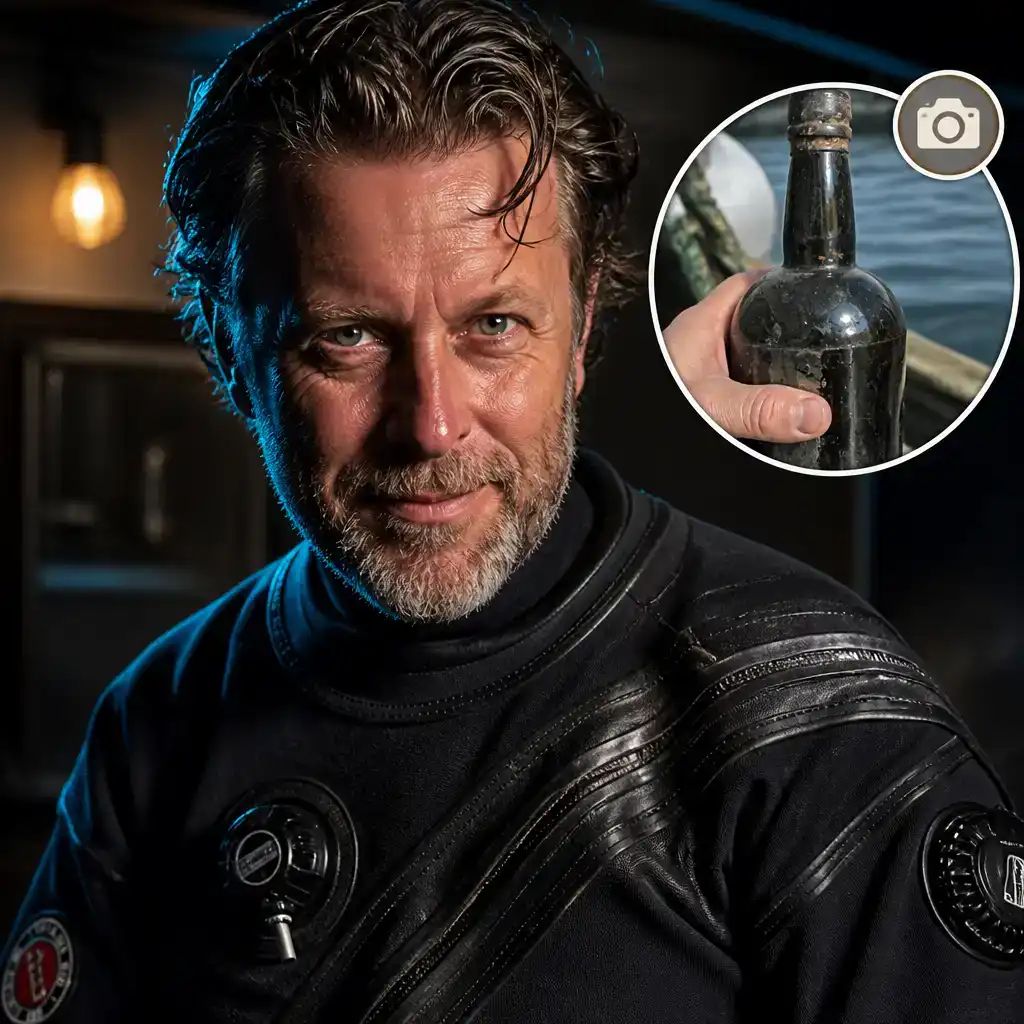
A 162-year-old Guinness bottle recovered from a shipwreck off Dover could help scientists recreate the stout as it tasted in 1864. The sealed bottle may still contain enough genetic material for researchers to identify the historic brew’s microbial profile and attempt a small-scale reproduction.
Belgian underwater photographer Stefan Panis found the bottle while exploring the wreck with his friend Eddie Huzzey. It had been buried beneath the seabed, and its identity only became clear after the pair surfaced and rinsed away the sediment, revealing the Guinness branding.
Panis believes it came from a case of 24 bottles. More may remain beneath the sand around the wreck, waiting with the patience expected of beer that has spent more than a century underwater.
Can scientists recreate the 1864 Guinness?
Samples from the bottle have been sent to microbiologists at KU Leuven University in Belgium for analysis, according to the BBC. Researchers are examining whether usable DNA can be recovered from the beer.
“There is always a chance that we can recover the complete DNA, and then we can do a small re-brew of the exact beer that was found in the 1860s,” Panis said.
A successful experiment could offer an unusually direct taste of brewing history. Guinness has changed over the decades as ingredients, production methods and consumer preferences have evolved, so recreating the 1864 stout could show how the drink differed from the version served today.
The bottle may even remain drinkable, although nobody is preparing to open it without expert guidance. Its condition depends largely on whether seawater passed through the cork during its long stay on the seabed.
“If not, most likely the beer would still be drinkable,” Panis said.
Why the bottle’s position may have protected it
The bottle was discovered upside down, a detail that brewing historian Edward Bourke said may have helped preserve its contents. After Panis shared photographs with the official Guinness club, Bourke identified the bottle as one filled by Cameron Saunders of London.
According to Bourke, Guinness beer was transported in large casks known as butts and bottled locally. He also pointed to preservation lore associated with the 1942 wreck of the SS Lochgarry near Rathlin Island.
Panis said bottles from that wreck showed a clear difference depending on how they rested underwater:
- Upright bottles had been spoiled by seawater.
- Upside-down bottles remained protected.
- Trapped air may have created a pressurized barrier that prevented seawater from entering through the cork.
“Finding them upside down was the single secret to survival,” Panis wrote in an Instagram post summarizing Bourke’s explanation.
That does not yet prove the Guinness is safe, or pleasant, to drink. It does give researchers a plausible reason to hope the bottle’s contents survived in useful condition.
Guinness is helping assess the discovery
Panis has admitted he is not a particularly enthusiastic Guinness drinker, but said he would try the historic stout if specialists concluded it was safe. Given the bottle’s age and uncertain seal, that decision will require more than curiosity and a clean glass.
Diageo, the company that owns Guinness, said the find could contribute to the brewer’s historical record.
“Discoveries like this provide a fascinating window into our past and help build a deeper understanding of our heritage,” a spokesperson said.
The Guinness Archive team is now working with the divers to collect more information and evaluate the bottle. The scientific analysis will determine whether enough intact genetic material remains for a credible re-brew and whether the liquid itself has avoided seawater contamination.
For now, the bottle is less a drink than a time capsule. If its contents can be reproduced, researchers and brewers may be able to recover not just an old recipe, but part of the taste experienced by Guinness drinkers more than 160 years ago.