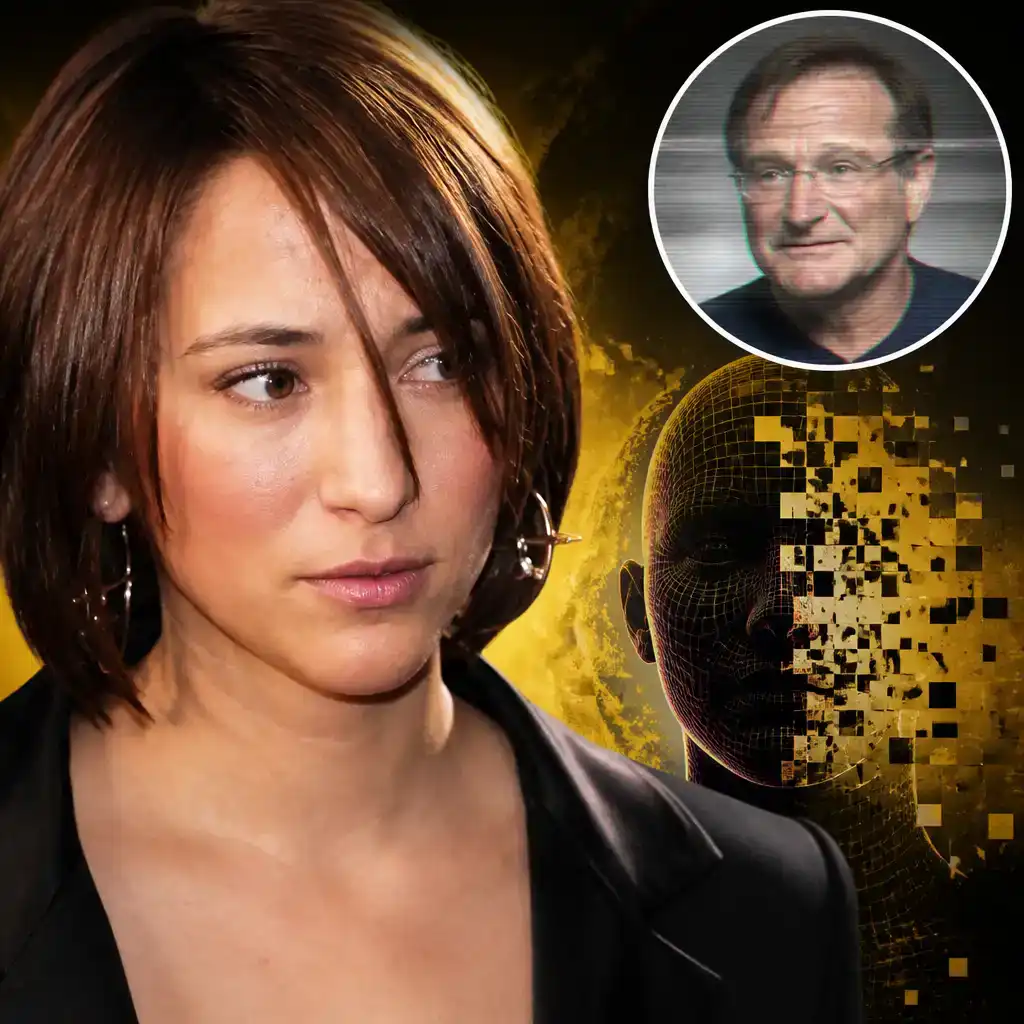
Zelda Williams has condemned a fake Robin Williams AI video that appears to show her late father discussing conspiracy theories, calling the recording both fabricated and deeply disrespectful.
The 37-year-old filmmaker said the supposedly private footage circulating online was clearly generated using artificial intelligence. She added that anyone familiar with Robin Williams’ performances should recognise that the voice sounds nothing like him.
“That supposedly ‘private video’ of dad that I’ve been shown talking about conspiracies is clearly AI, and not even particularly convincing AI,” she wrote on X.
“Anyone who claims to be a fan who believes it clearly listened to his movies on mute because that voice is robotic and terrible.”
Why Zelda Williams spoke out
Artificial intelligence may have produced the synthetic voice, but Zelda stressed that a person still chose to create the clip and use her father’s identity to promote its message. The software did not wake up one morning and develop an interest in conspiracy content.
“That said, a human made a robot create it, and to you I say: leave him out of your delusional bulls*** and let him rest,” she wrote.
She also challenged the people relying on a dead celebrity’s manufactured endorsement to make their argument seem credible.
“If you cannot make your case without making a dead man make it more convincing for you, then tell me: who’s the one manipulating the public thru media now?” she asked.
Zelda described X as a “cesspool” crowded with bots and users willing to believe them. Despite her dislike of the platform, she said she returned to correct the claim because of her love for her father.
“Just because he’s gone does not mean he’s now your puppet,” she concluded. “Have some shame.”
How the Williams family is challenging AI impersonations
Robin Williams died aged 63 in August 2014. His career included acclaimed and widely recognised performances in Good Will Hunting, Dead Poets Society, Mrs Doubtfire, Jumanji, Hook and Aladdin.
Since his death, increasingly accessible AI tools have been used to reproduce his distinctive voice and appearance. Zelda has repeatedly made clear that she does not consider these imitations a tribute.
In August 2026, Zelda and her brothers, Zak Williams and Cody Williams, revived their father’s dormant Instagram account. The page had been inactive for more than 12 years, but the siblings said they would turn it into an official archive of authentic photographs, footage and memories.
Zelda acknowledged that seeing the account active again felt “a little strange.” Still, she said establishing a dependable source of genuine material had become necessary as artificial recreations spread online.
Sharing verified clips and images, she explained, was one of the best ways the family had found to “fight back against rampant AI abuse of his voice and likeness.” Apparently, proving that real footage is real is now another administrative duty for bereaved families.
Her warnings began years earlier
The latest statement follows an appeal Zelda made in October 2025, when she asked social media users to stop sending AI-generated videos of her father directly to her.
“Please, just stop sending me AI videos of Dad,” she wrote at the time. She rejected the idea that the clips were comforting, flattering or harmless.
Urging anyone with “any decency” to stop producing and sharing them, she added: “It’s dumb, it’s a waste of time and energy, and believe me, it’s NOT what he’d want.”
Her concerns were already public during the 2023 SAG-AFTRA strike, when artificial intelligence and protections for performers’ digital likenesses became central issues in negotiations. Zelda said she had heard AI models being trained to recreate Williams’ voice and described the experience as “personally disturbing.”
She argued that a synthetic copy could never reproduce the person or performer behind the sound. More than a decade after Williams’ death, his family’s repeated objections highlight a growing problem for relatives and estates: death may end a performer’s career, but AI can keep manufacturing unwanted new “performances” without consent.