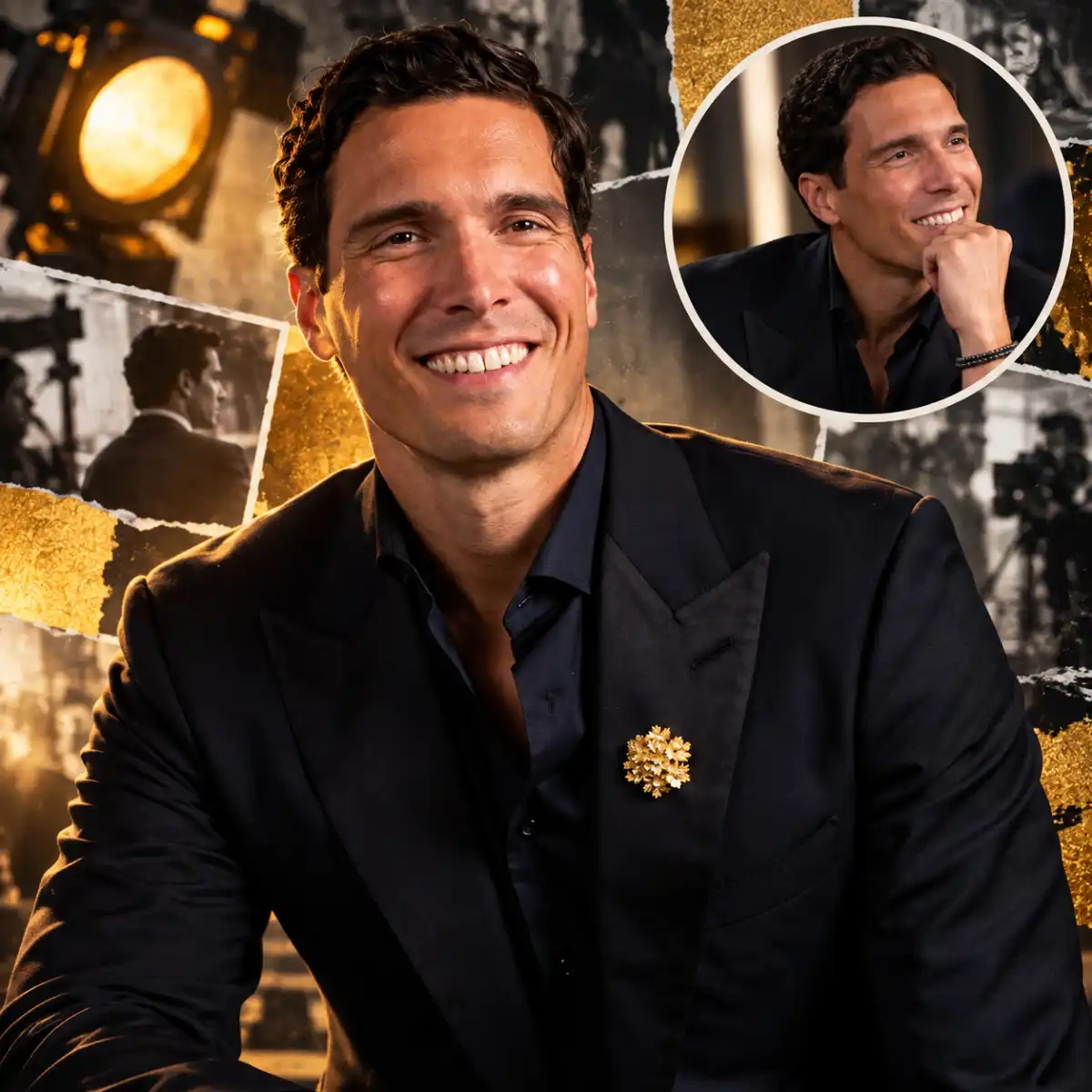
Will Reeve’s testicular cancer battle began with a tender lump he noticed in the shower in April. Months later, after two operations and two rounds of chemotherapy, the ABC News correspondent learned at a September 8 checkup that he was cancer-free.
Reeve, 34, discussed the private health crisis in an interview published September 29, explaining how his experience echoed the illnesses faced by his late parents, actor Christopher Reeve and activist Dana Reeve.
How did Will Reeve discover the cancer?
Reeve initially assumed the mass on one of his testicles was harmless or would disappear on its own. His wife, event planner Amanda Dubin Reeve, was less willing to let hope handle the diagnosis.
“It’s probably nothing,” she told him, “but what if it’s something?”
An ultrasound later that month confirmed the lump was cancerous. In May, Reeve underwent an orchiectomy, a procedure to remove the affected testicle.
“I hadn’t had surgery since I got my tonsils out at 5,” he said. “So, I was more nervous about the unknown of the surgery rather than the overwhelming realization that I would be losing an essential part of my body forever.”
The operation was only the first stage of treatment. Further testing found that 95 percent of the tumor was embryonal carcinoma, an aggressive form of testicular cancer. The illness had also spread to lymph nodes in his abdomen.
What treatment did he receive?
In June, Reeve underwent a six-hour operation to remove dozens of abdominal lymph nodes. Three tested positive for cancer, leading doctors to recommend two rounds of chemotherapy.
The treatment took place at Memorial Sloan Kettering Cancer Center, the same hospital where his mother had received care for lung cancer roughly two decades earlier. Dana Reeve died in 2006, two years after Christopher Reeve died from complications related to the spinal cord injury he sustained in a 1995 horseback-riding accident.
“The irony is not lost on me that 20 years after my mom died of lung cancer at Memorial Sloan Kettering, there I was in the same building getting treated for cancer,” Reeve said.
He described the experience as an unsettling overlap between both of his parents’ medical histories. As a patient, he gained a more direct understanding of what his mother had endured. At the same time, relying on Amanda helped him appreciate his father’s final nine years, when Christopher required extensive care from Dana and the rest of the family.
How did his parents influence his response?
Reeve said watching his parents turn severe personal hardship into advocacy shaped how he approached his own diagnosis.
“Watching my parents up close take the adversity they faced in their lives and repurpose it into something hopeful left a major impact on my life and how I try to live it,” he said. “I was raised to share one’s struggles if, in doing so, that might help others.”
He also saw similarities between Amanda and his mother as his wife took on the role of caregiver.
“There I was with my wife, who, since the day I met her, has reminded me in so many ways of my mom, now playing the role of wife and caregiver,” he said.
Reeve credited Amanda with pushing him to seek medical attention before the disease advanced further. Waiting for a lump to politely resolve itself is not, as it turns out, a treatment plan.
What happened after chemotherapy?
At his September 8 checkup, doctors told Reeve he was cancer-free. The news arrived less than a year after he and Amanda married in January, giving the couple an unusually demanding introduction to the “in sickness and in health” part of their vows.
“We got an early test of our vows, just a few months in,” Reeve said.
Amanda said the experience confirmed that they could withstand a serious crisis together. “The silver lining was that we had validation early in the marriage that we are well-equipped to tackle anything.”
Reeve’s account also carries a straightforward message: a suspicious change should be examined promptly, even when it seems minor. In his case, one question from his wife led to an ultrasound, an early diagnosis and treatment that ultimately left him cancer-free.