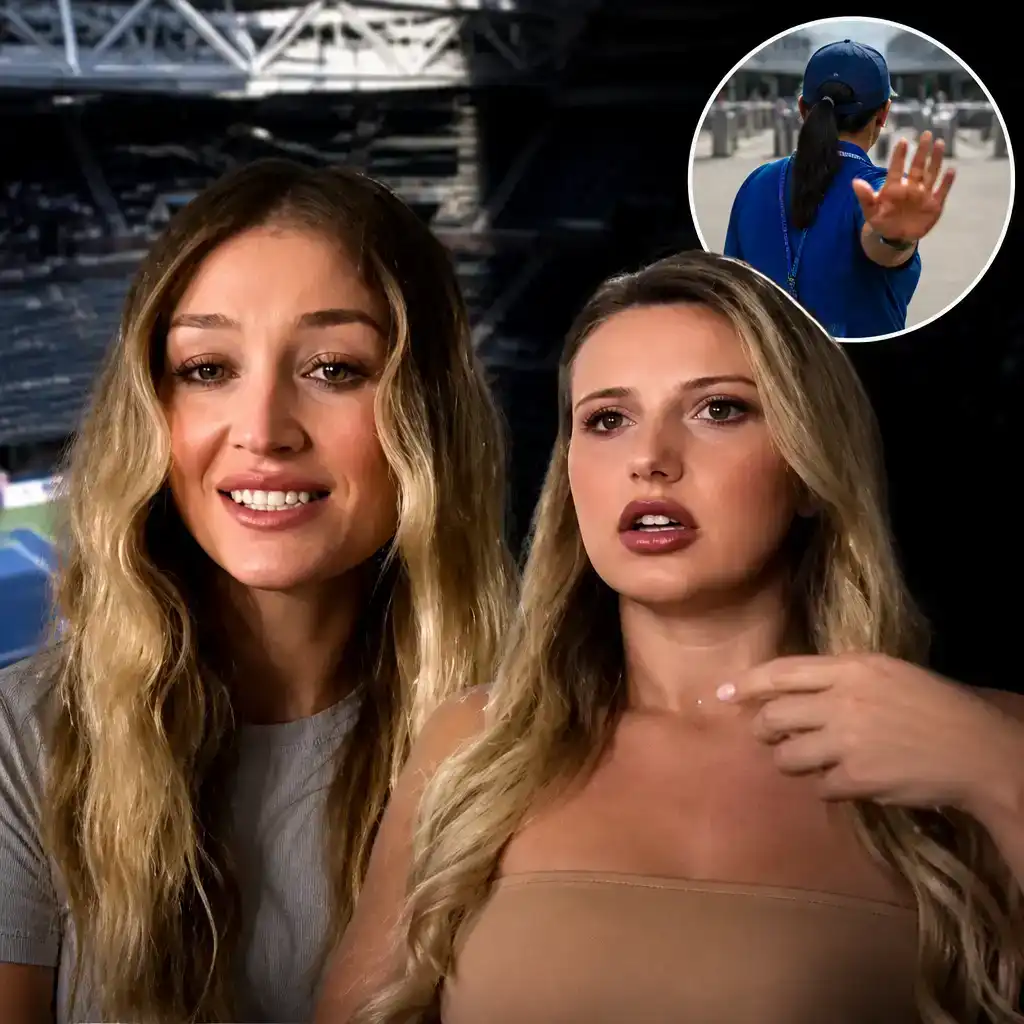
Meg Radice and Audrey Jongens had their U.S. Open credentials revoked within two hours after posting images of the passes on Instagram Stories. The creators say they did not know the images violated tournament rules, leaving a rather important question: did anyone clearly explain those rules before handing over the passes?
The women run the Instagram account The VIP List and had partnered with one of their favorite restaurants at the tournament. They planned to film content throughout the event after attending the Open as spectators for the previous three years.
Radice told TMZ that they were “diehard tennis fans” and described losing access as “not only embarrassing but devastating.” Jongens said they had no idea that sharing the passes online was prohibited.
Their access ended before they saw a match
Radice and Jongens posted the credentials while showing followers the photographs they had submitted to the United States Tennis Association, according to AOL. They then went to the restaurant for dinner and drinks.
Before they reached the courts or watched any tennis, they learned that the passes had been deactivated. The pair said the decision came about two hours after they arrived.
They had cleared their schedules and intended to attend every day of the two-week tournament. Instead, their carefully planned content operation ended before the first ball they saw was served. Efficient, if not especially welcoming.
The creators said they would happily return with anyone willing to bring them, including a stranger. They also said they were not asking for an apology and held no hostility toward the tournament, which they called their favorite sporting event. Their immediate request was considerably simpler: restore the access.
How clearly was the credential rule explained?
Displaying event passes online can create security and unauthorized-access risks, AOL noted. Images may give others information they can copy or misuse, which is why major events often treat credentials as security documents rather than social-media accessories.
The U.S. Open’s public code allows the USTA to remove guests who breach event policies. It also prohibits unauthorized commercial promotion. However, the publicly available language identified in reporting does not specifically state that guests may not post photographs of credentials.
That does not prove the pair received no private instructions. It does mean their claim that they did not understand the restriction cannot be resolved by simply pointing to an obvious line in the public rules.
For a program built around people posting their experiences online, guidance about what must remain offline would seem fairly central. Talent-agency chief executive Kyle Hjelmeseth told Axios that brands and agencies must ensure creators understand the conduct expected of them.
The USTA has rapidly expanded creator access
The credential dispute comes as the United States Tennis Association increases its use of online creators to reach audiences outside traditional sports media.
Axios reported that the USTA approved nearly 100 creators in 2026. That is almost double the 54 admitted when the tournament launched its creator program in 2025. The inaugural group generated more than 5.5 million social-media engagements, offering a clear explanation for the expansion.
Jeanmarie Daly, the USTA’s director of media operations, told Front Office Sports that the goal was to reach the “broadest possible spectrum” of audiences.
That strategy gives the tournament access to fashion, food, lifestyle and entertainment followers who may not regularly read tennis coverage. It also brings participants with very different levels of experience around sporting-event security and etiquette.
A larger program therefore requires more than distributing passes and hoping everyone has absorbed the customs of professional tennis by instinct. Clear briefings matter, particularly when creators are being invited specifically because they document nearly everything.
A separate suite disturbance was wrongly linked to creators
The debate around influencers at the tournament was already heated because of a disturbance during Naomi Osaka’s first-round match. People in a hospitality suite were seen moving around, taking photographs and using a light while play was underway.
Some coverage broadly associated that disruption with credentialed influencers. U.S. Open spokesman Brendan McIntyre told Axios that the people involved did not hold creator credentials.
The distinction matters. Corporate-suite guests and members of the formal creator program may all possess phones, but they are not interchangeable groups. Blaming approved creators for conduct involving other spectators makes it harder to assess whether the program itself has an etiquette problem.
McIntyre said crowd disruptions occur infrequently and that umpires can address them when necessary. The episode still demonstrated how quickly visible bad behavior can become part of a wider argument about influencer access, even when the label does not fit the people involved.
No reinstatement has been reported
As of September 4, no outlet had reported that the USTA restored Radice and Jongens’ access or contacted them after the passes were revoked.
Their case leaves two issues unresolved. Posting credential images may present a genuine security concern, while the available public rules do not appear to spell out that restriction. Both can be true, inconveniently enough.
If the USTA continues expanding its creator program, the practical response is straightforward: explain security restrictions and expected conduct before participants begin posting. Creators still have a responsibility to read and follow the instructions they receive. The organization inviting them also has an interest in making those instructions difficult to misunderstand.
Radice and Jongens, meanwhile, remain willing to return without an apology. They just need someone to let them through the gate.