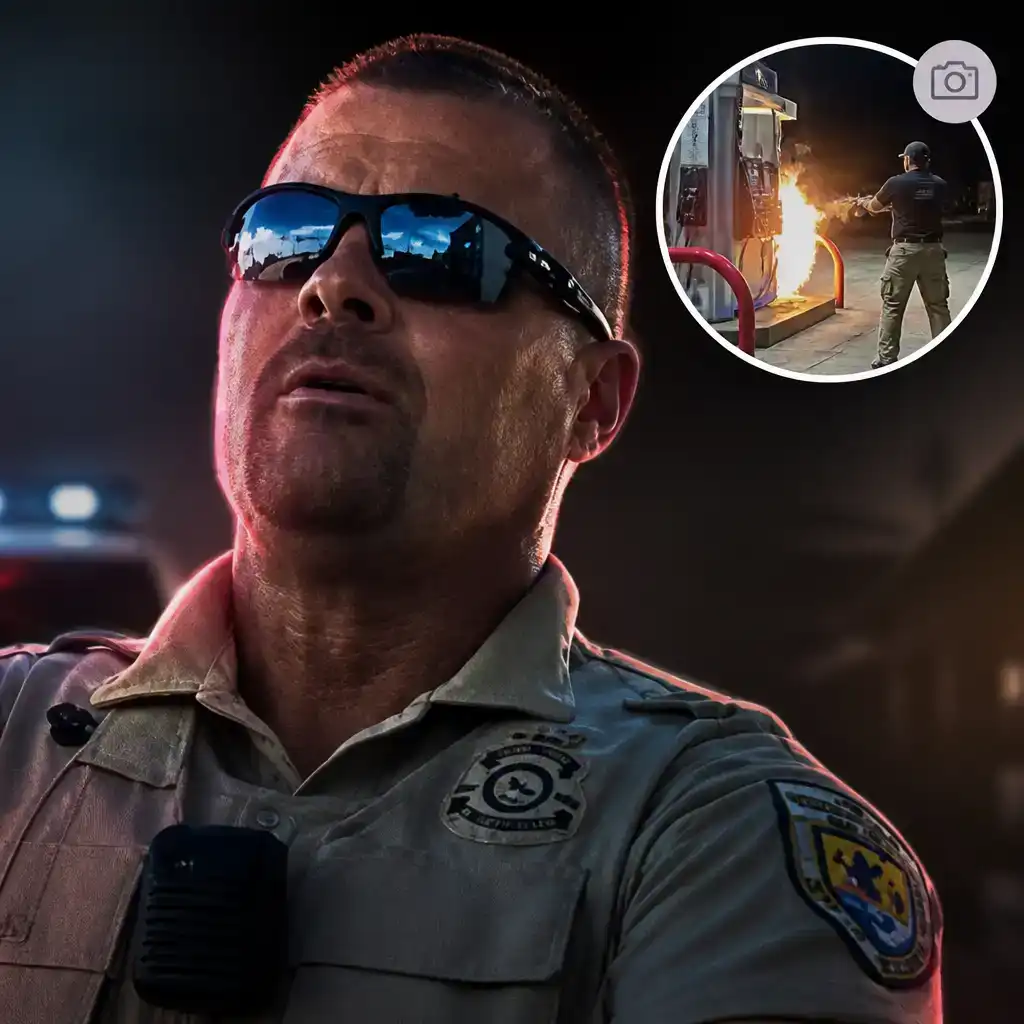
A Taser fire at an Arizona gas pump has put a federal officer’s split-second decision under scrutiny, particularly because the U.S. Fish and Wildlife Service’s own policy warns against deploying electronic-control devices near flammable materials without compelling reasons.
Clarence “Chuck” Coyl suffered first- and second-degree burns and nerve damage to two fingers during the July 16, 2026, encounter on the Fort Mojave Indian Reservation. He had not been charged in connection with the incident as of August 6, and no lawsuit, disciplinary action or officer identification had been publicly reported.
What happened before the fire?
Coyl told KPNX that he and a friend had planned to fish at Havasu National Wildlife Refuge. He said they accidentally entered Catfish Paradise through an open gate before a federal wildlife officer accused them of trespassing and ordered them to leave.
According to Coyl, the pair complied. He later encountered the same officer while fueling his pickup at a nearby gas station.
Video recorded by Coyl shows the officer pointing a Taser and demanding identification. Coyl asks what he is being arrested for, and the officer responds that he is failing to cooperate after committing a crime.
“A misdemeanor? A misdemeanor?” Coyl replies, before beginning to describe it as a “ten-dollar” offense. The sound of the Taser follows. His phone drops, flames appear beneath the truck, and Coyl can be heard shouting in pain.
A second angle shared by civil rights attorney Ben Crump shows the officer extending the device toward Coyl beside the vehicle and fuel pump shortly before the flames erupt. The footage establishes the sequence, though a full investigation would still need to determine the precise ignition mechanism.
What does federal Taser policy require?
The U.S. Fish and Wildlife Service confirmed that its officer deployed the Taser and said every such use is reviewed. It otherwise declined to discuss the case, while stating that the agency remains committed to public safety and safe recreation on refuge lands.
Agency policy allows electronic-control devices, commonly known as Tasers, when a person is actively resisting or when deployment is needed to prevent serious harm. It also says officers should not use them near flammable or explosive materials unless they can clearly explain compelling reasons for doing so.
That makes the setting central to the review, not a minor background detail. Coyl was standing beside a fuel pump, with his pickup being refueled. Gasoline vapors and an electrical discharge are not an obscure combination requiring specialist imagination.
The available videos show Coyl questioning the officer, but they do not provide the entire encounter or establish what information the officer had immediately before deploying the device. They also do not, by themselves, answer whether Coyl’s conduct met the agency’s standard for active resistance.
What evidence should the review produce?
Fish and Wildlife policy requires more than an informal discussion after a Taser deployment. The process includes:
- Collecting and preserving probe evidence
- Downloading the device’s data within 72 hours
- Notifying a supervisor
- Completing formal use-of-force reporting
The device download could establish the timing and duration of the electrical cycle. Reports and any other available recordings could clarify the officer’s stated justification, the distance involved and whether warnings were given.
None of that material had been released publicly by August 6. No body-camera footage had surfaced, and the officer had not been named. The Fort Mojave Indian Tribe declined to comment, according to syndicated reporting.
The case also arrives with an established warning from elsewhere. In a separate Florida incident, prosecutors charged a deputy after a Taser deployment at a gas pump was followed by a fire. The defense in that case disputed whether the device definitively caused the ignition. The circumstances are not identical, but the broader operational risk is hardly theoretical.
How serious were Coyl’s injuries?
Coyl told local television stations that he suffered first- and second-degree burns along with nerve damage affecting two fingers. AZFamily reported that he expected to undergo more than a month of physical therapy.
One personal-injury website described the burns as reaching the third degree, but that conflicts with Coyl’s account and reporting from AZFamily and KPNX. The first- and second-degree description is therefore the better-supported version.
“I literally thought … it’s going to burn to death and die,” Coyl told KPNX. He said instinct led him to stop, drop and roll, which helped extinguish the flames.
Coyl has said he intends to pursue legal action. As of August 6, however, no filing had been publicly reported, and there had been no announced criminal charge against him or disciplinary decision involving the officer.
The next meaningful answers should come from the mandatory review and device records. Until those are released, the central question remains straightforward: what compelling reason, if any, justified using a Taser beside an active fuel pump?