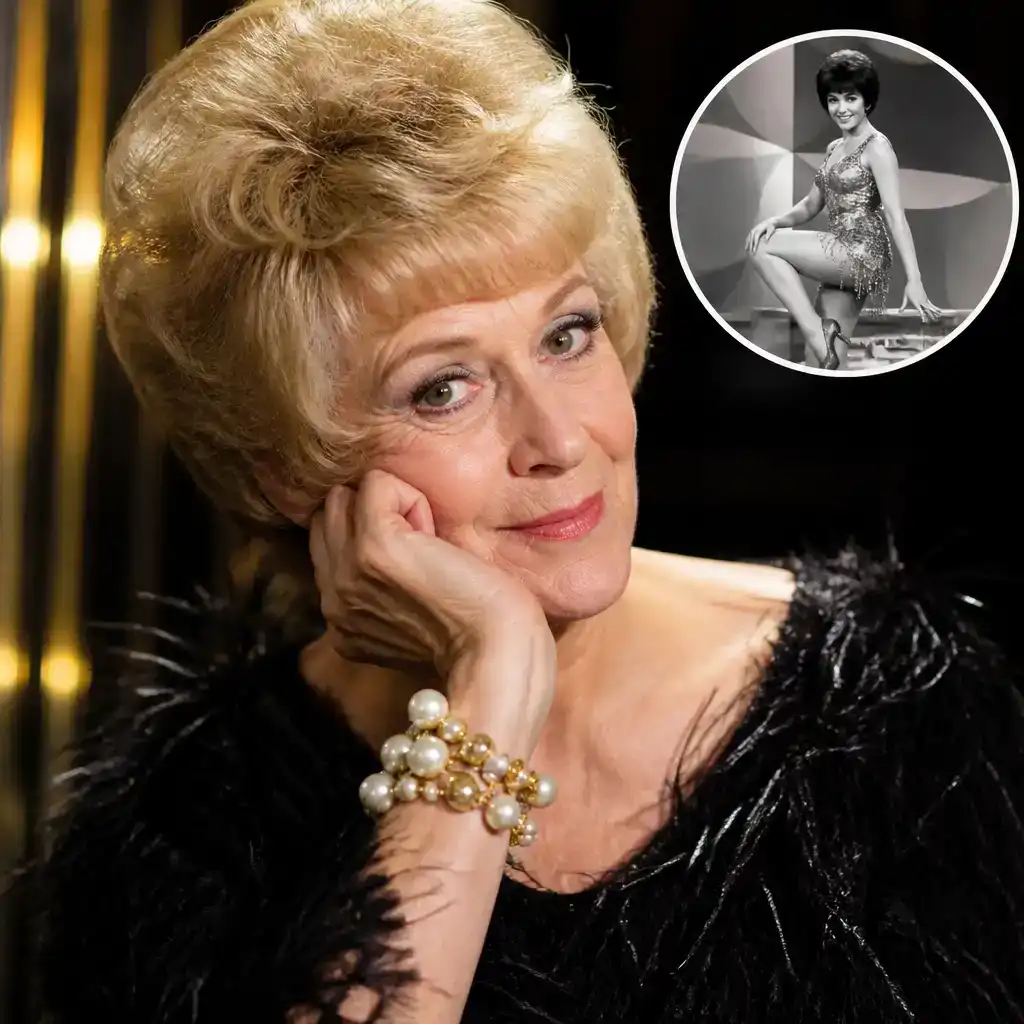
A Sheila Mathews death report says the English singer, actor and variety performer has died aged 99. The problem is that no family announcement, representative’s statement or major-outlet obituary has been found to confirm it. Nor does the report provide a date of death, which is a fairly basic requirement when announcing that someone has died.
The uncertainty does not diminish Mathews’s long career, which stretched from post-war pantomime and the London Palladium to ITV’s opening broadcasts and later television roles. It does, however, mean her death and the accompanying claim that she was Britain’s longest-serving performer should not yet be treated as established facts.
Has Sheila Mathews’s death been confirmed?
No independent confirmation has surfaced. A recently crawled British Comedy Guide profile still described Mathews as living, although its displayed age of 98 may simply not have been updated. IMDb also used the present tense in its listing for her.
Both services give her birth date as May 31, 1927. That means Mathews turned 99 on May 31, 2026, so the reported age is plausible. Without a death date or a statement from her family, plausibility is doing more work than it should.
The description of Mathews as Britain’s longest-serving performer is similarly unsupported. No independent source located for this report verified that distinction or explained how it was measured. Professional longevity can mean years since a debut, years of continuous employment or the length of time between first and last credits. Those are not interchangeable, however convenient the headline may be.
There is also scope for mistaken identity. The Television Academy records American actress and producer Sheila Mathews Allen, who died in 2013 aged 84. Broadway records list another Sheila Mathews or Matthews with extensive stage credits. Variations in the spelling of Mathews’s own name appear in historical television listings, making proper verification even more important.
How did Mathews build her stage career?
Born in Edmonton, Middlesex, Mathews began professionally in pantomime at the King’s Theatre in Edinburgh. She then moved into major revue and variety productions, joining Sid Field in Strike a New Note at the Prince of Wales Theatre.
Her London Palladium work included Tommy Trinder’s Happy and Glorious and Frankie Howerd’s Out of This World. During the latter production, she was selected to perform a solo song-and-dance number at the Royal Variety Performance.
Records also place her in the 1950 Royal Variety Performance at the Palladium, attended by King George VI and Queen Elizabeth. The bill included Tommy Trinder, Max Bygraves, Frankie Howerd, Gracie Fields, Jack Benny and Dinah Shore. It was not an evening short of prominent names.
Those appearances established Mathews in the demanding post-war variety circuit, where performers were expected to sing, dance, act and manage a live audience without the safety net of another take. Her career developed before television became the dominant route to national fame, then continued as the new medium absorbed many of the performers and formats that theatre had trained.
What was her role in ITV’s launch?
Mathews appeared during the opening days of Independent Television in September 1955. Listings for September 22, ITV’s first night, place her in the late-evening programme Star Cabaret on Associated-Rediffusion and ABC. The following evening she appeared in Friday’s Girl, a short musical programme built around her performances.
A contemporary theatrical biography later called her “the first star of Commercial TV” and said she appeared in opening programmes for ABC-TV, Tyne Tees Television and Scottish Television, with her own series following at each company. That promotional description is difficult to measure objectively, but her early place in ITV’s history is supported by programme records.
An obituary for her husband, director and designer Charles Reading, described Friday’s Girl as a ratings success watched by 12 million viewers. The Independent said Mathews’s performances of popular standards made her “a great television favourite.” At a time when commercial television was an experiment rather than part of the furniture, she became one of its earliest familiar performers.
Mathews also starred in Tyne Tees Television’s The One O’Clock Show. Producer Alfred Black’s profile for the British Entertainment History Project says it became Britain’s most-watched lunchtime programme, drawing more than 150,000 viewers a day.
Which major West End roles did she perform?
Television did not replace Mathews’s stage career. In 1968, she stepped into the role of Lady Hadwell in Charlie Girl at the Adelphi Theatre when Dame Anna Neagle was absent through illness. Theatre records describe Mathews as Neagle’s understudy and say she performed the part for several weeks.
She later followed Lauren Bacall as Margot Channing in Applause at Her Majesty’s Theatre, a role requiring considerable dramatic and musical range. Her reported repertoire also included Blanche DuBois in A Streetcar Named Desire, Madame Arkadina in The Seagull and Phoebe in The Entertainer.
Other stage credits included Noël Coward’s Song at Twilight and Hay Fever, along with The Boy Friend, No, No, Nanette, The Sound of Music, The Umbrellas of Cherbourg and Peter Pan. The list reflects the working reality of her generation: versatility was less a personal brand than a condition of continued employment.
Where did later television audiences see her?
Mathews continued taking television roles after her years as a musical and variety star. Her credits included Crossroads, Emmerdale Farm, The Good Old Days and Secret Agent.
British Comedy Guide records her as Mrs Nash in two 1982 episodes of Shelley. In 1984, she played Mrs Boswell in the Minder episode “Hypnotising Rita.” She later appeared as herself in the 2013 documentary Morecambe & Wise: The Whole Story, linking the surviving record of early British variety with television’s later enthusiasm for examining its own past.
Mathews married Charles Reading in 1957. The couple had two daughters, Sally and Jane. Reading, whose career covered acting, design and directing for stage and television, died in 1999 aged 88.
Mathews’s documented work is substantial without the need for an unverified superlative. She performed at the Palladium, appeared during ITV’s launch, led popular regional television programmes and moved between musicals, classical drama and character roles for decades.
What remains missing is authoritative confirmation of her reported death. Until that comes from her family, a representative, a professional body or a reliable official record, the responsible account is straightforward: Sheila Mathews has been reported dead at 99, but the report has not been independently verified.