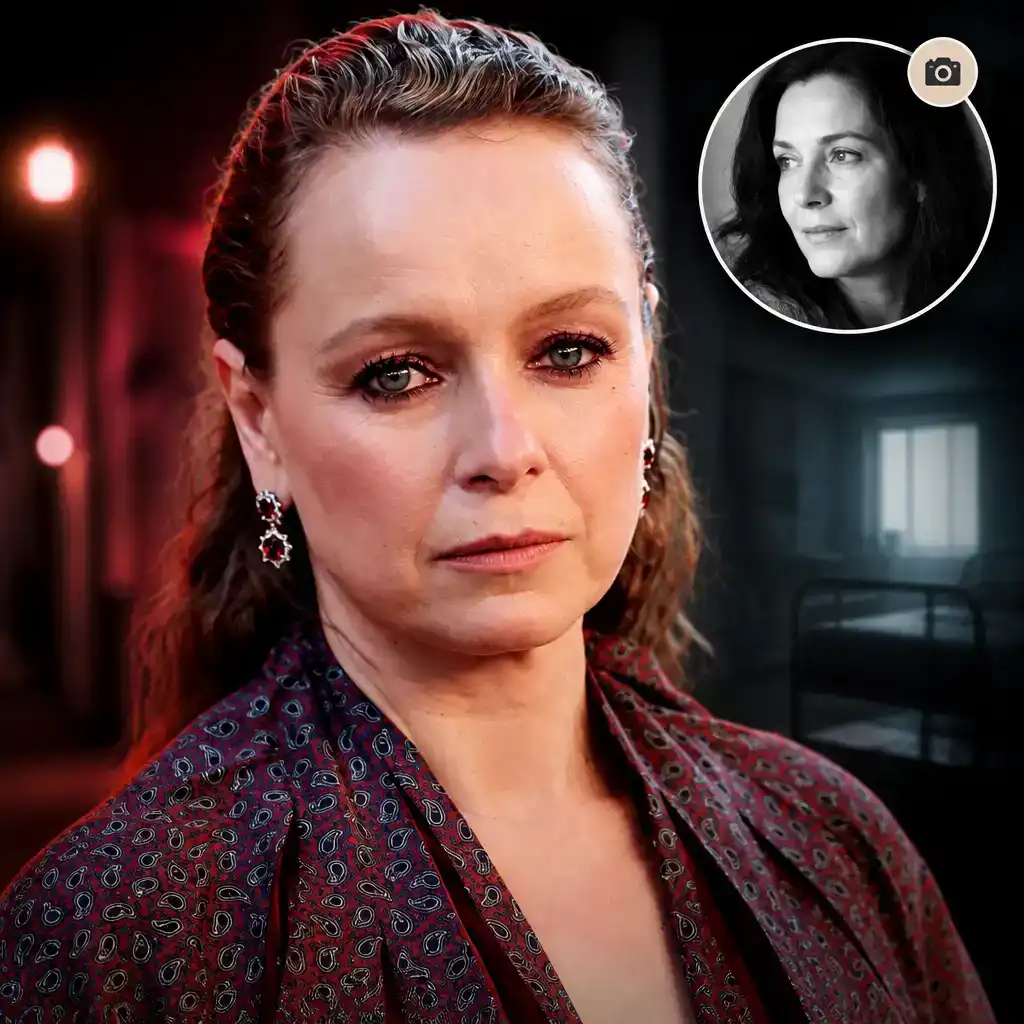
Samantha Morton has spoken about her sister’s death at 53, revealing that she is still coping with the trauma while dealing with coroners. The loss came only 18 months after the death of the 49-year-old actor’s father.
Morton, who plays Circe in Christopher Nolan’s The Odyssey, said her older sister died on April 22, 2026. She did not disclose her sister’s name or cause of death.
“My relationship with my past changes as I age and my children age, but things keep happening,” Morton told The Sunday Times.
“I sadly lost my sister on April 22 this year, she was 53. I am still dealing with the coroners and the trauma. I lost my real father 18 months ago. Trauma.”
She added that she begins each day with a prayer: “Please help me.” While she believes she may feel better from one week to the next, she said the past remains an unavoidable part of her life.
How her childhood shaped her understanding of trauma
Morton is one of nine siblings and spent much of her childhood in foster care. She was born to factory worker Pamela and coal miner Peter. Her mother experienced mental health difficulties, while her father struggled with alcoholism.
“The past never leaves you,” Morton said. “It’s in your DNA, and trauma is a constant battle.”
The actor also pushed back against the simple idea of resilience as an inspiring personal quality. For children facing instability or abuse, she explained, endurance is often not a choice.
“Someone told me I was resilient when I was younger. But sometimes you’ve got no choice other than to be resilient because if you are not you’re dead,” she said.
Morton recalled moving between foster families and homeless hostels. At times, she slept near bins behind a Co-op because she believed returning to a children’s home, where she experienced abuse, was too dangerous.
“I have made choices that have always been about survival, because I watched my mum trying to survive and I watched my dad trying to survive,” she said.
Her account places the language of survival in a less comfortable context than celebrity profiles sometimes allow. It was not a polished lesson discovered later. It was the practical reality of getting through childhood.
Why Circe’s words felt personal in The Odyssey
Morton said those experiences informed her portrayal of Circe in Nolan’s epic adaptation of The Odyssey. Rather than treating the character’s dialogue as something distant or mythological, she connected it to the women in her own life and to the ways women have historically been represented and treated.
“These weren’t just words. I believe them as Sam, not just Circe,” she said.
“And when I opened my mouth, I was every woman. I was speaking for my mother, who suffered all sorts at the hands of men. And my sister, friends, grandmother. It was all the wrongs and ways that women have been depicted or treated forever.”
That connection gives the role an emotional weight beyond costume and spectacle. For Morton, Circe’s voice carries memories of her mother, sister, grandmother and friends, as well as her own history. Nolan’s production may be an epic, but her route into the character was intensely personal.
Morton has previously said acting “saved” her. Her career has provided a way to turn experiences that began with instability and fear into performances built around complicated inner lives.
Morton has long advocated for children in care
The actor is a mother of three. She shares daughter Esmé Creed-Miles with actor Charlie Creed-Miles, and has two younger children, Edie and Theodore, with filmmaker Harry Holm.
Morton has also used major public moments to draw attention to children in the care system. When she received the British Academy of Film and Television Arts Fellowship in 2024, she dedicated the honor “to every child in care, or who has been in care and who didn’t survive.”
Her latest comments continue that unusually direct approach. She does not present grief as a completed chapter, or childhood trauma as material neatly resolved by professional success. Instead, she describes both as ongoing, changing as she and her children grow older.
For audiences familiar with Morton’s emotionally demanding work, the interview offers a clear sense of what she brings to roles such as Circe. It also makes room for a less tidy truth: achievement can change a life without erasing what came before.