A nicotine lozenge, a live microphone and a performer with a very public addiction history proved enough to generate days of reckless speculation. Robbie Williams’ World Cup moment was embarrassing, he admits, but the 52-year-old singer says the white object involved was Nicorette, not evidence that he was intoxicated.
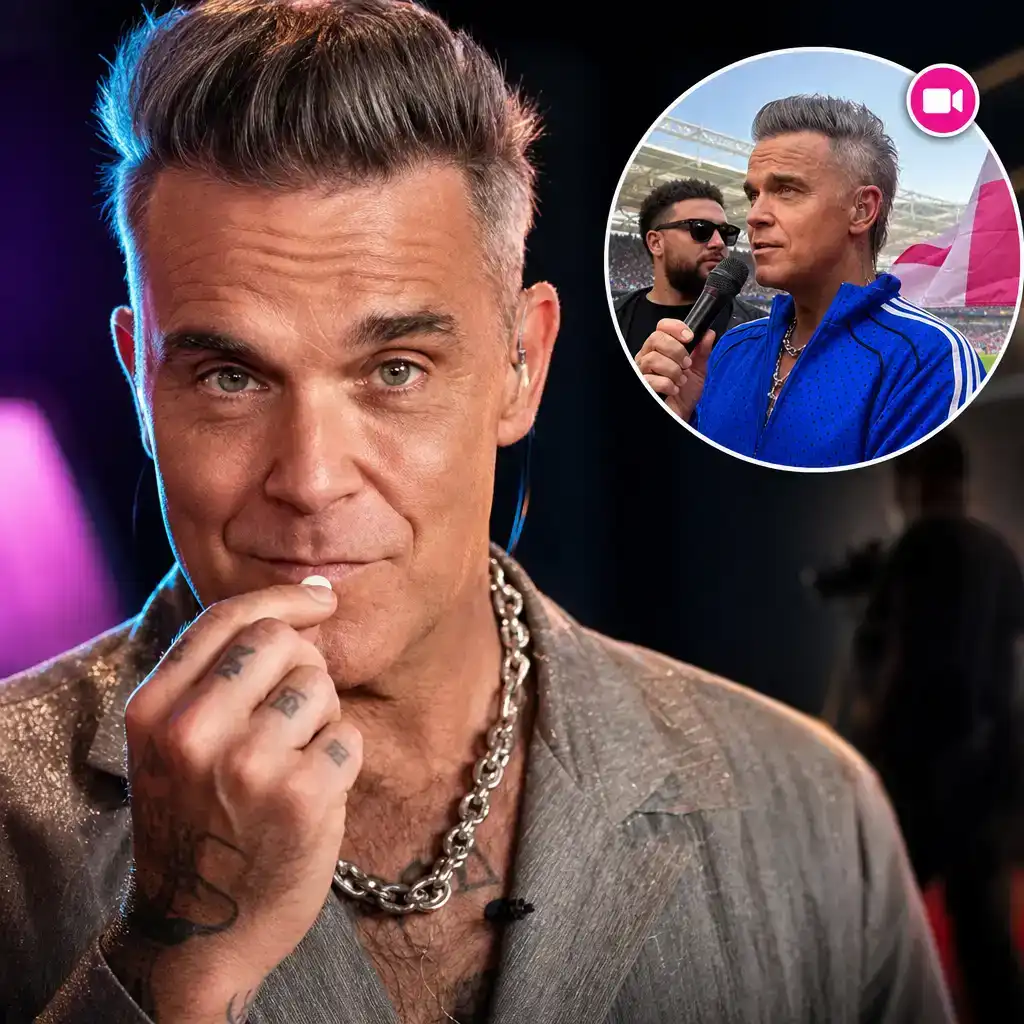
The clip was recorded during a MagentaTV interview following the Spain-Argentina World Cup final on July 19. A small white object fell from Williams’s mouth onto the microphone. He removed it, then somehow transferred it to his forehead without noticing. The internet supplied its own theories, because apparently a nicotine product was considered too straightforward.
What happened during the live interview?
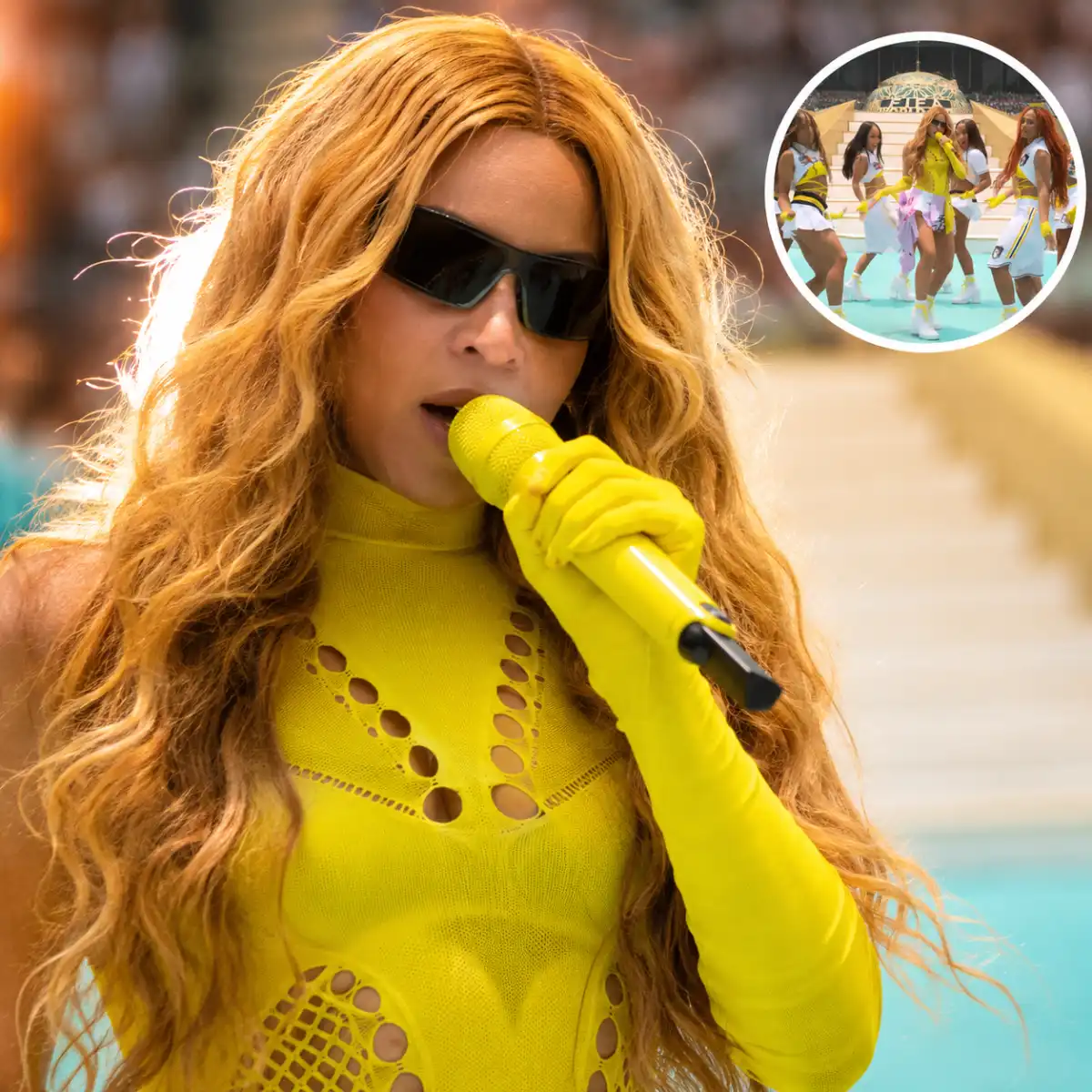
Williams had just performed “Desire” with Laura Pausini and Nicole Scherzinger at the final. According to ANSA, Williams wrote the song and Pausini adapted its Spanish section. It had accompanied players’ entrances throughout the 2025 Club World Cup and the 2026 World Cup.
Backstage, Williams said he celebrated the performance by telling those around him: “No one died and I didn’t cause an international incident. We did it!”
He then agreed to what he thought would be a short television interview. During it, the Nicorette lozenge dropped from his mouth and landed on the MagentaTV microphone. After picking it up, he later ended up with it stuck to his forehead.
Williams said he had “absolutely no idea it was there until the following day.” In his initial response, he called the incident “deeply unprofessional,” while reassuring viewers that he had “several more” lozenges.
His later reflection was more amused than mortified.
“I think I reached peak me at the World Cup,” he wrote. “To have a Nicorette fall out of my mouth during a live interview… and then stick to my forehead… is the most me thing I’ve ever done.”
Why the drug speculation carried more weight
The object was widely described as a “mint,” including by Williams, but Nicorette officially calls it a nicotine-replacement lozenge. Mint-flavored versions sold in the United States contain measured doses of either 2mg or 4mg of nicotine. There is no confirmed information about which version Williams had.
That distinction matters because some social media users treated the unclear footage as proof of drug use. Williams responded directly to posts characterizing him as intoxicated.
“Remember when Robbie was off his nut at the World Cup?” he wrote, repeating the allegation before rejecting it. “I wasn’t. I’m not. And I haven’t been for a very long time.”
Williams has discussed his past dependence on drugs and alcohol for years. He previously described himself to The Irish Times as a “fully-blown, self-medicating addict,” adding that the experience “wasn’t a lot of fun.” He has now been sober for more than two decades.
That history helps explain why the unsupported claims were not entirely harmless. A blurry clip became an invitation to rewrite a person’s recovery as public relapse, without evidence. Williams chose humor, but his denial was unusually plain for a reason.
How many people actually saw the incident?
Williams joked about appearing before an audience of roughly 1.5 billion people, but that number needs some context. The Associated Press used 1.5 billion as a pre-final estimate for the match’s worldwide audience. It was not a confirmed audience figure for the later MagentaTV interview.
Worldwide final viewing figures had not been released by July 23. Axios reported that the Spain-Argentina match attracted a record 62.8 million viewers in the United States.
The broader tournament was certainly built for enormous reach. FIFA expanded the competition to 48 teams and 104 matches and said it expected engagement from six billion people across the event. That projection covered the entire tournament, not one interview or one unexpectedly mobile lozenge.
Williams said his apology video had received more than 27 million views, while posts connected to the wider “MintGate” episode had reached 51 million people. He also praised memes comparing his appearance with The Sopranos character Paulie Walnuts, known for his silver side hair.
“The Paulie Walnuts memes have been magnificent,” Williams wrote.
Williams is choosing to laugh at the attention
The former Take That singer said he had avoided reading too many comments, which helped him find the situation funny rather than humiliating. He also acknowledged the anxiety behind performing on such a large stage.
“For someone whose nervous system is permanently convinced we’re moments away from disaster, I’m quite proud that none of it was visible on my face,” he wrote. “Well… apart from the Nicorette.”
Pausini offered a more polished description of the evening, saying the performance showed how music and sport could unite people through “the same emotion: passion.” Williams’s experience added another emotion to the list: relief, followed almost immediately by confusion.
He appears prepared for the incident to remain part of his public image. “It wouldn’t feel right if I appeared on the world stage and absolutely nothing weird happened,” he wrote.
His closing promise was equally accepting of future complications: “Me being me is very on brand. There’ll be plenty more. I am inevitable.”
Then came the final sign-off: “I’m off to continue ageing in public. See you at the next misunderstanding.”