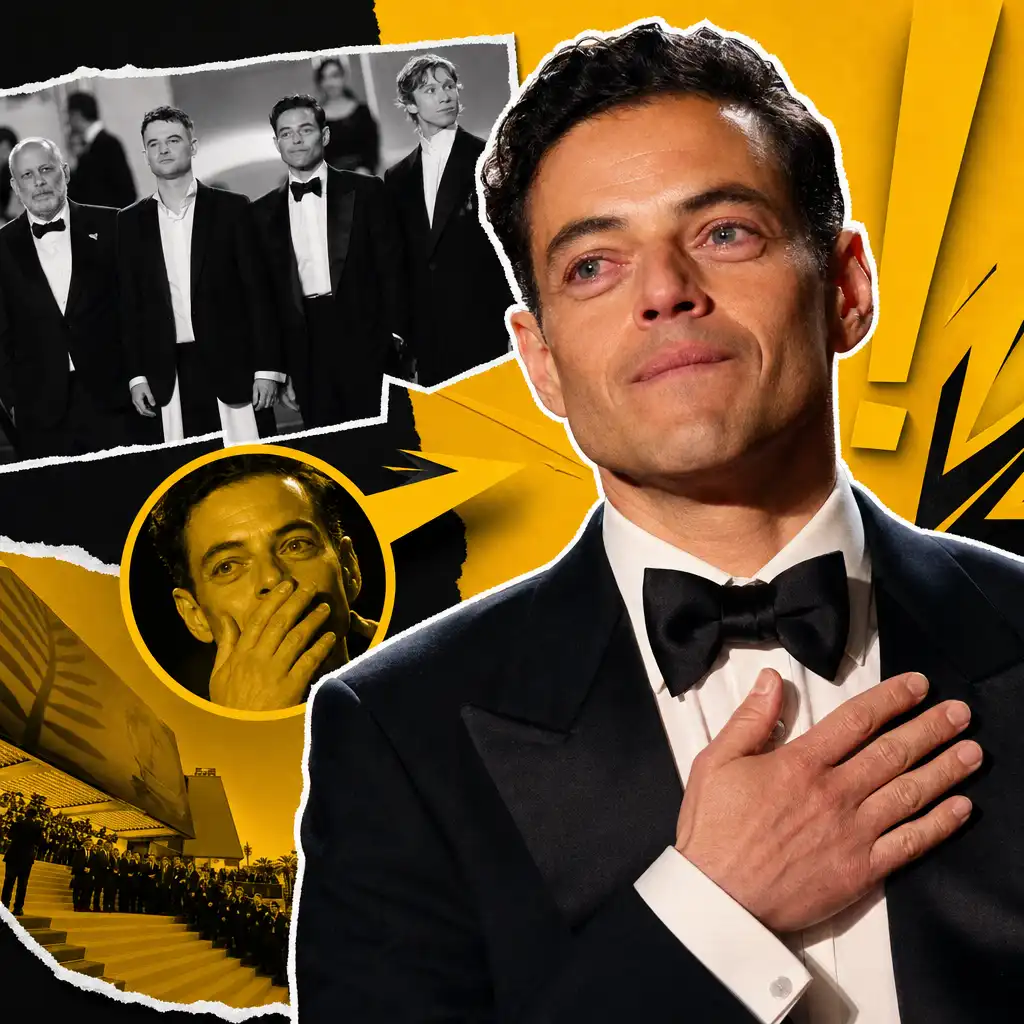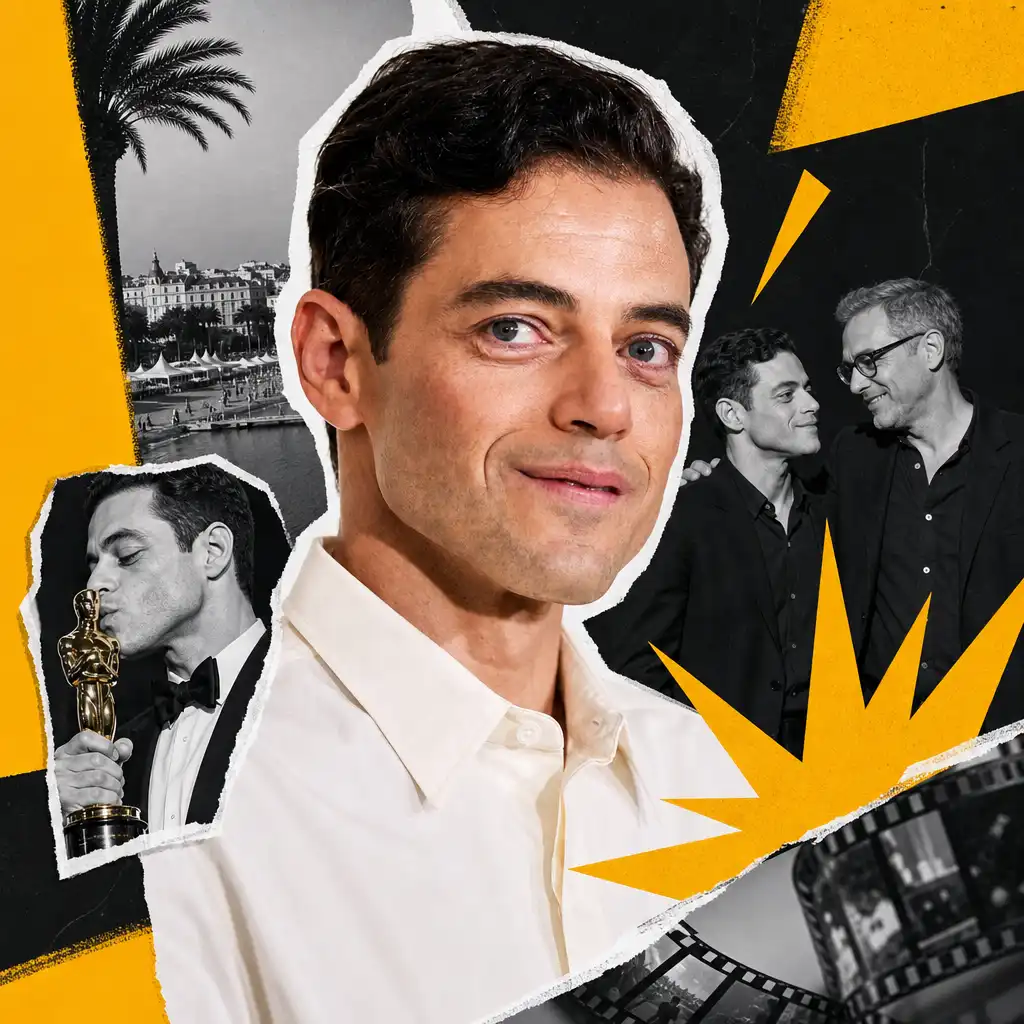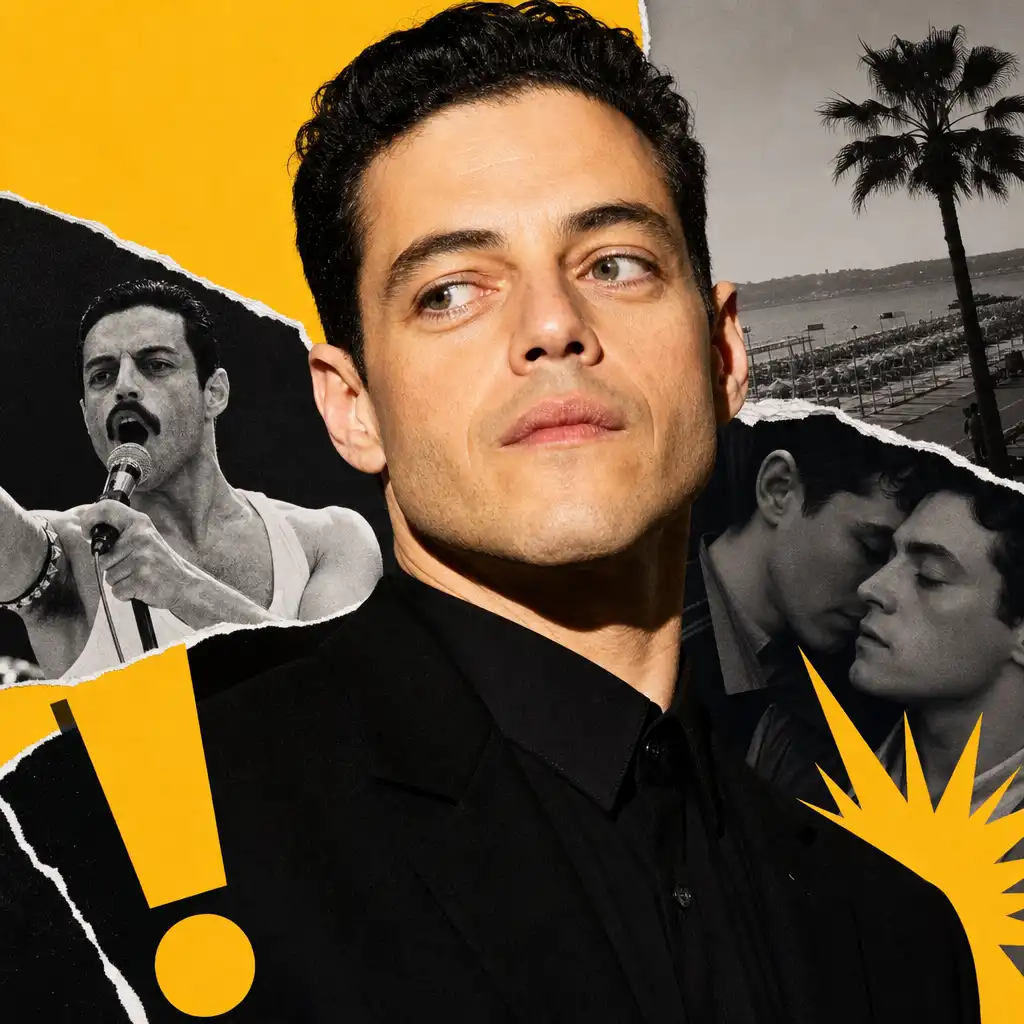
Rami Malek says The Man I Love gave him pause before it gave Cannes a standing ovation. The actor, who won an Academy Award for playing Freddie Mercury in 2018’s Bohemian Rhapsody, admitted he initially worried his new role as a gay man in the 1980s would sit too close to familiar territory.
The film, directed by American independent filmmaker Ira Sachs, premiered at the Cannes Film Festival on Wednesday, May 20, 2026. It received an eight-minute standing ovation, during which Malek, visibly moved, became tearful. Awards chatter has already started, because apparently Cannes likes to begin Oscar season before most people have finished planning summer.
Why Rami Malek hesitated over the role
In the film, Malek plays Jimmy George, a New York performance artist chasing what may be his final role while living with an AIDS diagnosis. Speaking at a press conference at the Palais des Festivals on Thursday, May 21, Malek was asked about early Oscar speculation and initially deflected it before turning to the more personal question behind his casting.
“At first, when I read the script, I said: ‘Oh, I can’t do this, there are too many similarities [with Freddie], it could be problematic,’” he said.
He explained that the overlap made him question what exactly was unsettling him.
“There’s a certain sense of fear. I started to really think about what I was afraid of, was it the similarities? Was it the singing? Was it, obviously, what was going on in the period? And I knew I had to address the fear.”
For Malek, the lesson from playing Mercury was not to avoid fear, but to move toward it with care.
How he separated Jimmy George from Freddie Mercury
Malek said he came to see Jimmy and Freddie as fundamentally different men, even if viewers might notice surface parallels: queer artists, music, the 1980s, and the shadow of AIDS.
“We have an icon, a legend, in Freddie, who really had a destination, whereas Jimmy is just searching for creativity and love and intimacy and joy and pleasure in every moment,” he said.
That distinction mattered. Freddie Mercury, as portrayed in Bohemian Rhapsody, was a global figure moving through fame, performance and legacy. Jimmy, in Sachs’s film, is more searching, more unstable, and less defined by public mythology.
“Was it ever going to be perfect? It didn’t have to be,” Malek said. “It was just about this element of creating and living and joy, and New York in that period is a very different time.”
He added that the two roles now feel “radically different” to him, especially with more distance from both characters.
Ira Sachs helped push the film into difficult territory
Malek credited Ira Sachs, best known for films including Passages, with giving him the confidence to accept the part.
“If there’s anything I learnt from Ira as well is [that] he makes unique cinema unlike any other and I knew I was [in] extraordinary hands,” Malek said.
He added that Sachs’s decision to cast him helped quiet some of his doubts.
“And if he was choosing me, I could rely on him. Not only to depend on him throughout the film, but to elevate it, push myself and force myself to race into that fire.”
Malek also spoke openly about the insecurity that came with the work. He said he leaned on others throughout the process and even called Sachs “in the middle of the night,” a detail the pair appeared to joke about during the press conference.
The actor also pushed back on the idea that winning an Oscar means every major part simply arrives gift-wrapped.
“It’s not the case,” he said. “We were having a meeting… and just getting a feel for one another to see if this could actually work. I just had my fingers crossed that it would and that he would appreciate me.”
Why the film needed a star at its center
Sachs said the story required “truly a star quality” at its core because “there’s a whole universe which revolves around Jimmy and Rami in the film.”
That universe includes a strong supporting cast: Tom Sturridge, Rebecca Hall, Ebon Moss-Bachrach and Luther Ford, the breakout actor from The Crown. Sturridge, recently known for leading Netflix’s The Sandman, appears to have played a particularly important part in helping Malek feel secure on set.
Malek recalled an emotionally intimate early moment between them in a pub in London.
“He put his hand on top of mine and I immediately felt nurtured,” Malek said. “I thought: ‘Oh that’s it, this man will take care of me.’”
For a film centered on intimacy, illness, creativity and fear, that kind of trust is not decorative. It is the machinery. Malek’s comments suggest the performance depended not only on technical preparation, but on feeling safe enough to look vulnerable without sanding off the discomfort.
The film was not an easy sell
Sachs also made clear that getting The Man I Love made was far from straightforward. According to the director, 25 companies rejected the project before Big Creek came on board.
“25 companies said no,” Sachs said. “And David, Scott and Mike from Big Creek said yes. So just to say these stories are not easy to get made.”
That context gives the Cannes response a sharper edge. The ovation was not just a festival ritual, though Cannes does enjoy a long clap. It marked a major public arrival for a film that, by Sachs’s account, had to fight for backing.
For Malek, the project appears to have become less about repeating an earlier triumph and more about confronting the anxiety that came with it. After Bohemian Rhapsody, any return to a queer artist shaped by music, fame and the AIDS era was bound to invite comparison. His answer, at least for now, is that similarity was the fear, not the film.