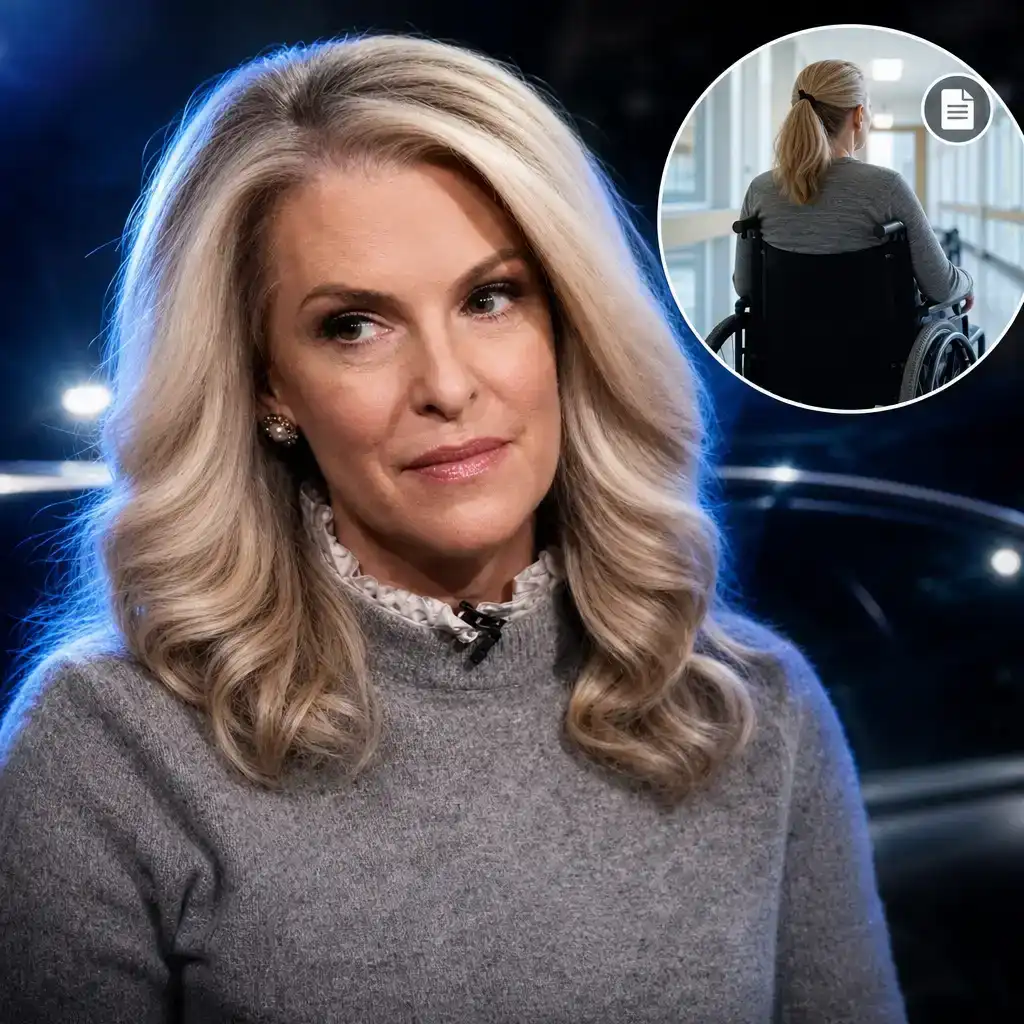
Christina Applegate’s cheek spot attracted nearly as much attention as her newly brightened blonde hair when the actor returned to Instagram on September 21. She acknowledged the darker mark with humor but offered no explanation, and nothing in her post connected it to multiple sclerosis. A visible mark plus a known diagnosis can produce a tidy headline. Medicine, inconveniently, requires evidence.
What did Christina Applegate post?
The 54-year-old Dead to Me and Married... With Children star appeared in jeans and a black zip-up hoodie while showing followers her fresh hair color. As she turned her face to display the blonde highlights, the discoloration on her cheek became visible.
“Fresh hair color, new weird spot on my cheek haha,” Applegate wrote. She also thanked hairstylist Dave Stanwell for “brightening up my cloudy day” and sent her love to followers.
Applegate later shared a closer selfie on Instagram Stories, again showing the mark without saying what caused it. As of September 22, she had not provided a diagnosis or further details.
Friends and fellow performers filled the comments with support. Henry Winkler wrote, “You are truly powerful.” Cheri Oteri called her “gorgeous” and thanked Stanwell for making her smile, while Craig Shoemaker said he was happy to see her getting healthy.
Why was the Instagram appearance significant?
The upbeat video followed a serious and largely unexplained health episode. TMZ reported on August 3 that Applegate had returned home and was “doing well” after spending nearly four months in hospital, beginning in late March.
Neither Applegate nor her representative disclosed what condition required the hospitalization. During that period, she told followers, “I’m a strong chick and I’m getting stronger and better every day.”
That missing information makes the September post notable, but it does not make the cheek discoloration part of the same medical issue. Parade described the video as a rare lighthearted appearance following her hospital stay, while reporting the same caption and supportive reactions.
Applegate has discussed her health openly for years, particularly since revealing her multiple sclerosis diagnosis in 2021. Even so, she retains the right to disclose only what she chooses. An Instagram caption is not a medical chart, despite the internet’s persistent efforts to treat it as one.
Is the cheek mark related to multiple sclerosis?
There is currently no public evidence linking the mark to Applegate’s MS. She did not describe it as a symptom, and no medical professional involved in her care has commented on it.
The National Multiple Sclerosis Society defines MS as a chronic inflammatory disease in which the immune system attacks the central nervous system, including the brain, spinal cord and optic nerves. More than 2.8 million people are estimated to live with the condition worldwide.
Common effects can include fatigue, weakness, mobility problems, numbness, pain and changes to vision or other neurological functions. The organization’s fact sheet does not identify facial pigmentation as a characteristic symptom.
That does not establish what caused Applegate’s mark. It simply means coverage should not present an MS connection that she and her doctors have not made.
How has Applegate described living with MS?
Applegate gave a detailed account of her daily symptoms in her memoir, You With the Sad Eyes, published on March 3, 2026. The book also addresses childhood abuse, domestic violence, breast cancer and her double mastectomy, placing her MS experience within a much longer and more difficult health history.
She wrote that some mornings she cannot move her arm far enough to reach the water beside her bed or collect her phone from its charger. Fatigue, she said, is among the illness’s most punishing effects.
“It feels as though I’ve been on a three-day-long sleepless bender,” Applegate wrote, according to Today.
One routine still gives her a valued stretch of private time with her 15-year-old daughter, Sadie, whom she shares with her husband of 13 years, musician Martyn LeNoble. Applegate said she continues doing the daily school drop-off whenever possible, even if she needs to return to bed immediately afterward.
“It’s my favorite thing to do,” she wrote. “It’s the only time we have together by ourselves.”
For now, the cheek mark remains unexplained. The clearer development is that Applegate appeared publicly, joked about it herself and received a warm response after months of serious health concerns.