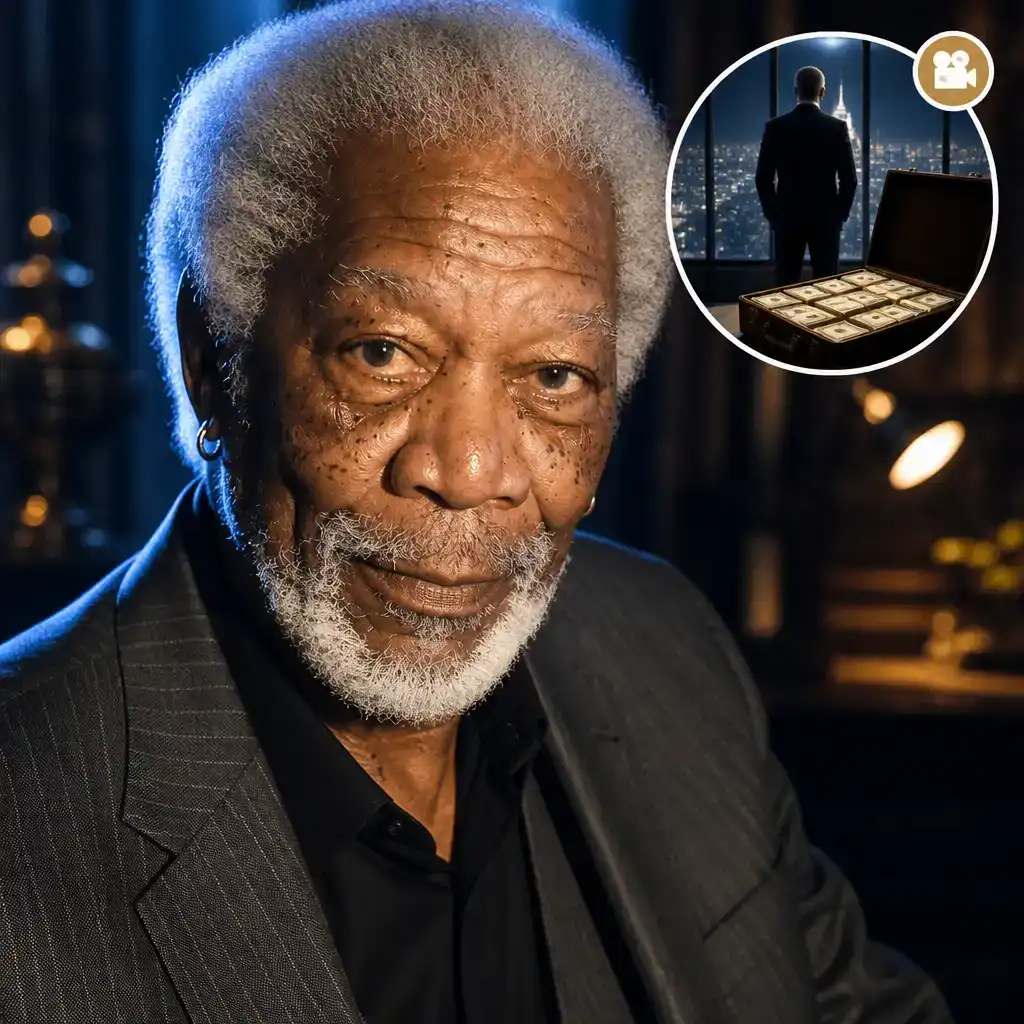
Morgan Freeman says mediocre scripts do not automatically rule out a movie role. The five-time Oscar nominee told The New York Times that an actor may be willing to accept flaws in the writing when the paycheck makes those flaws easier to tolerate.
“If somebody offers you a job, it’s very nice if they’re offering you also an exciting script, but in reality, two or three things come into play,” Freeman said. “What are they going to pay you? If they’re going to pay you enough, then you overlook some of the glitches in the script that happen to be there.”
It is not exactly the romantic version of an actor being swept away by the material. It is, however, a fairly direct description of work.
Can a flawed script be improved?
Freeman also noted that agreeing to a project does not mean accepting every page without question. Actors can raise concerns about dialogue, character choices or scenes that do not make sense for them.
“Sometimes you can mention things that are in the script that don’t quite work out for you and by and large, that gets worked out,” he said.
That leaves room for a practical middle ground: a script may arrive with problems, but those problems are not always permanent. For an actor with Freeman’s experience and standing, speaking up can lead to changes before filming or while production is underway.
Freeman has built that influence over a career that includes five Academy Award nominations. He won the Oscar for best supporting actor for Million Dollar Baby and has moved comfortably between prestige dramas, action films, comedies and major studio franchises.
His most recent film role was in 2025’s Now You See Me: Now You Don’t. He returned as Thaddeus Bradley, the magician debunker he played across all three installments of the franchise. The series has become one of his most recognizable recurring projects, alongside his role as Lucius Fox in Christopher Nolan’s Dark Knight trilogy.
Why Morgan Freeman is not retiring
At 89, Freeman also made clear that he intends to continue acting for as long as he remains physically able and people keep offering him work.
“I’m like Clint Eastwood on that: Don’t let the old man in,” Freeman told The Times. “So, keep working. If you can get out of bed and don’t fall down when you do it, then you just count your blessings and keep moving. So, I’ll work as long as I can, as long as somebody says, ‘Do you want to do this part?’”
The comment reflects more than professional momentum. For Freeman, work appears tied to staying active, useful and connected to the craft that has defined most of his adult life.
He expressed the same view in a separate interview with The Guardian. Although retirement occasionally crosses his mind, he said the idea quickly disappears when another offer arrives.
“Sometimes the idea of retirement would float past me but, as soon as my agent says there’s a job or somebody wants you or they’ve made an offer, the whole thing just boils back into where it was yesterday: how much you’re going to pay, where we’re gonna be?”
For Freeman, then, the decision is not only whether a script is excellent. The role, the location, the ability to keep working and, yes, the money all matter. At least he is not pretending otherwise.