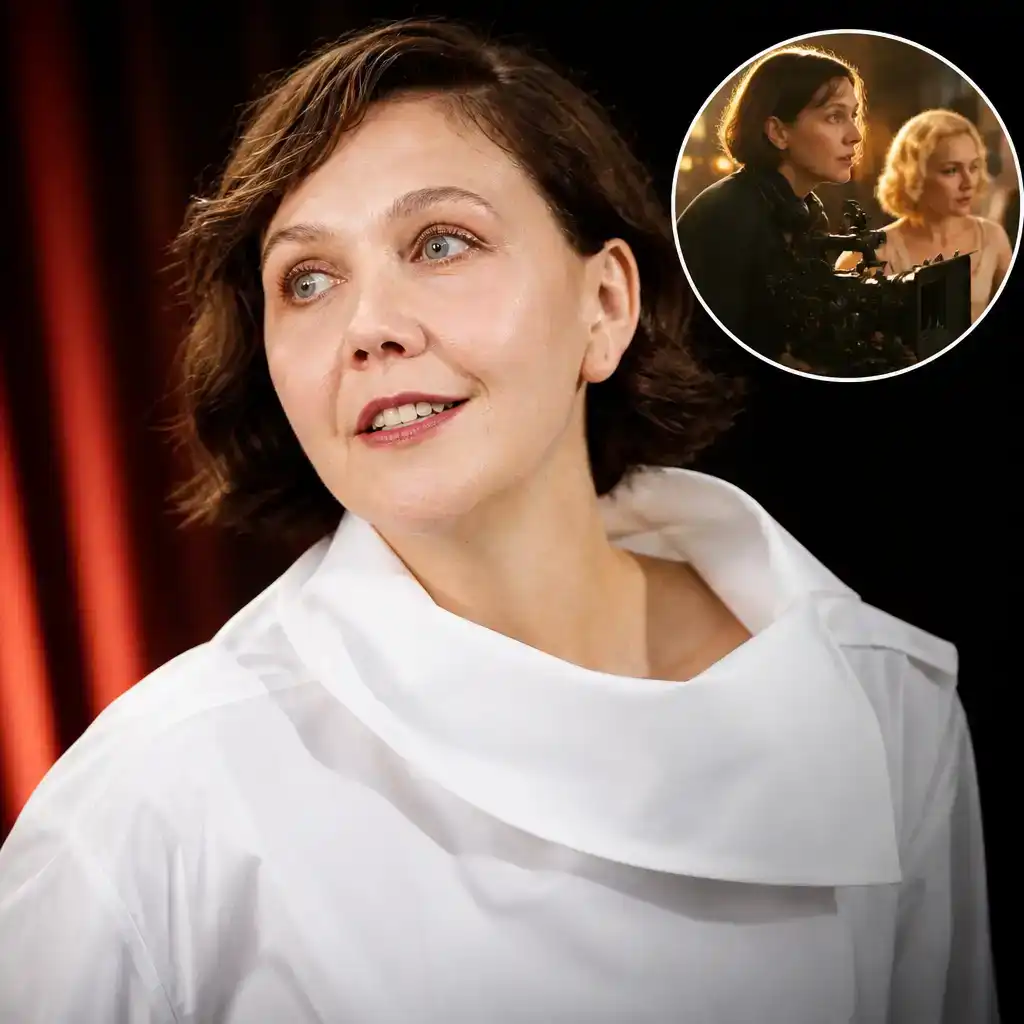
Maggie Gyllenhaal on directing has a straightforward position: filmmakers who silence their collaborators are often frightened, not brilliant. Speaking at a Busan International Film Festival press conference on Wednesday, she said the strongest directors she encountered as an actor usually understood the value of other people’s ideas.
“It was the people who were very scared… or just not very smart, who tried to squash other people’s voices,” Gyllenhaal said.
Her own approach is deliberately open. While making her feature directing debut, The Lost Daughter, Gyllenhaal wanted everyone, including actors, the cinematographer, production designer and gaffer, to feel able to contribute. The director still makes the final decision, she noted, so allowing discussion hardly threatens the established power structure.
“The truth is… it is ultimately up to me as the director. I have the power, so there’s no reason to squash anyone else’s voice,” she said.
Why Gyllenhaal wants every crew member involved
Gyllenhaal argued that a film built with contributions from an entire crew will be stronger than one designed to reproduce a director’s private vision without alteration.
“I mean, it’s just so obvious that the movie that I will make that includes all the minds of the people on my crew, at least as things I can draw from, is going to be exponentially better than the movie I can make trying to recreate something I imagined all alone by myself in my room.”
That does not mean surrendering control. Gyllenhaal’s point was that directors already hold enough authority to listen without fearing a workplace coup by the lighting department. Ideas can be considered, adapted or rejected. Silencing them before they arrive only reduces the material available to the person in charge.
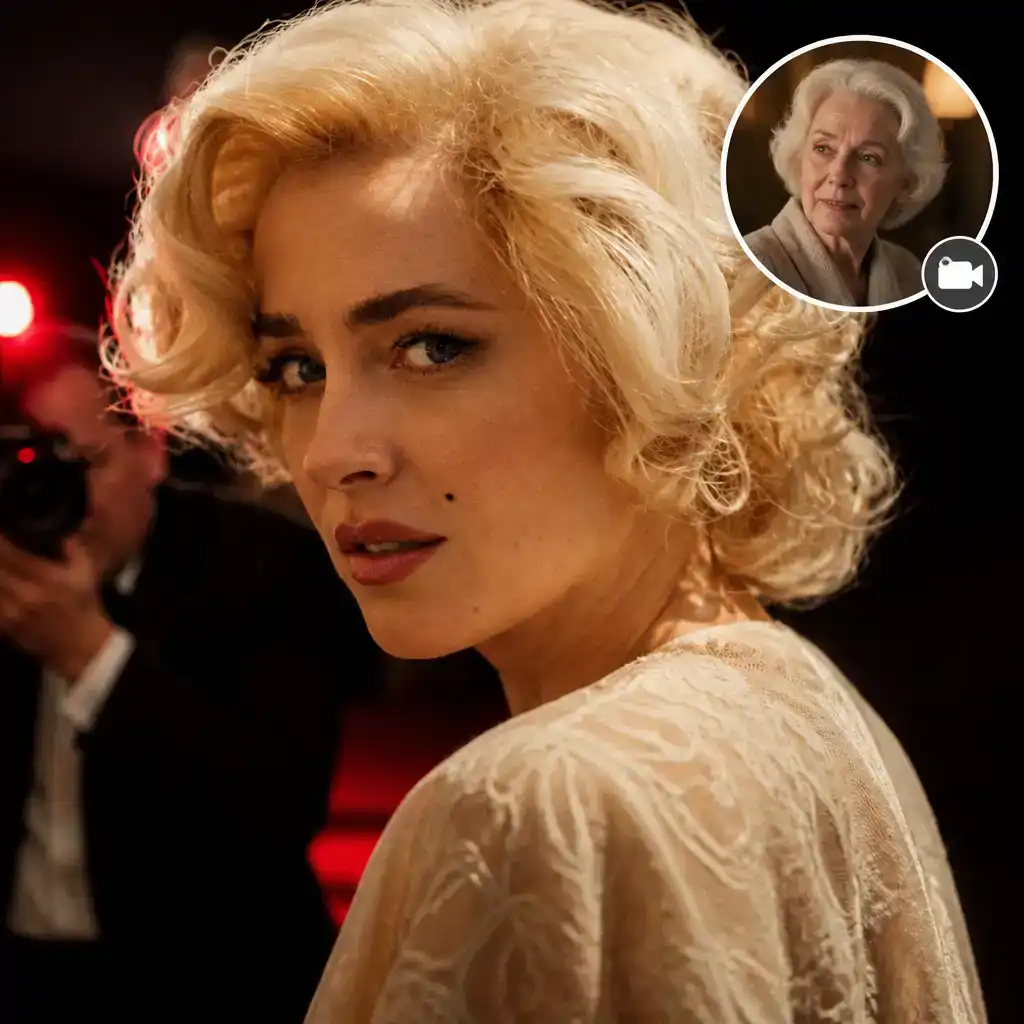
She brought that collaborative philosophy to Busan with Flesh Impact, a short film she wrote and directed. Ellen Burstyn plays Marilyn Monroe at the age of 100, while Dakota Johnson portrays Monroe as a young woman. Peter Sarsgaard and Sepideh Moafi also appear.
The film had its world premiere out of competition at the Venice Film Festival before travelling to Busan.
How Marilyn Monroe became 100 on screen
Flesh Impact began as a commission from Genesis, the luxury car brand and longtime sponsor of the Busan festival. The company wanted a film marking what would have been Marilyn Monroe’s 100th birthday in June.
Gyllenhaal initially knew Monroe mainly through her familiar public image as a screen icon. She took a week to decide whether she had anything meaningful to add, spending the time reading about Monroe and watching her films.
The eventual concept was more literal than Genesis may have expected: Monroe would actually be 100 years old in the story.
“I don’t think that when Genesis came to me and asked for a film about Marilyn Monroe to celebrate what would have been her 100th birthday that they imagined she would actually be 100 years old in the movie,” Gyllenhaal said. “I thought, ‘Okay, I have this idea. They’re never going to go for it.’”
Genesis did go for it. Once the company approved the pitch, Gyllenhaal completed the script over a weekend.
She described the short as a tribute not only to Monroe, but also to its two leading actors. The film is “100% a celebration and an honoring of Ellen Burstyn and her incredible career, and Dakota Johnson and her incredible career,” she said.
Why she moved from acting to directing
Gyllenhaal said her progression from acting into producing, writing and directing felt natural. As a young woman who loved films and wanted to tell stories, acting seemed like the most obvious route because relatively few women were being given opportunities to direct.
For years, acting provided the creative challenge she wanted. Eventually, however, she felt she had reached its limits.
“It felt satisfying and exciting for a long time, and then I think I hit the edge of what I was able to do as an actress,” she said.
Her transition into writing and directing began eight years ago with The Lost Daughter. Since moving behind the camera, she has felt more comfortable and creatively inspired.
At Venice, where she served as jury president, Gyllenhaal also addressed the position of women filmmakers. Only one woman had a film in competition that year, a statistic requiring little decorative interpretation. In Busan, she referred reporters back to those earlier comments when the subject arose again.
How filmmaking shaped the Gyllenhaal family
Cinema was already central to Gyllenhaal’s upbringing. Her father, Stephen Gyllenhaal, is a director, while her mother, Naomi Foner, is a screenwriter. The family went to the cinema almost every Friday night when Gyllenhaal was growing up.
Foner later directed her first film after becoming a grandmother, which her daughter believes may make her unique.
“My mom directed her first film as a grandmother. I think she might be the only person to have directed her first film as a grandmother,” Gyllenhaal said.
She also called Foner “probably the best note-giver that I have.” Her brother, Jake Gyllenhaal, appeared in The Bride and remains a close friend. Maggie Gyllenhaal said their differing tastes are useful rather than inconvenient, giving her another perspective on her work.
The family background helps explain why directing did not feel like an abrupt reinvention. It was less a departure from acting than an expansion into the other parts of filmmaking she had been surrounded by for years.
What Maggie Gyllenhaal plans to direct next
Gyllenhaal said she has started writing two early ideas and is still working out what they may become.
She described herself as being in “that very exciting place where I’m kind of like, ‘What is this going to ultimately be about, you know?’” The projects remain at a formative stage, before practical matters arrive to make everything considerably less abstract.
She is also set to direct and produce an adaptation of Rachel Kushner’s novel Creation Lake for Warner Bros. The studio previously backed The Bride.
For now, Flesh Impact offers the clearest recent example of her method: begin with a commissioned tribute, turn Marilyn Monroe into a centenarian, cast Ellen Burstyn and Dakota Johnson, and leave enough room for the people around her to improve the result. Authority, in Gyllenhaal’s account, works better when it is secure enough to listen.