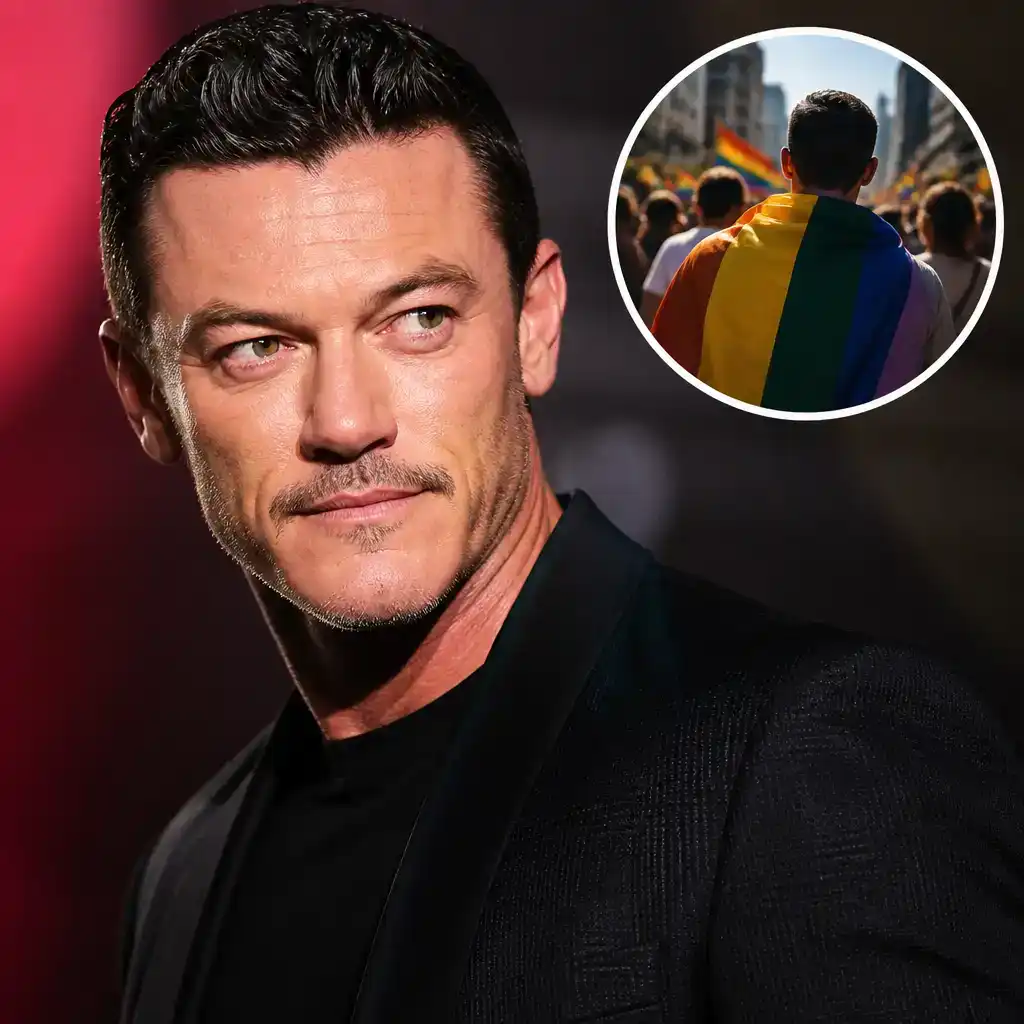
Luke Evans has pushed back against online criticism after a headline quoted him as saying, “Just because you are gay yourself doesn't mean you have to be woke,” arguing that the wording did not accurately reflect what he meant.
The Beauty and the Beast actor addressed the backlash directly on Instagram, saying parts of the original interview had been paraphrased in a way that distorted his position.
Evans was particularly clear on one point: he does not reject the label “woke” when it is used to describe awareness of injustice and support for people whose rights are under threat.
Luke Evans says the headline missed his point
The controversy centred on a headline highlighting Evans's comments about the political diversity of gay people. The line — “Just because you are gay yourself doesn't mean you have to be woke” — quickly became the focus of criticism on social media.
Evans has now responded by drawing a distinction between the wording that circulated online and the broader point he says he was trying to make.
According to the actor, elements of the interview were paraphrased rather than presented in a way that fully captured his intended meaning.
That distinction matters when a single sentence is being used to define someone's political outlook. Headlines are designed to compress. Sometimes, rather inconveniently, opinions refuse to cooperate.
“I absolutely consider myself woke”
Evans's clarification was unusually direct.
“I absolutely consider myself woke. If that means being aware of injustice, caring about others and standing up for people whose rights are threatened, those are values I’ve held for decades,” he wrote.
The statement puts considerable distance between Evans and any suggestion that he was dismissing concern about discrimination or equality.
Instead, his argument appears to be that sexual orientation does not automatically determine every political belief a person holds. Gay people, like any other group, can have different political views.
At the same time, Evans stressed that caring about equality remains central to his own values.
Why the clarification changes the context
The dispute illustrates how much weight can be placed on a short quotation once it is separated from the wider argument around it.
On its own, the line about being gay not necessarily meaning someone has to be “woke” can easily be read as Evans distancing himself from the term or the values associated with it.
His Instagram response presents a notably different position. Evans explicitly embraces the word under a definition centred on recognising injustice, caring about other people and defending threatened rights.
Those two ideas are not necessarily contradictory. Someone can believe gay people are politically diverse while personally supporting progressive principles around equality. Evans's complaint is essentially that the headline collapsed that distinction.
In my view, his clarification is important because the original quotation is broad enough to invite an interpretation that Evans now explicitly rejects. Based on the statements available, the more accurate reading is not that he objects to being “woke,” but that he objects to treating gay people as a politically uniform group. That does not settle every possible argument about his original wording, but it does materially change the context in which it should be understood.
The argument is now about context as much as politics
Evans's response does not erase the headline that triggered the backlash, nor does it require everyone who criticised it to suddenly agree with him.
What it does provide is a much clearer statement of where he says he stands.
He considers himself “woke” when the term means recognising injustice and standing up for people whose rights are threatened. He also believes being gay does not prescribe a single set of political opinions.
The remaining disagreement, then, is less about whether Luke Evans cares about equality — he has stated his position plainly — and more about whether the original headline fairly represented the argument he was making.
And in a controversy created largely by the power of a few quoted words, the context around those words has become the story itself.