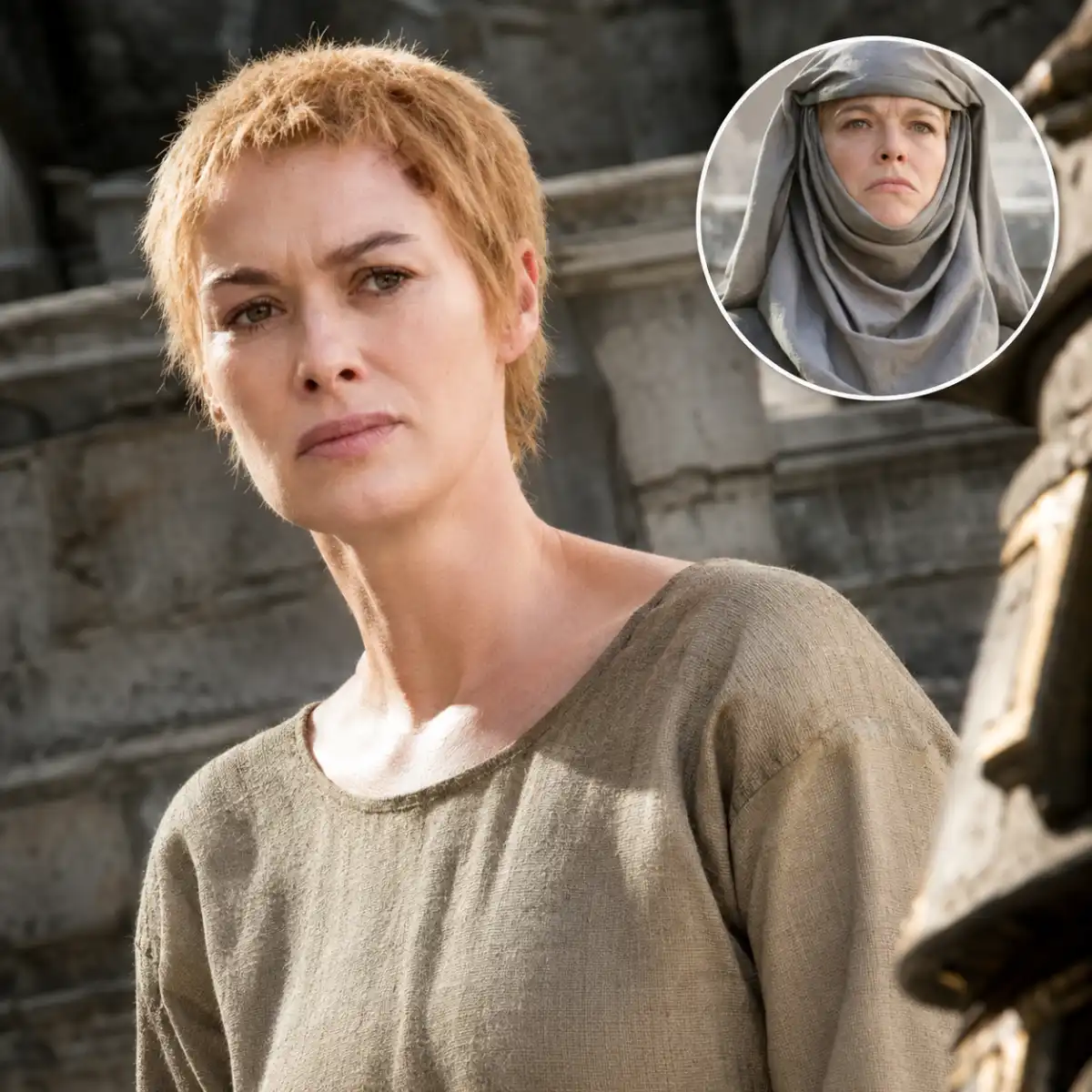
More than a decade after Cersei Lannister’s “Walk of Atonement” became one of Game of Thrones’ most debated sequences, Lena Headey has revisited the Lena Headey nude scene backlash and said she was stunned by how personally some viewers took it.
In a new interview with The Telegraph, Headey said the response to her decision to use a body double still strikes her as bizarre. The scene, filmed with thousands of extras, showed Cersei being publicly shamed through King’s Landing. Headey performed the emotional work, while body double Rebecca Van Cleave appeared nude.
Apparently, for some viewers, medieval public humiliation was fine, but a production boundary was where realism went too far.
Why Lena Headey says the backlash surprised her
Headey told The Telegraph she was “really shocked by the anger” after the episode aired, especially by the suggestion that she had somehow misled the audience.
“I was really shocked by the anger, by this idea that I’d duped the audience,” she said. “But by that point everyone knew [the cast], it was insane simply going anywhere, and I was with 3,000 extras.”
Her point was straightforward: acting the scene required focus, and the filming conditions were not exactly intimate. Headey said she did not believe she could have done the emotional part of the performance properly while also being nude in front of a huge crowd.
“I wouldn’t have been able to do the emotional part of the job,” she told the outlet. “I’d have been in full-on defensive mode.”
That distinction matters. Headey was not saying nudity is always off-limits. She was saying this specific scene, under these specific conditions, would have made the performance harder for her to access.
What she said about boundaries on set
Looking back, Headey said she had the experience and confidence to draw a line in a way that younger performers may not always feel able to do.
“By that point, I’d been through the wringer,” she said. “I could stand up for myself. I’m not saying those actresses couldn’t, but they were much younger and more vulnerable, and had far less experience of being in front of people and the camera and performing. Whereas I was of an age where I’d just tit about and diffuse anything uncomfortable with idiocy.”
The comment fits into a wider conversation about how actors, especially actresses, have historically been expected to accept discomfort as part of the job. Headey’s position is not especially radical: she made a professional choice about how to perform a scene while protecting her own limits.
The online reaction at the time, however, framed that choice as a kind of betrayal. A very normal and healthy way to watch television, naturally.
Headey had addressed the body double criticism before
This is not the first time Headey has spoken about the scene. In 2016, she told Entertainment Weekly that some viewers had accused her of being “less of an actress” because she did not perform the nudity herself.
“I’ve done nudity. I’m not averse to it,” she said then. “But I know I’m a very emotional actor and I get really driven by that. In order to do my job, I allow myself to be really vulnerable. I don’t know any other way to do my job. Things really affect me.”
Headey said that being naked for the three-day shoot would have shifted her emotional state in a way she did not think suited Cersei.
“And the thought of being naked for three days and trying to contain her in the way she would be I think I would feel very angry,” she said. “I didn’t want to be angry. I don’t think Cersei would be angry. I did what I thought she would do, emotionally.”
She also praised Rebecca Van Cleave, who handled the nude portion of the sequence. Headey made clear that the body double’s work was demanding and that she did not disappear from the process.
“I didn’t phone it in,” she said. “I was actually there for three days with Rebecca.”
The scene became part of a larger industry discussion
In the Telegraph interview, Headey connected the controversy to a broader pattern she said many young female actors faced early in their careers.
“There was this rite of passage all young female actors had to go through, which usually involved snogging and falling in love, and having sex and showing your boobs,” she said. “They’d call them the ingénue parts, to make it sound nicer.”
Headey said she often did not question those expectations when she was starting out. She had not attended drama school, and she described arriving on set with the basic relief of having work.
“But I just got on with it,” she said. “I didn’t go to drama school, so I would just arrive on a set and be, ‘Oh my God, I’ve got a job.’ And when it came to those moments, I don’t think I even questioned that I should be safe. Instead, I’d go home and cry, or think, ‘Oh, that felt weird and too familiar.’ Now I look back and feel, ‘Hmm, that was rough.’”
Her comments underline the difference between consent that is freely given and consent that comes under professional pressure. The industry has spent years insisting it understands that difference. Results have varied.
How #MeToo changed the conversation
Headey also said those early experiences shaped how she views power in film and television. She described being angered by the way some men in the industry were protected because of their status, while actresses who needed work were expected to absorb the consequences.
“The weird protection that we offer predatory men in the business because of the disproportionate power they wield, set against the need among vulnerable actresses to work to put food on the table to get the job – it makes me very angry,” she said. “A job can be completely soured by one person who, for some reason, is allowed to get away with it.”
According to Headey, the #MeToo movement made the scale of those experiences harder to ignore. She also suggested younger actresses are now more prepared to refuse situations that feel unsafe or exploitative.
“The attitude today is, ‘I’m not f***ing doing that,'” she said.
The “Walk of Atonement” discourse may have started as a fight over one scene in a fantasy series. Headey’s comments make clear she sees it as part of something less fictional: who gets to set boundaries, who gets punished for having them, and why audiences sometimes feel entitled to more than an actor has agreed to give.