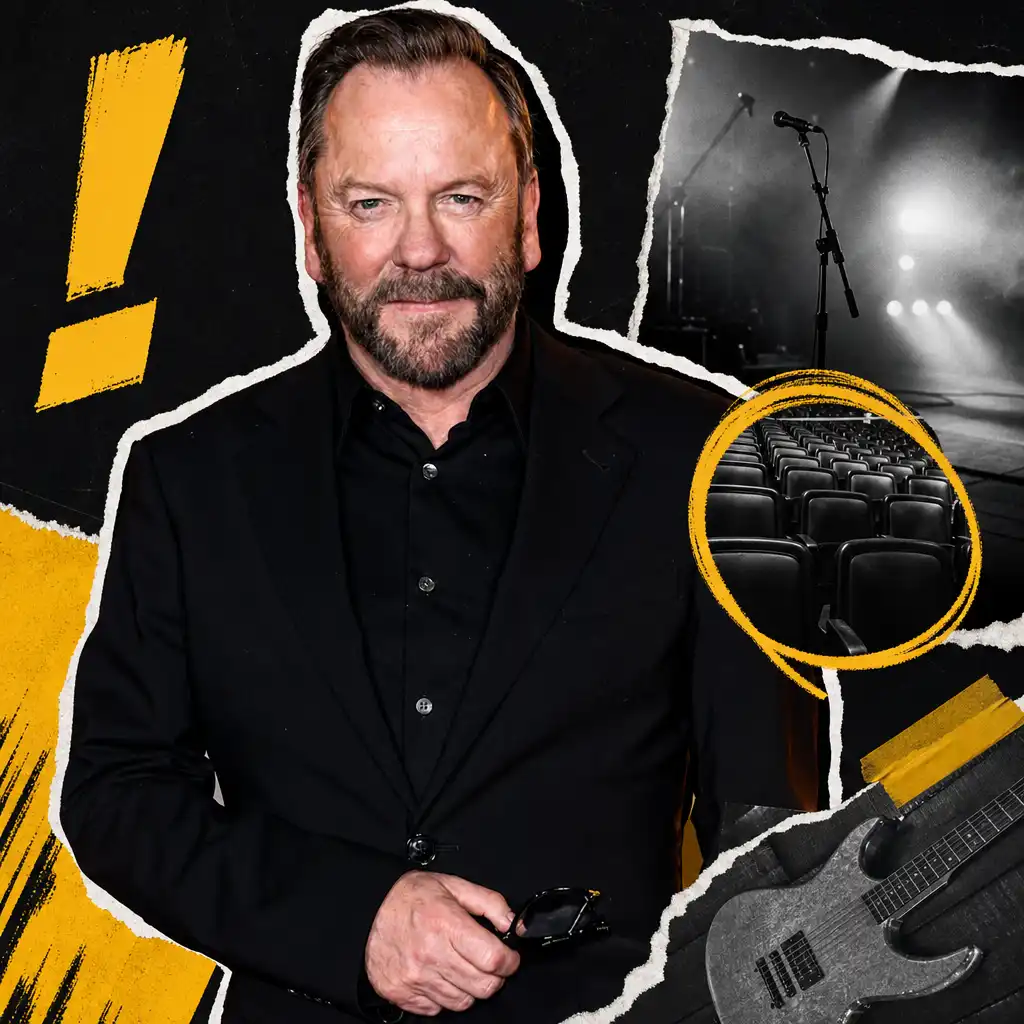
Kiefer Sutherland cancels U.S. tour dates after deciding that playing to half-empty rooms would not be fair to fans who had bought tickets, or to the venues expected to host him. The actor and Americana singer shared the decision in a May 15 Instagram post, calling it a disappointing but necessary move.
“With great disappointment I am going to have to cancel the US leg of my tour due to very low ticket sales,” Sutherland wrote. “I don’t think it’s fair to the people who have bought tickets, or the venues, to play to half empty houses.”
Why Kiefer Sutherland called off the U.S. shows
Sutherland, 59, has been performing in Europe on his Love Will Bring You Home Tour. The canceled portion was the planned U.S. leg of that concert series.
In his message, he said he hopes to return to American stages when the timing makes more sense. “I’m looking forwarding to touring the United States again at a more suitable time,” he wrote, before adding, “I hope you understand.”
For fans who already made plans, the practical part is at least straightforward: “Refunds will be available from point of purchase,” Sutherland said.
It is an unusually direct explanation in an industry where cancellations often arrive wrapped in fog. Low sales are not exactly glamorous, but they are clear. That may not soften the disappointment for ticket holders, though it does explain the decision without making everyone decode a statement written by committee.
The tour was tied to his fourth album, Grey
The U.S. dates were announced in February ahead of Sutherland’s upcoming fourth album, Grey, which is scheduled for release on May 29.
The album follows a writing and recording period that Sutherland described as personally significant. On his website, he wrote, “To begin, I want to express how happy and excited I am to be releasing my fourth album, Grey. The songs were written and recorded over a two-year period from 2024 to 2026.”
He also said the new material reflects a shift in his songwriting. “In many ways these songs mark a growth for me personally, as I wrote less about observations and more about personal feelings that I have been navigating in my own life.”
That context gives the canceled dates a little extra sting. This was not just a side trip from an actor dabbling in music. Sutherland has spent years building a second public life as a singer-songwriter, alongside screen roles in 24, Designated Survivor, Phone Booth and Mirrors.
Other artists have also changed tour plans
Sutherland’s announcement lands during a rough stretch for live entertainment, with high ticket prices drawing growing pushback from fans. Still, not every recent tour change has had the same cause.
Several other performers have postponed or canceled shows while citing different reasons:
- Post Malone delayed the start of his Big Ass Stadium Tour Part 2 so he could finish unfinished music.
- Meghan Trainor canceled her upcoming Get in Girl tour, calling it a “difficult decision,” and said she was focusing on her family after welcoming daughter Mikey Moon Trainor with husband Daryl Sabara in January.
- Zayn Malik canceled all U.S. dates on his KONNAKOL Tour after being hospitalized for undisclosed reasons.
Sutherland’s case is more blunt: not enough people were buying tickets. For an artist releasing a deeply personal album, that is not the preferred plot point. But his message at least leaves the door open for another U.S. run later, assuming the audience, the schedule and the economics finally agree to be in the same room.