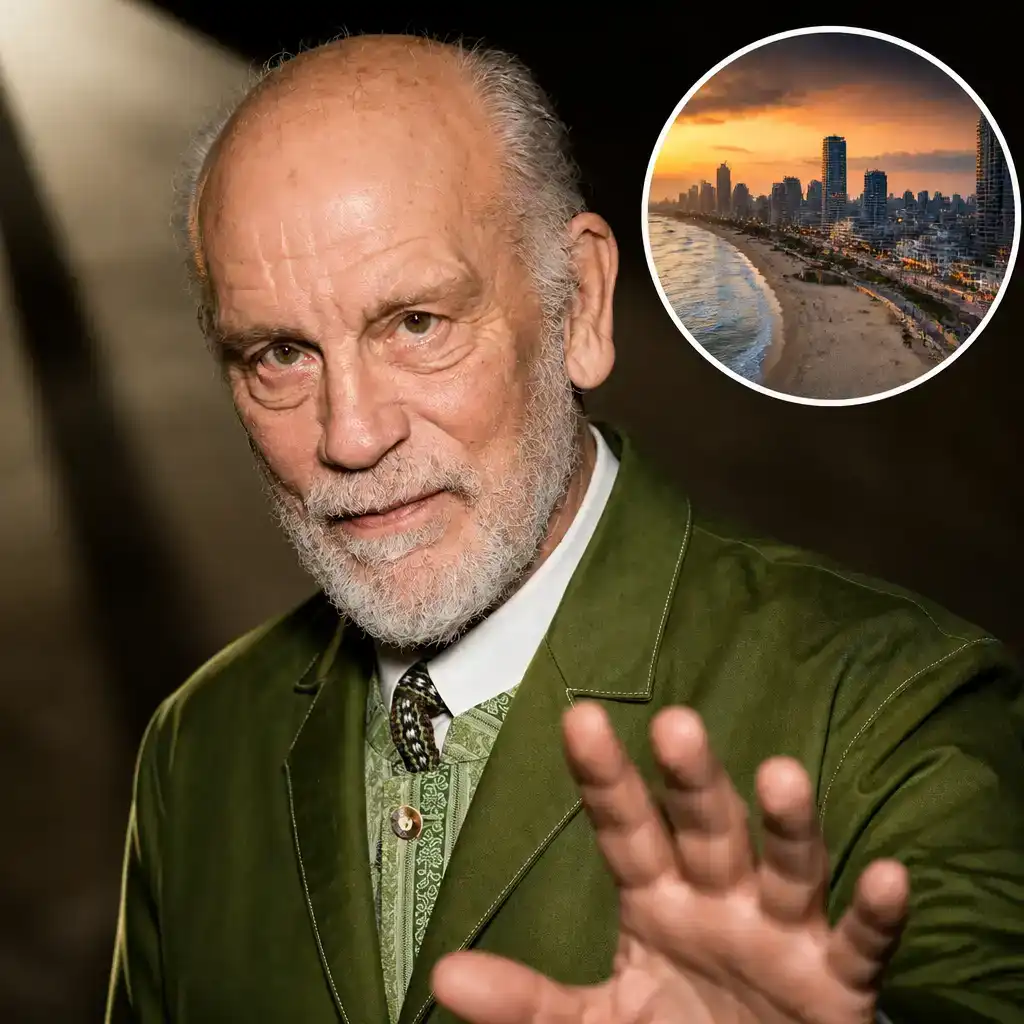
John Malkovich has cancelled his Tel Aviv performance of The Music Critic after a publicity release attributed comments to him that he says he never made or approved. The actor had been due to appear at the Charles Bronfman Auditorium on April 13, 2027, as part of a wider tour through Europe and the Middle East.
The disputed release claimed Malkovich felt “closeness and solidarity” with Israeli audiences, according to TheWrap. That is a politically loaded statement at the best of times, and particularly during a regional conflict marked by cancelled tours and pressure from cultural-boycott campaigns. There was just one administrative flaw: the supposed speaker had not said it.
Why did Malkovich withdraw from the show?
Malkovich said a public relations company working for the Israeli promoter drafted the quotation without consulting him. He only learned about it after reports appeared in The Jerusalem Post and The Hollywood Reporter.
“I did not utter these phrases, and they most certainly are not approved by me, nor do they reflect my feelings,” he said. Calling the presentation of the words as direct quotations “unacceptable and untenable,” he announced that he could no longer participate in the Tel Aviv date.
The actor stressed that performing in a country does not amount to endorsing its government, policies or leaders. Nor, he added, should an appearance be treated as support for a political cause, terrorism, the killing of civilians or “any other kind of barbarity.”
Malkovich said he has spent nearly two decades touring classical music collaborations and theatre productions, performing in 47 countries by his count. Many had governments or cultural values he did not share. His position was that artists can perform for audiences without signing an ideological approval form at passport control.
He ended with a pointed rule for future publicity departments: “Only playwrights, novelists and screenwriters can put words in my mouth, and even then, only in the service of storytelling.”
How did the false quotation get published?
Israeli producer Alon Yurick initially told The Jerusalem Post that the release contained an incorrect quotation caused by a “misunderstanding.” The newspaper corrected its report, removed the fabricated wording and published Yurick’s apology.
Yurick later gave Israel Hayom a more detailed explanation. He said the text came from materials concerning another artist and was mistakenly assigned to Malkovich through human error.
“The source of the text was materials relating to another artist, and due to human error it was attributed to Mr. Malkovich,” Yurick said. He added that the production team sought corrections, apologized and attempted to have the statement removed once the mistake became clear.
The publicity company separately confirmed to TheWrap that Malkovich neither made nor authorized the statement and offered a “sincere” apology. No credible report has challenged his account that the quotation was unauthorized.
Yurick said he regretted that the error resulted in the cancellation and intended to continue bringing international productions to Israel. No replacement performer or rescheduled date has been announced.
The episode also demonstrates why celebrity quotations are normally sent for approval before release. Drafting language on someone’s behalf is common in publicity. Publishing it as a direct quotation without that person signing off is a rather different service, and not one performers generally request.
What is The Music Critic?
The Music Critic was conceived by violinist and composer Aleksey Igudesman. The production turns vicious historical reviews of celebrated composers into a live theatrical and classical music performance.
Malkovich reads genuine attacks once aimed at figures whose work later entered the canon, while Igudesman, pianist Hyung-ki Joo and an ensemble perform their music. The finale redirects the criticism toward the narrator, with Malkovich reading a harsh review of his own acting. Ordinarily, that would provide the evening’s most uncomfortable quotation.
The Tel Aviv appearance would have been Malkovich’s third professional visit to Israel. He attended the Jerusalem Film Festival in 2008 and returned in 2013 for performances of The Infernal Comedy.
The Jerusalem Post had described the 2027 booking as unusual because international productions have faced disruption during the regional conflict, alongside pressure on artists to avoid appearing in Israel. Malkovich’s statement drew a distinction between opposing attempts to define his politics and opposing cultural exchange itself.
“Generally speaking, I believe that we need more culture and more beauty in more places, not less,” he said. He argued that art can address conflict, grief and shared humanity, while artistic freedom can itself serve as a protest against violence.
Why does the promoter’s wording matter?
This is the second recent case in which an artist publicly disputed an explanation associated with Yurick. In 2025, Mako reported that Yurick attributed John Cleese’s cancellation of an Israeli appearance to pressure from the Boycott, Divestment and Sanctions movement. Cleese contradicted that account, saying he withdrew because of safety concerns.
The circumstances are different. Cleese challenged the stated reason for his cancellation, while Malkovich rejected words presented as his own. Still, both cases underline the risk of explaining an artist’s intentions without clear authorization, especially when the subject is politically sensitive.
For the cancelled production, the practical result is straightforward. A major international performer is gone, the venue has lost its announced attraction, and a promotional quotation intended to support the booking has instead ended it. Publicity is supposed to generate attention. On that narrow measure, at least, the release was extremely effective.