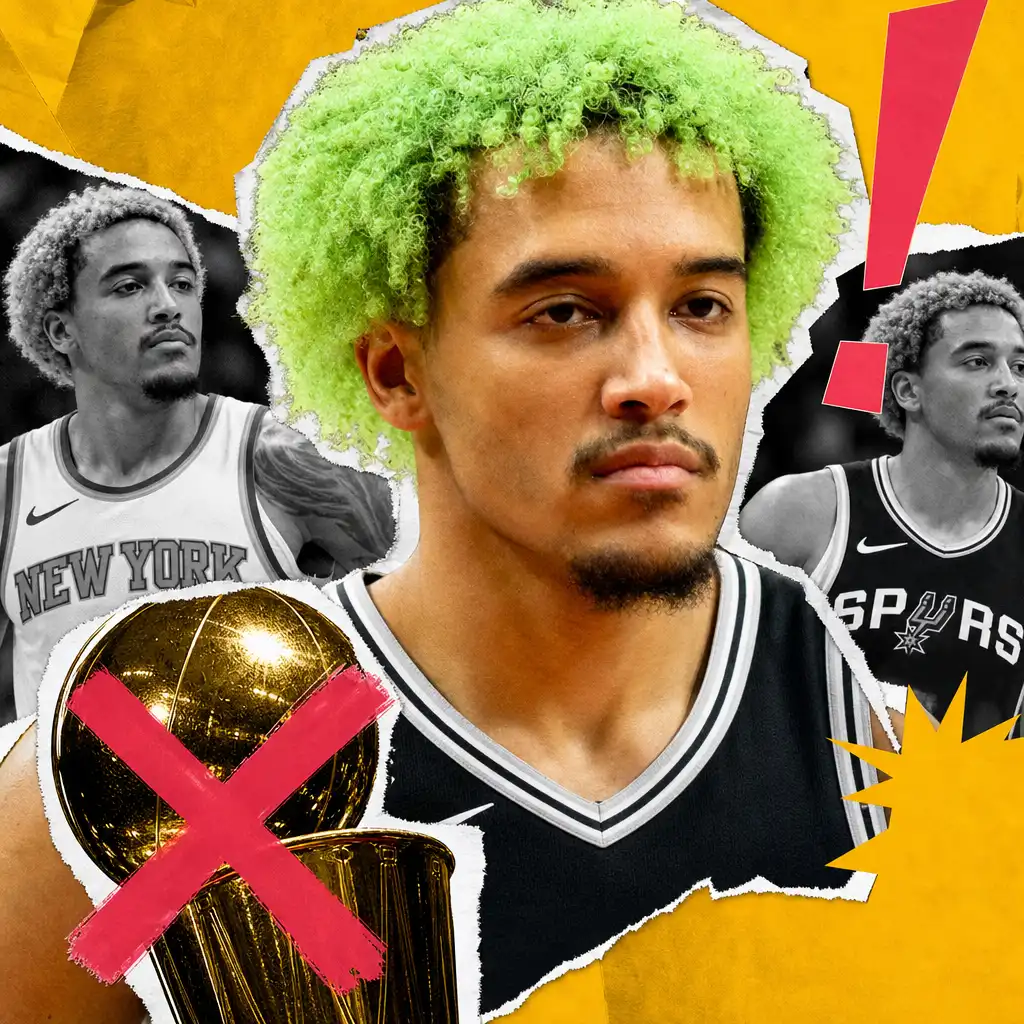
The Jeremy Sochan NBA Finals ring claim has been making the rounds with the neat little twist that he supposedly cannot lose because he played for both finalists. It is a fun bit of basketball trivia. It also falls apart under the basic pressure of checking whether any of those things actually happened.
Jeremy Sochan has not played for the New York Knicks, has not been waived by the San Antonio Spurs in the reported scenario, and the Knicks and Spurs have not been set to meet in the NBA Finals. So, no, there is no guaranteed championship ring waiting for him because of a split season between those two teams.
What the claim says
The rumor says Sochan started the season with the Spurs, got waived after falling out of favor, signed with the Knicks, and then saw both teams reach the Finals. In the version making the rounds, whichever team won, Sochan could get a ring from one of them.
That’s the kind of sports oddity people love because it sounds absurd but just plausible enough. The NBA does allow championship teams wide discretion in deciding who receives rings, including players who spent part of the season with the franchise. Teams have given rings to former players, staff members, and others connected to a title run.
But a rule that could allow something like this does not make a made-up transaction real. Small problem, admittedly.
What actually happened with Jeremy Sochan
Sochan was drafted by the San Antonio Spurs in 2022 and became part of the team’s young core. His development has been closely tied to the Spurs’ rebuild, especially as Victor Wembanyama became the center of the franchise’s long-term plans.
There is no factual basis for the claim that San Antonio waived Sochan and that the Knicks signed him during the season described. He has not had the Knicks tenure required for this supposed two-team Finals loophole.
The reported matchup is also wrong. A New York Knicks versus San Antonio Spurs NBA Finals was not the Finals pairing described in the claim, and the stated setup does not match the league’s actual postseason record.
How NBA championship rings really work
The NBA does not hand out rings through one rigid league-wide checklist. The championship team typically decides who gets one, and that can include people beyond the playoff roster.
In practice, ring recipients can include:
- Players on the championship roster
- Players who appeared for the team earlier in the season
- Coaches and front office staff
- Training, medical, and support staff
- Occasionally, former players or contributors the team chooses to recognize
That flexibility is why stories like this can sound believable. A player who spent time with two Finals teams in the same season could, depending on team decisions, be in a strange position. But the team still has to offer the ring, and the player still has to accept it.
A real example often cited is Anderson Varejão in 2016. He played for the Cleveland Cavaliers earlier that season before joining the Golden State Warriors. When Cleveland beat Golden State in the Finals, the Cavaliers offered him a ring. He declined.
Why this rumor traveled so easily
The appeal is obvious: a player supposedly wins no matter what, while everyone else has to endure the normal stress of elite sport. Fans love a loophole, especially one that makes a high-stakes championship feel briefly like an administrative puzzle.
But this one depends on multiple things being true at once: Sochan leaving the Spurs, joining the Knicks, and both teams reaching the Finals. Those facts do not check out.
Sochan remains best understood as a Spurs player and a key young piece in San Antonio’s broader project, not as the accidental owner of a guaranteed Finals souvenir. The ring story is a clever basketball hypothetical dressed up as news.