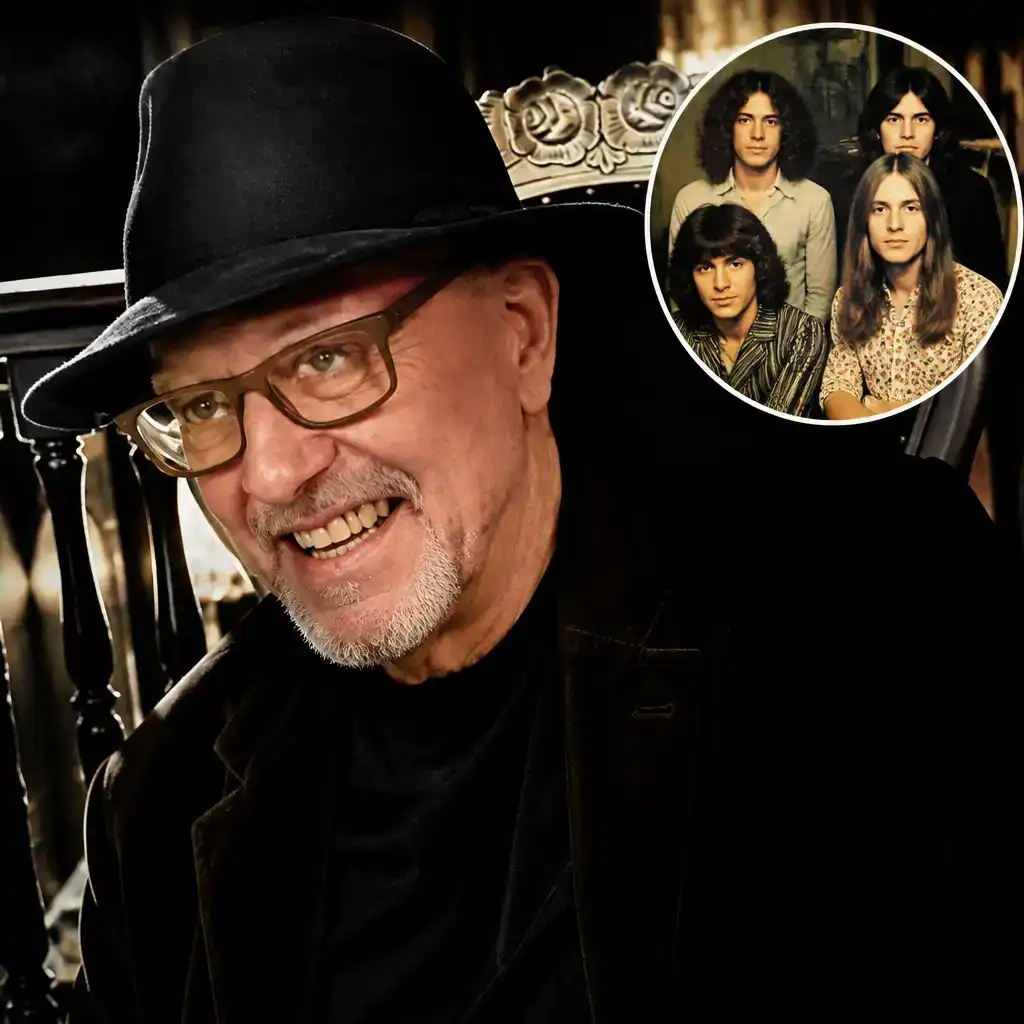
Former Queen bassist Barry Mitchell has died, prompting tributes from fans, friends and musicians who remembered both his warmth and his first-hand stories of the band’s earliest days. Friend Gary Taylor said Mitchell died on August 17, 2026. No cause of death or age has been made public.
Greg Brooks, Queen’s official archivist, confirmed the news on August 21 alongside a black-and-white photograph of Mitchell.
“Terribly sad news just received that early Queen bass player (circa 1970), Barry Mitchell, has passed away,” Brooks wrote. “His anecdotes at the convention were fascinating and offered rare insight. He will be greatly missed.”
Queen’s official website had not issued a separate statement by the time of publication. No funeral arrangements or family statement were publicly available.
What role did Barry Mitchell play in early Queen?
Mitchell served as Queen’s second bassist from August 1970 until January 1971, after the group’s first bassist, Mike Grose. His time with the band came before its debut album, Queen, arrived in 1973 and well before stadium tours made personnel changes rather easier to document.
Accounts differ over exactly how many concerts he played. Some reports put the total at 13, while Queen’s official Live Archive lists 11 performances. The archive then records Doug Bogie briefly taking over for two shows before John Deacon joined and completed the lineup that became internationally famous.
Mitchell was involved while the young group built its live repertoire around songs including:
- “Keep Yourself Alive”
- “Liar”
- “Son and Daughter”
- “Great King Rat”
Some accounts have credited him with playing the “original bass lines” for “Liar” and “Son and Daughter.” That description needs a little restraint. In a 2005 fan question-and-answer session, Mitchell recalled performing both songs, but said the band never discussed recording while he was a member. At that stage, Queen was concentrating on assembling enough material for live shows.
His performances may therefore have contributed to the songs’ development on stage, but there is no evidence that he played on their released studio versions.
What did Mitchell remember about Queen before fame?
Mitchell’s value to Queen historians rested partly on timing. He witnessed the band before its recording career, when songs later associated with the classic lineup were still being tested in small venues.
He also discussed a surviving tape from Queen’s January 9, 1971 performance at Ewell Technical College. According to Mitchell, the recording contained only the show’s rock-and-roll medley, rather than a complete early Queen set. It is not quite the lost archive fans might wish for, but rock history rarely checks what collectors would find convenient.
Those memories made Mitchell a familiar and valued presence at Queen conventions. Mark Cotterill described him as “a genuinely lovely man” who made time for attendees and had “some great stories to tell” about his musical career.
Taylor also remembered Mitchell as “a great guy, and a friend,” recalling their conversations over the years by telephone and in person. He shared a photograph of Mitchell performing at Edinburgh Queen Day in 2018.
One fan summed up the loss more simply: “Another piece of living history gone.”
What happened after Mitchell left Queen?
After leaving Queen in January 1971, Mitchell played with Crushed Butler, a British group later associated with the emerging proto-punk sound. The exact sequence of that band’s lineup and name change is less settled than some biographies suggest.
AllMusic lists Mitchell as a member and says Crushed Butler became Tiger in February 1971 before splitting that spring. Loud Horizon offers a different account, reporting that Mitchell replaced original bassist Alan Butler, who later returned as the group adopted the Tiger name. That would mean Mitchell may not have remained through the renaming.
The group’s early recordings did not receive a commercial release at the time. They eventually appeared on the limited 1998 EP Uncrushed, giving listeners a much later glimpse of a band whose reputation had grown largely through retrospective accounts.
Mitchell was from London and attended Claremont High School in Harrow during the mid-1960s, according to his social media profile. He later lived in Northampton. Reports said he is survived by two daughters.
His period in Queen lasted only a few months, but it covered an important and poorly documented stage in the band’s development. Mitchell did not appear on the albums that followed. He did, however, help carry the songs through the rooms where they existed before the records, the tours and the mythology arrived.