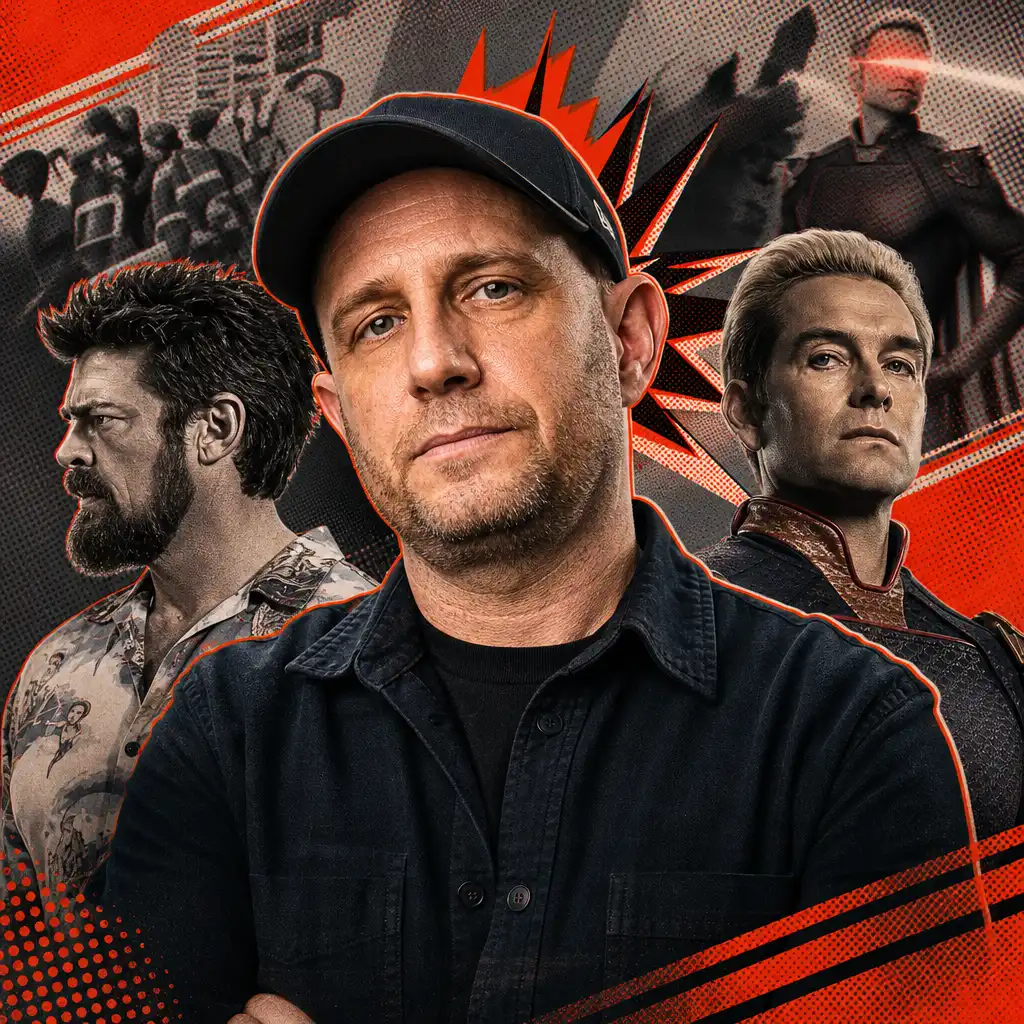
The Boys is heading into its endgame with two episodes left in its fifth and final season, and Eric Kripke has heard the complaints. Some viewers think the latest run has spent too much time on character work and not enough time moving the main plot forward. Kripke’s response, in short: that is not a bug in the system.
In an interview with TV Guide, the co-creator and showrunner pushed back on the idea that Season 5 has been padded with “filler episodes,” arguing that the show’s final blows will only land if the audience understands the people taking them.
“None of the things that happen in the last few episodes will matter if you don't flesh out the characters,” Kripke said. “I'm getting a lot of online dissatisfaction, to put it politely. And I'm like, 'What are you expecting? Are you expecting a huge battle scene every episode?'”
Why Kripke says the quieter episodes matter
The Boys has always sold itself as a superhero show with a nasty political edge, not a weekly demolition derby. Still, the premise naturally invites a certain expectation: if your cast includes Homelander, a superpowered tyrant with a very Superman-like tool kit, some fans are going to want him unleashed in large-scale combat.
Most of the show’s fights, however, tend to be tighter and nastier, usually involving one or two supes rather than dozens of costumed bodies flying through the sky. Kripke said there is a practical reason for that, but also a creative one.
“One, I can't afford that,” he said. “And two, it would be so empty and dull, and it would just be about shapes moving without having any import.”
That is the industry reality beneath the blood spray. Even as one of Prime Video’s biggest series, The Boys is not built like a Marvel crossover event, where huge visual effects sequences can dominate the runtime. Kripke’s argument is that the show would be weaker if it tried to chase that scale every week.
The episodes stirring the backlash
The “online dissatisfaction” Kripke referenced appears to have intensified around Season 5, Episode 5, titled One-Shots. The episode used a series of single-character mini-stories, each framed from an individual perspective. It included some major moments, including Firecracker’s memorable fate, but also drew criticism for a slow-moving subplot involving Homelander and his allies trying to obtain V-One.
It also featured a stranger detour told from the perspective of Butcher’s dog, Terror. For a show that has never had much interest in restraint, that still counts as a choice.
The previous episode, King of Hell, also frustrated some viewers. Its plot involved the main characters turning against one another under the influence of spores. By the end, the group’s external situation had not dramatically changed, but the episode had forced several buried feelings into the open. Even Homelander and Soldier Boy, his father, shared a significant moment.
Kripke called that kind of work “important,” saying he owes it to the central characters “to flesh them out and humanize them and their stories.” He also boiled his larger philosophy down to a simple point: television “is the character business.”
He was sharper when addressing the assumption that only plot mechanics count as story.
“...apparently, just because it's not plot, you're like, 'Nothing happened!' I'm like, 'Nothing happened, what?' The craziest, biggest moves happened. It just wasn't someone shooting someone else and going, pew, pew, pew. And if that's what you want, you're just watching the wrong show.”
Weekly release may be part of the tension
Kripke also suggested that the weekly release pattern may be amplifying the frustration. Unlike an all-at-once drop, a weekly schedule gives viewers seven days to sit with an episode, debate it, rank it, defend it, or turn on it before the next chapter arrives.
“My guess is if you were bingeing it or watching it all at once, you would have a very different experience than watching one episode a week that you might find slow or slower than usual, and then you have to wait a whole other week for the next piece. I think that aggravates people, probably,” he said. “To be clear, I'm a proponent for this release schedule, but I've been wondering if that was one of the side effects.”
That is the trade-off streamers keep relearning. Weekly releases build conversation and keep a series in public view for longer. They also turn every transitional chapter into a referendum.
Antony Starr says nobody is safe
Season 5, Episode 6 reportedly arrived with a heavier load of twists, some anticipated by fans and others less so. Its ending has already fed theories about where Homelander’s story is heading in the final stretch.
Antony Starr, who plays Homelander, recently addressed concern that The Boys could join the list of divisive TV endings. He insisted the series will not finish like a recent finale that avoided killing major characters, widely understood to be a reference to Stranger Things, though he did not name it.
“As our boss Eric [Kripke, The Boys showrunner] has said, don't get attached to any characters on this show because everyone's head is potentially on the block,” Starr said.
For a series that has spent years turning superhero certainty inside out, that is less a tease than a reminder of the contract. The Boys may not be staging a mega-battle every week, but Kripke is making clear that the final season’s quieter moves are designed to make the damage count when it arrives.